


In southeastern Russia, Daniil’s motorboat rental business is in trouble. Restrictions on fuel sales mean his fleet in the Rostov and Krasnodar regions is idle, he said in a social media post: “At every gas station, they tell me to f*** off.”
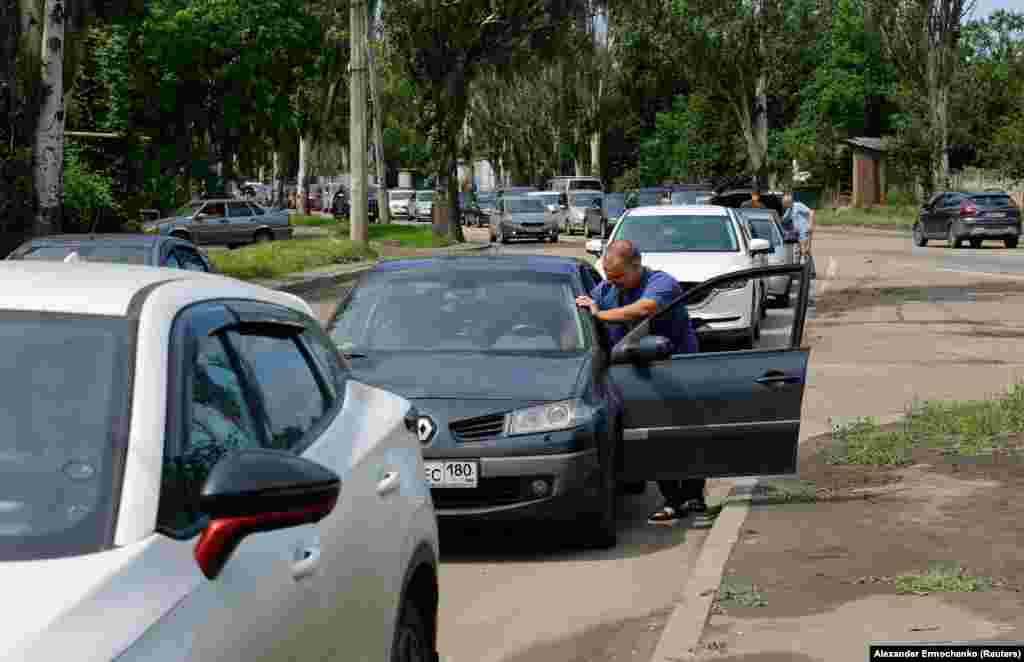
Daniil’s problem is that in many cases, customers are barred from pumping fuel into canisters rather than cars, to avert hoarding as shortages spread across Russia amid Ukraine’s burgeoning campaign of drone and missile strikes on refineries and other oil facilities.
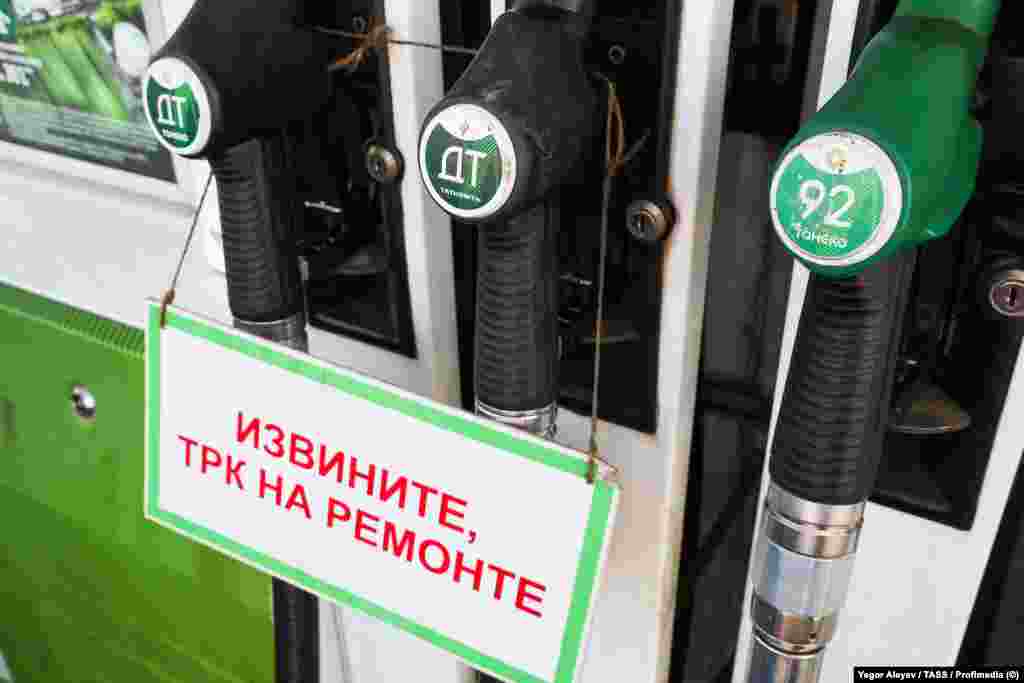
But motorists are often limited to as little as 20 liters of gas — when the stations have any for sale at all.
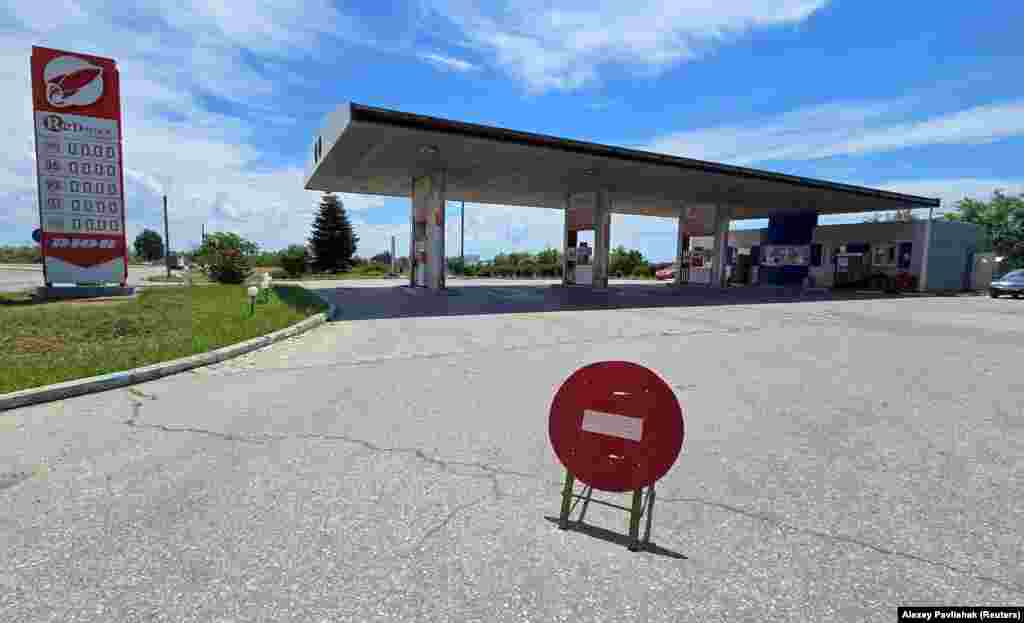
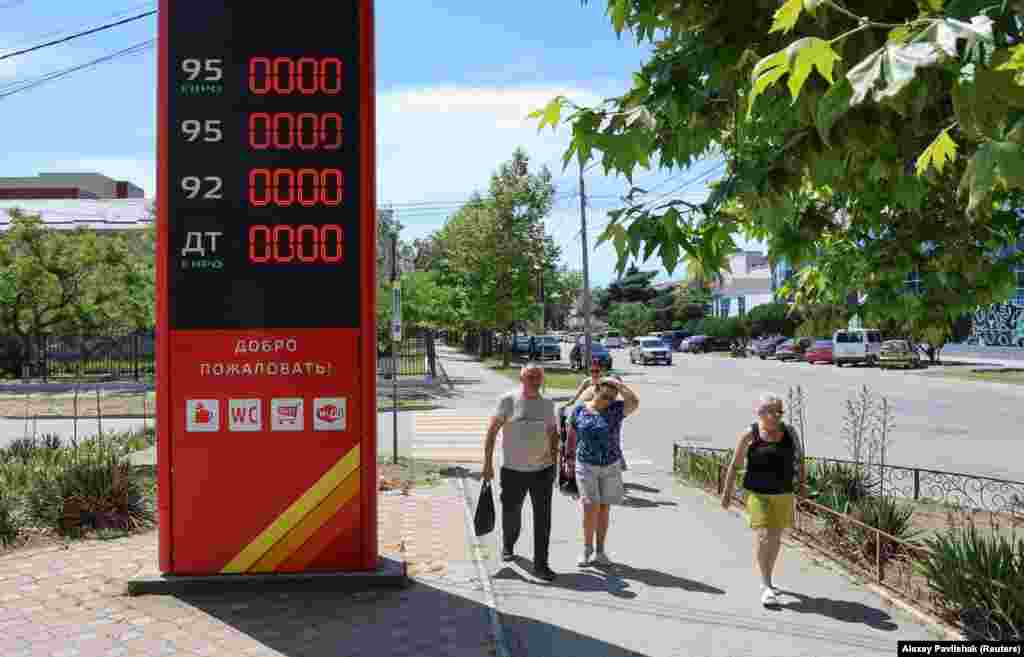
“We can’t fill up with gas — there isn’t any in Krasnodar,” a woman says in another video, pointing her cell phone camera at a Lukoil station’s price board on which every category is blank: No diesel and no gasoline of any octane level. “What is going on in this country?”
More than 1,000 kilometers to the northeast, in Tatarstan, another driver had the same question: “As always, the needle is on empty, and I’m just in a panic,” she said. “What’s happening?”
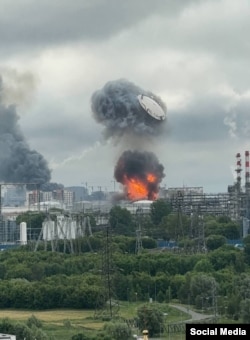
Flames and smoke rise from Moscow’s main oil refinery following a Ukrainian strike on the morning of June 18.
What’s happening is that in the fifth year of Russia’s full-scale invasion of Ukraine, Kyiv is fighting back with frequent strikes on refineries — part of a broader effort to curtail Russian oil exports – a key source of cash for the Kremlin’s war chest – and bring the consequences of the conflict, in which Russia has killed or wounded tens of thousands of Ukrainian civilians, to citizens across Russia.
The strikes on hydrocarbon infrastructure curtailed Moscow’s ability to profit from months of high global prices during the US-Israeli war with Iran, whose closure of the Strait of Hormuz increased demand for oil from other regions including Russia.
In May alone, Ukraine carried out at least 16 attacks on fuel-producing facilities in Russia, with drones targeting eight of its 10 biggest refineries, according to Bloomberg News.
There’s been no letup this month. The shortages in Tatarstan and a slew of other regions along the Volga River are the result, in part, of strikes early on June 12 on two refineries in the city of Nizhnekamsk. One of them, major oil company Tatneft’s Taneco facilty, is among the biggest in Russia.
‘I Need Gas Like Oxygen’
“My sister Alsu called and said, go fill up quickly — they’re restricting gas sales. I rushed off immediately, didn’t even change clothes. I’m in real estate — I need gas like oxygen,” a local woman says in a selfie video. When she reached a gas station, she found that customers were restricted to 25 liters per vehicle.
“Beautiful,” she said sarcastically. “It’s come to this.”
For older Russians, restricted sales, rationing, and long lines at gas stations may bring back memories of shortages that sometimes plagued the country amid economic troubles in the wake of the Soviet Union’s collapse in 1991.
When President Vladimir Putin launched Russia’s full-scale invasion in February 2022, he expected to succeed in subjugating Ukraine within days or weeks. More than four years later, Kyiv’s campaign of strikes on Russia is one of the factors that have changed the tenor of the war — a development that would have been almost imaginable at the start.
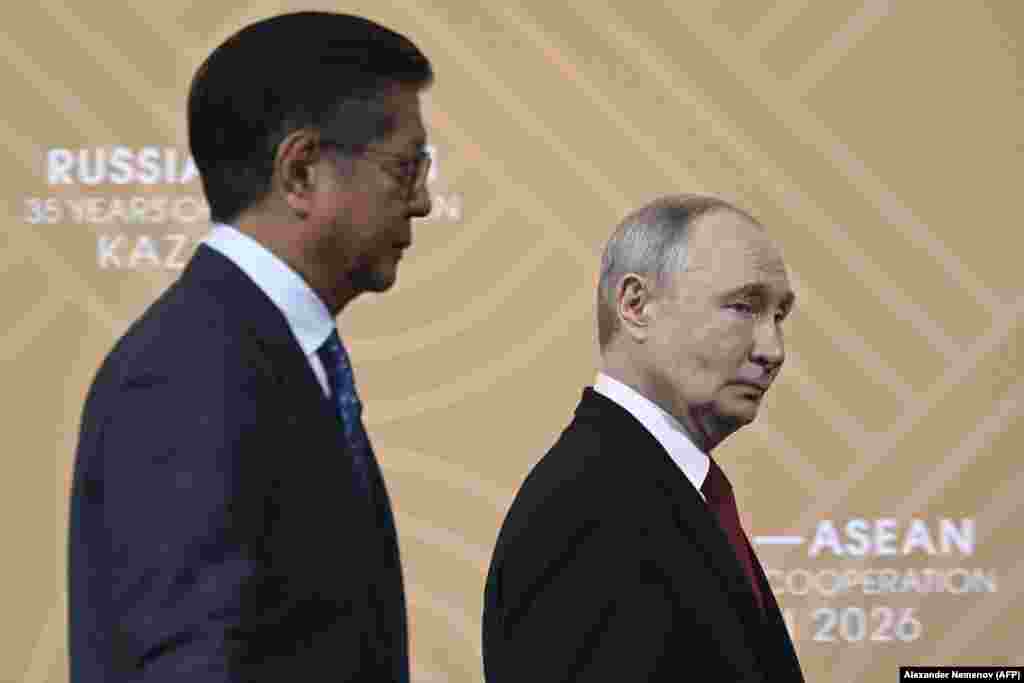
In early June, Ukrainian attacks on oil facilities near St. Petersburg clouded his showcase annual investment forum in his hometown. And the Tatarstan strikes came shortly before Putin hosted Southeast Asian leaders in Kazan, the regional capital, at a Russia-ASEAN summit on June 18.
This week, Ukraine had the Russian capital in its sights. It struck Moscow’s main oil refinery on June 16 and again on June 18, this time in what may have been the biggest attack on the city since the start of the Russian invasion in 2022, with the mayor claiming that 180 drones had been shot down.
Video footage showed multiple fireballs against a backdrop of black smoke over the sprawling facility in the Kapotnya district on Moscow’s southeastern edge, about 16 kilometers from the Kremlin. The refinery can normally process 11 million metric tons of oil a year and covers a significant share of Moscow’s supply of gasoline.
As Moscow Burns, Russia’s Fuel Crisis Spreads
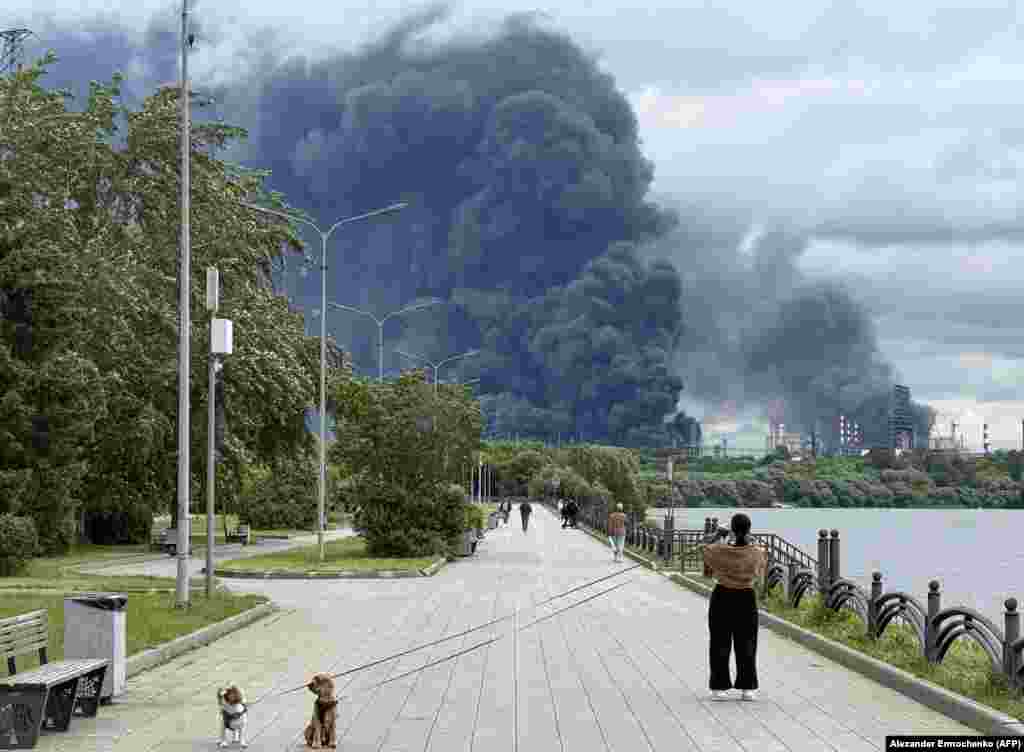
A massive Ukrainian strike on a Moscow oil refinery on June 18 is set to exacerbate a worsening fuel shortage that is spreading throughout Russia.
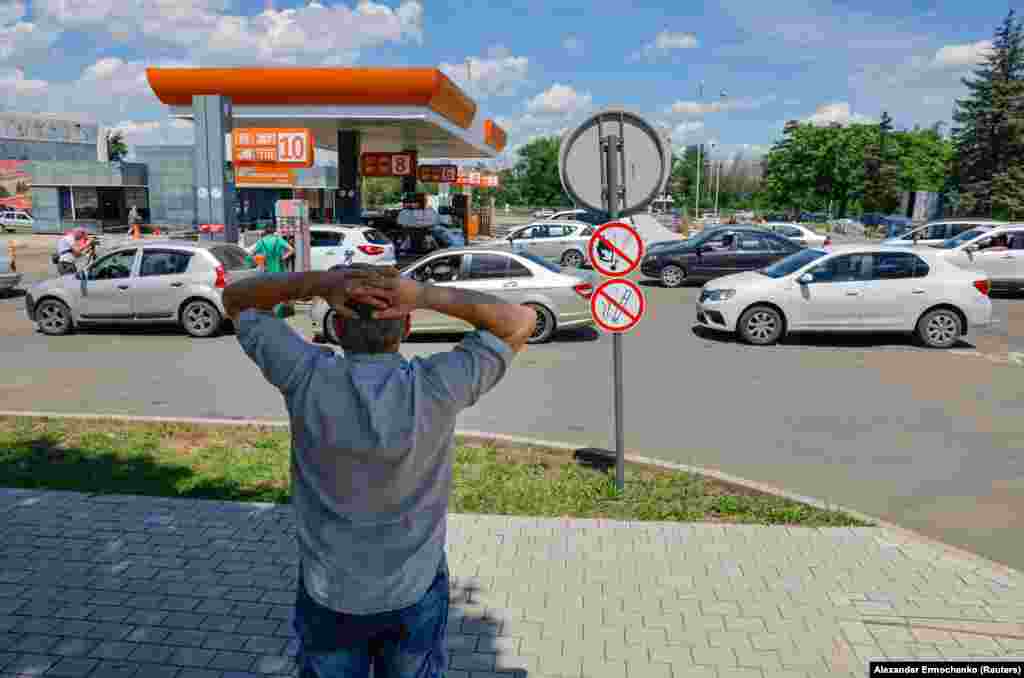
A massive Ukrainian strike on a Moscow oil refinery on June 18 is set to exacerbate a worsening fuel shortage that is spreading throughout Russia.
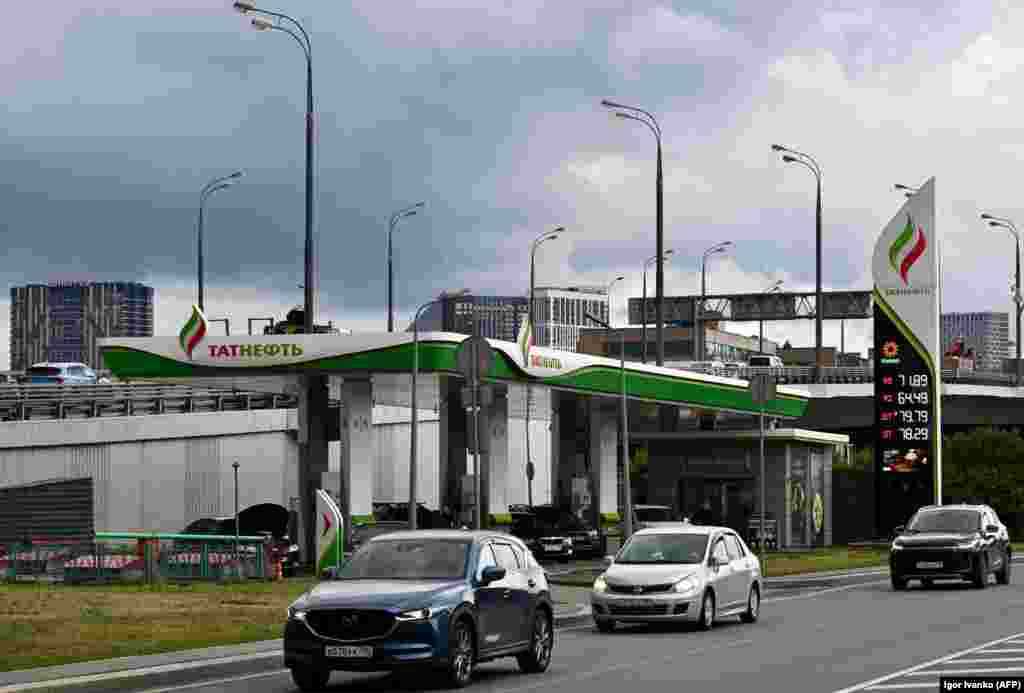
A massive Ukrainian strike on a Moscow oil refinery on June 18 is set to exacerbate a worsening fuel shortage that is spreading throughout Russia.
A massive Ukrainian strike on a Moscow oil refinery on June 18 is set to exacerbate a worsening fuel shortage that is spreading throughout Russia.
A massive Ukrainian strike on a Moscow oil refinery on June 18 is set to exacerbate a worsening fuel shortage that is spreading throughout Russia.
A massive Ukrainian strike on a Moscow oil refinery on June 18 is set to exacerbate a worsening fuel shortage that is spreading throughout Russia.
A massive Ukrainian strike on a Moscow oil refinery on June 18 is set to exacerbate a worsening fuel shortage that is spreading throughout Russia.
A massive Ukrainian strike on a Moscow oil refinery on June 18 is set to exacerbate a worsening fuel shortage that is spreading throughout Russia.
Russian authorities may avoid major gas shortages in the capital. But analysts said the strikes may have what for Kyiv is a desired effect on Muscovites who have been partially shielded from the conflict, with most of the military’s manpower coming from poorer regions where high pay and a lack of prospects are incentives to fight in a war that has killed half a million Russian soldiers, according to Western intelligence estimates.
“I am confident that the Moscow authorities will find a way to make up for the [fuel] shortfall, but…Moscow residents can 1781883666 see that a war is in fact under way,” independent economic analyst Andrei Makhovsky told Current Time.
‘The Country That Started It’
“For most of this war the residents of the capital have been insulated from it, with the violence of the war kept at a convenient distance on someone else’s territory. Smoke rising over Moscow entirely removes that distance,” Mick Ryan, a retired Australian major general who is now a senior fellow at the Lowly Institute, an Australian think tank, wrote in a blog post. “The war is, in a real sense, returning to the country that started it.”
More broadly, “it looks like this fuel crisis may turn out to be the toughest since the start of the war,” Makhovsky said, adding that Kyiv’s strikes on oil facilities will affect the summer holiday season and the grain harvest.
“[T]his crisis may be harsher than all previous ones, simply because the Armed Forces of Ukraine’s capabilities have grown,” he said. “Until now we hadn’t seen the Ukrainian forces hit Russian refining so much and so systematically.”
“If the diesel shortage continues and worsens, it could trigger a crisis in the agricultural sector, which in turn could lead to a food crisis, economic analyst Maksim Blant told RFE/RL’s Russian Service.
“The shortage could also affect the aviation industry. Some airports have already introduced restrictions on refueling. Aircraft are being fueled for exactly the distance specified in their flight plans, meaning pilots have virtually no margin for error.,” he said. “It could also hit the transportation sector, with truck drivers affected.”
Russia has reportedly banned jet fuel exports until the end of November and extended a provision allowing some refineries to sell gasoline and diesel fuel domestically that do not meet Euro-5 standards for pollutants.
Fuel shortages have been particularly severe on Ukraine’s Russian-occupied Crimean Peninsula, with Ukraine choking off some of the supplies by menacing the highway that leads from Russia to Crimea across Russian-held territory in southern Ukraine with “middle strikes” from drones and missiles. But shortages have struck across large swaths of Russia, and restrictions on sales have been imposed in many regions.
In addition to their practical effects, Kyiv’s strikes figure into the information war, or propaganda war, between Russia and Ukraine. Ukrainian President Volodymyr Zelenskyy calls the attacks “long-range sanctions,” and after the Moscow refinery hit on June 18, he urged Russian citizens to “sober up and put pressure on your leader.”
Russian officials, meanwhile, are struggling to play them down. Putin all but ignored the strikes near St. Petersburg during the June 3-6 investment forum, and he made no mention of the Moscow refinery hits at a press conference at the ASEAN-Russia summit in Kazan.
While regional media outlets have reported on fuel shortages and lines at gas stations, coverage of the Moscow refinery strike on the main state TV channels was scant on the morning of June 18 and all but disappeared from news programs later in the day.
“Everything’s fine, here’s [gasoline] everywhere,” one speaker on a state-TV talk show said this week, and prominent pro-Kremlin host Vladimir Solovyov who dismissed Russians who post images and videos about the shortages on social media as “hysterics.”
In mid-May, Moscow authorities introduced fines for the publication of images of the effects of Ukrainian strikes, and similar measures are in place in dozens of Russian regions as well as in occupied parts of Ukraine. But some propagandists and pro-war bloggers are demanding harsher punishments, and with a senior executive at state broadcaster VGRTK suggesting Russians who post material about the strikes should be tried for treason.
In a rare reference to the gasoline and diesel fuel shortages, Putin’s spokesman Dmitry Peskov said on June 1 that the “problems” in occupied Crimea “need to be solved” – but he did not say how.


