


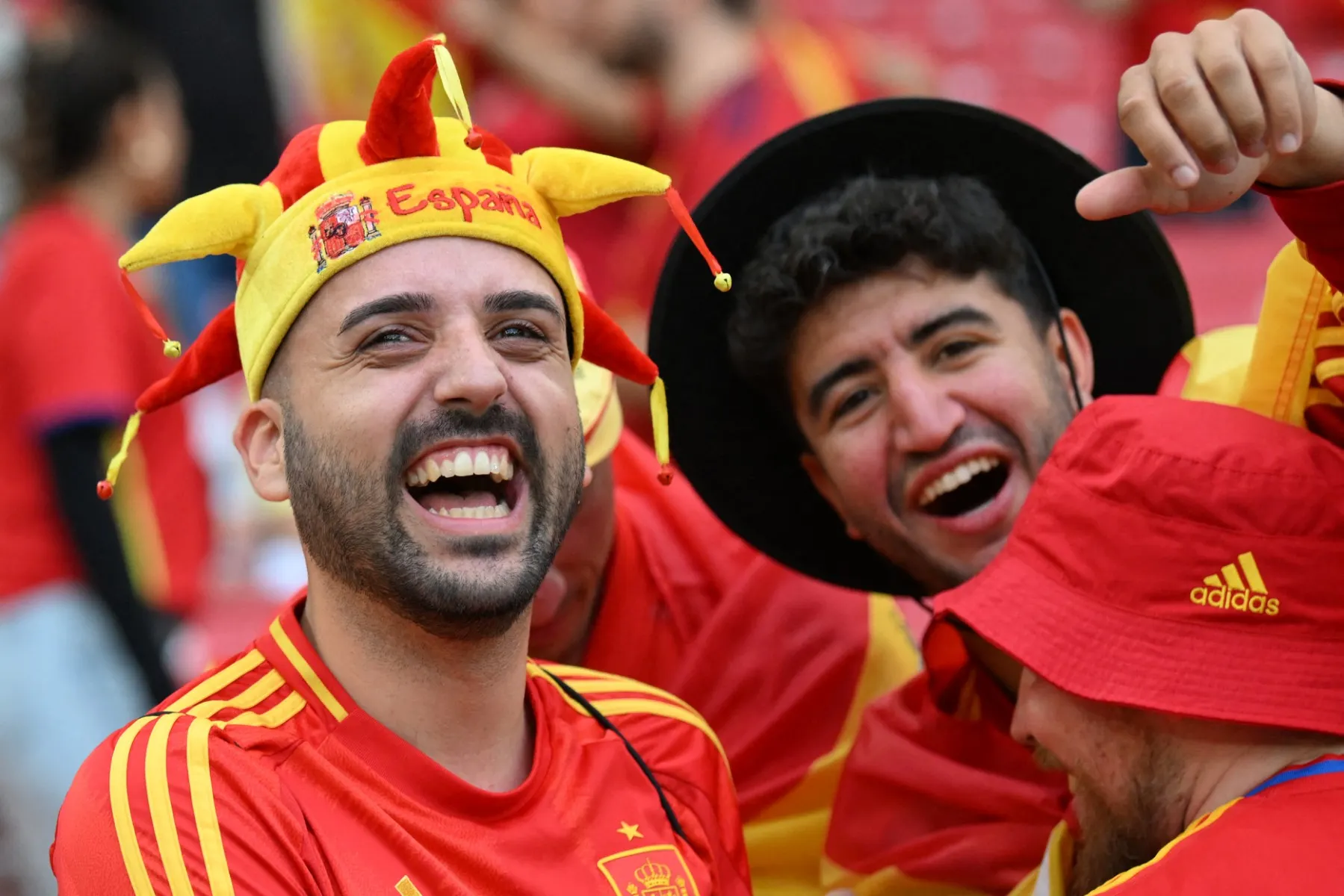
Want to learn to talk about football like a Spaniard? Whether it’s hurling mild abuse at refs, talking tactics or just knowing the basics, we’ve got you covered so you can speak and understand everything relating to ‘el fútbol’ more confidently.
As you probably know already, el fútbol is everywhere in Spain, from the kids kicking a ball in the local square, to the match playing on every TV bar, and the pensioner reading a copy of Marca (Spain’s most read newspaper, a football-heavy sports one).
The beautiful game is deeply intertwined with regional identity, politics, and daily life here.
Introduced by British immigrants in the late 19th century, el balonpíe (as it was formally known) evolved from early clubs like Recreativo de Huelva and Sevilla FC into a global powerhouse dominated by the culturally symbolic El Clásico rivalry between Real Madrid and FC Barcelona.
READ ALSO: The Scottish roots of Spain’s oldest football club
Domestically, elite clubs battle in LaLiga, while the national team honed the revolutionary, possession-heavy tiki-taka passing style pioneered by Guardiola’s Barça.
This tactical brilliance fuelled a historic golden era – including back-to-back European Championships in 2008 and 2012 and a FIFA World Cup triumph in 2010 – cementing Spain’s status as a dominant footballing powerhouse.
READ ALSO: How to watch the entire 2026 World Cup on TV in Spain
Now that the 2026 World Cup is underway, you may well be enjoying the global spectacle in Spain, listening to the Spanish commentators or overhearing conversations among Spaniards in your local bar.
This linguistic breakdown will help you to speak more confidently about football in Spanish, and understand what’s going on in conversations about football.
THE BASICS
El fútbol – Football or soccer. Fútbol used to be called balonpíe in Spanish but nobody
El partido – The match / game
El balón / La pelota – The ball
El campo / El terreno de juego – The pitch / field
La portería – The goal (as in the the physical structure with the two posts, the bar and the net)
El gol – The goal (getting the goal in the net)
El equipo – The team
El estadio – The stadium
Los aficionados/ La afición / Los hinchas – The fans / supporters
PLAYERS AND OFFICIALS
El jugador / La jugadora – The player. You can also say el futbolista or la futbolista (the footballer)
El portero / La portera – The goalkeeper
El defensa – The defender. More specially there’s los centrales (the centre halves) and el lateral derecho and el lateral izquierdo (right back and left back).
El centrocampista – The midfielder. When talking more specifically about positions it’s more common to use the word mediocentro than centrocampista. This includes los mediocentros such as el mediocentro defensivo (holding midfielder or defensive midfielder), el mediocentro ofensivo or mediapunta (attacking midfielder) and el mediocentro organizador (playmaker or central midfielder).
El delantero – The forward/striker. You have el delantero centro for centre forward and el extremo derecho and el extremo izquierdo to refer to the right winger and left winger.
El capitán / La capitana – The captain
El entrenador / La entrenadora – The coach / manager
El árbitro – The referee (also called el colegiado)
El juez de línea – The linesman / assistant referee
GAMEPLAY AND ACTIONS
Pasar – To pass
Tirar/ Chutar/ Disparar – To shoot
Marcar un gol/ Meter un gol – To score a goal
Parar – To save (by the goalkeeper)
Centrar – To cross
Regatear – To dribble
Cabecear / Rematar de cabeza – To head the ball
El saque de centro – Kick-off
El descanso – Half-Time
El tiempo añadido / El descuento – Injury time / Added time
La falta – The foul
Fuera de juego – Offside
La tarjeta amarilla – Yellow card
La tarjeta roja – Red card
El tiro libre / El saque de falta – Free kick
El penalti – Penalty
El saque de esquina / El córner – Corner kick
El saque de banda – Throw-in
THE WORD CUP AND OTHER TOURNAMENTS
La Selección Española – The Spanish national team, often just called La Selección.
La Roja – The nickname of the Spanish national side, ‘The Red One’.
El Mundial / La Copa del Mundo – The World Cup
La Eurocopa – The Euros
La fase de grupos – The group stage
Los octavos de final – The round of 16
Los cuartos de final – The quarterfinals
La semifinal – The semifinal
La final – The final
La prórroga – Extra time
La tanda de penaltis – Penalty shootout
El campeón / La campeona – The champion
FOOTBALL EXPRESSIONS
¡Gooooooool! – Spain and other Spanish speaking countries love to celebrate a goal with a very elongated gol (the longer you hold the “o”, the better).
¡Árbitro, la hora! – “Referee, look at the time!” (Said by fans when their team is winning and they want the match to end immediately).
¡A la calle! – ‘Send him to the street’, really meaning send the player off (also ¡expúlsalo! or ¡sácale roja!)
¡Árbitro vendido! – Comment to suggest that the ref has been bought by the opposition.
Hacer un caño / un túnel – To nutmeg someone (passing the ball between a defender’s legs).
Piscinero – A player who dives a lot.
Es un/ una crack – He/She is a legend. Yes, crack is used in Spanish to describe someone who’s very good at something, not just football.
Eres más malo que el hambre – ‘You’re worse than hunger’ is an expression in Spanish used to say someone is rubbish
Meterla por la escuadra – To score a goal in the top corner, also known as top bins.
Colgar las botas – just like in English, to hang up one’s boots in the sense of retiring from professional football.
Sudar la camiseta – ‘To sweat the jersey’, in other words to give it all for the team.


