


Although countries around the world agreed on ambitious biodiversity targets under the 2022 Kunming-Montreal Global Biodiversity Framework, their implementation has fallen short of expectations.
Keystone-SDA
More than 1,000 experts from over 70 countries will convene in Davos, in southeastern Switzerland, from June 14–19 for the World Biodiversity Forum to explore solutions to global species extinction.
+Get the most important news from Switzerland in your inbox
“We must go beyond simply describing the state of biodiversity and take concrete action,” Gabriela Schaepman-Strub tells the Keystone-ATS news agency. The professor of Earth system science at the University of Zurich is chairing this year’s World Biodiversity Forum 2026 (WBF2026).
Although countries around the world agreed on ambitious biodiversity targets under the 2022 Kunming-Montreal Global Biodiversity Framework, their implementation has fallen short of expectations. “Efforts have intensified at the international level,” says Schaepman-Strub. “But we are not yet on track to meet these targets by 2030.”
Swiss biodiversity under pressure
The gap between targets and their implementation is also evident in Switzerland.
“Biodiversity in Switzerland remains under severe pressure,” says Lukas Berger of the Biodiversity Forum at the Swiss Academy of Sciences (SCNAT), the country’s scientific centre of expertise on this issue and ecosystem services. It is true that the decline has slowed since the start of the millennium and sporadic positive developments are being observed. But one-third of all species in Switzerland remain under threat.
More
More
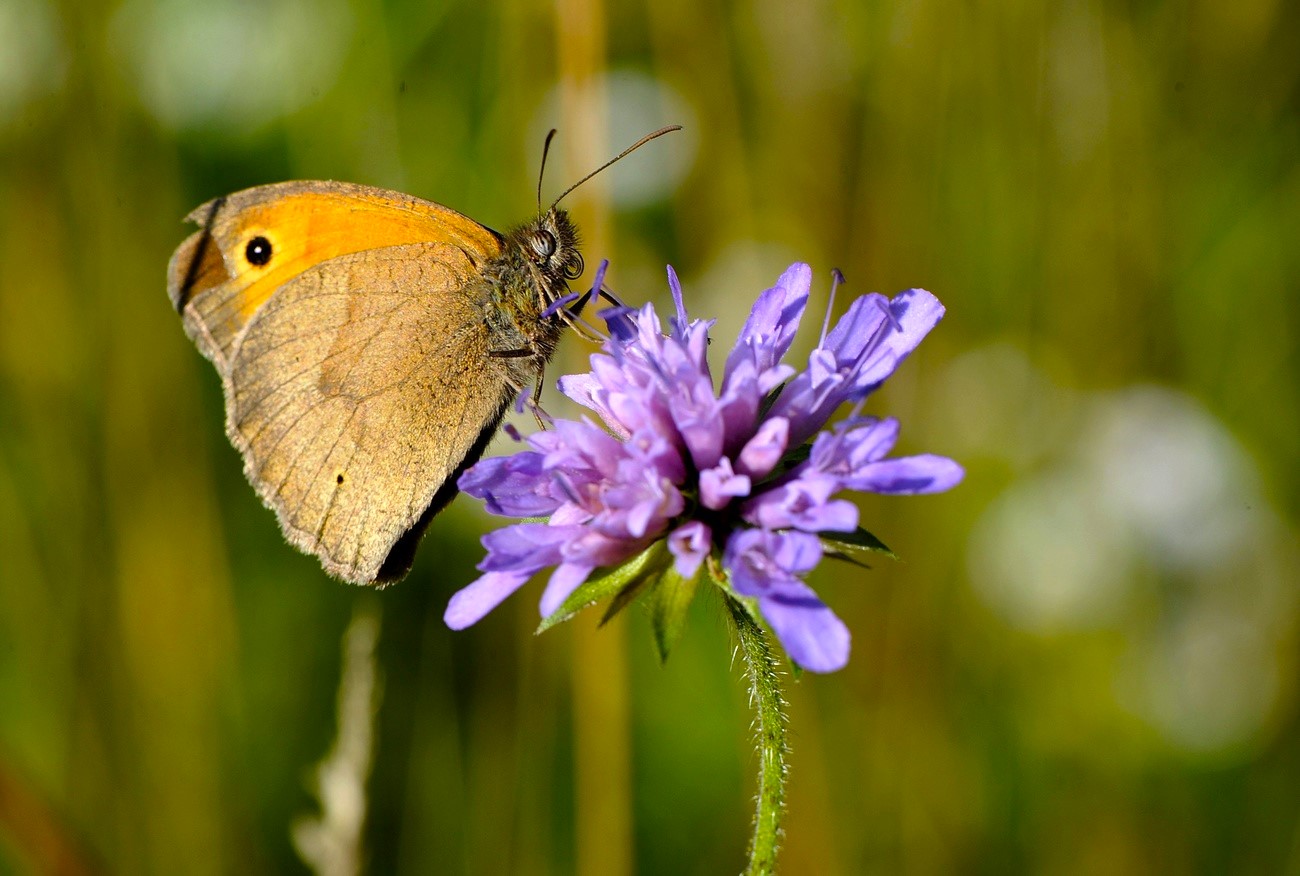
Biodiversity loss in Switzerland in six graphs
According to Berger, it is not so much a lack of strategies or laws that is the problem – what matters is implementation. “The laws must be enforced,” she says.
There are also conflicting incentives. “On the one hand, we try to promote biodiversity through funding. On the other, we provide far more substantial subsidies that cause serious harm to it,” explains Schaepman-Strub.
The expert also highlights Switzerland’s international responsibility.
“We must speak honestly about the international footprint of our financial and manufacturing sectors,” she says. Biodiversity loss occurs not only within national borders, but also along global supply chains and as a result of overseas investments.
More
More
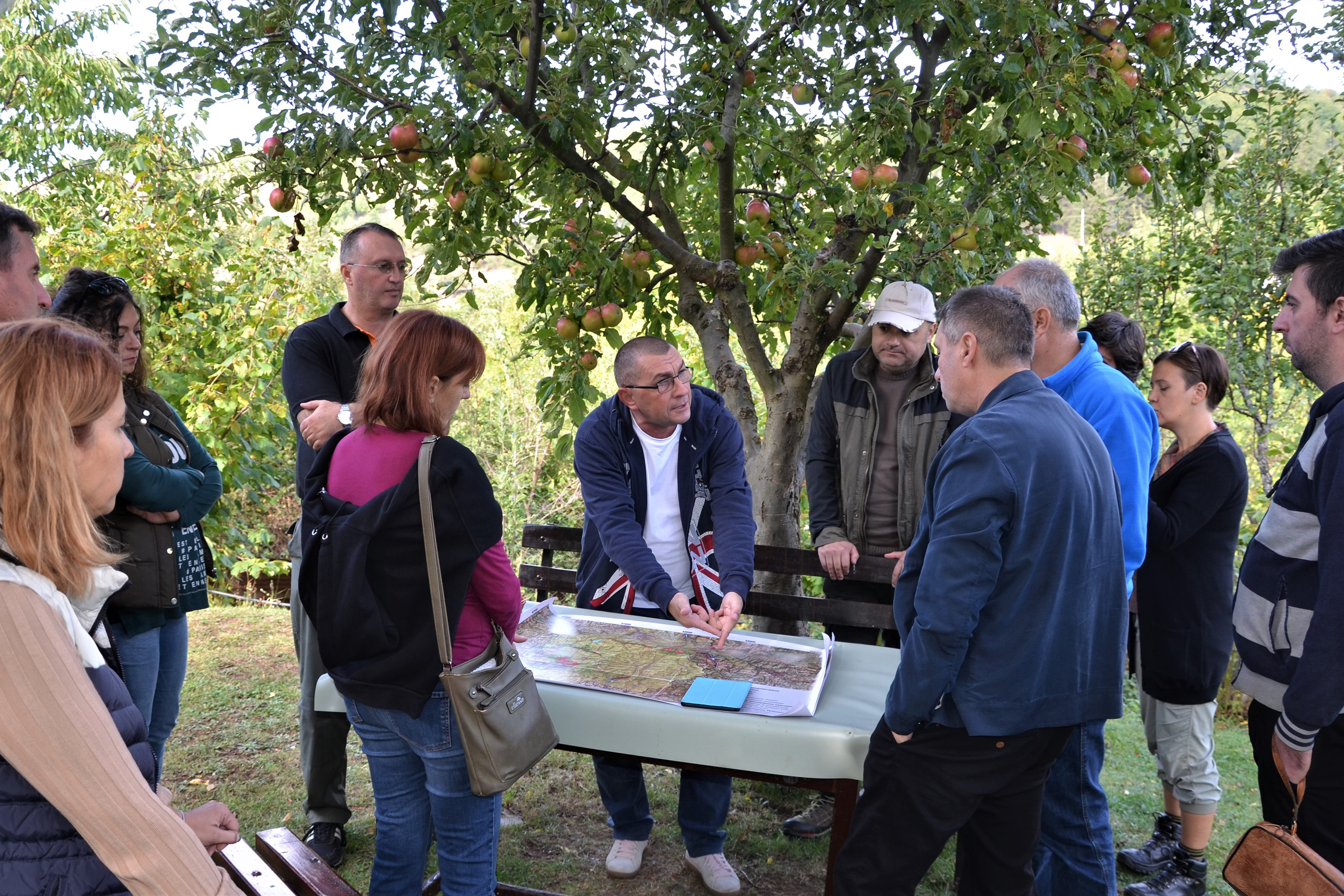
Species extinction: how Switzerland is working for global biodiversity
In search of new solutions
The WBF2026 is set to open against this backdrop, organised by the University of Zurich and entitled ‘Leading Transformation Together’.
Unlike UN conferences on biodiversity, negotiations between states are not the focus of the debate in Davos. The forum serves as a platform where science, business, politics and civil society seek solutions together. “Its aim is rather to devise truly innovative solutions,” explains Schaepman-Strub.
Participants will incorporate this message into a resolution to be adopted at the end of the forum. In it, they will urge governments, businesses and society to take the decisive step “from declarations of intent to implementation”.
Biodiversity, the foundation of life
“We are trying to reflect, across different sectors of society, on what biodiversity should look like in a hundred years’ time,” explains Schaepman-Strub. These visions of the future must help define concrete measures: from spatial planning to subsidies, via corporate strategies and consumer choices.
According to the experts, protecting biodiversity is not a lost cause. “If you take the right approach, you get results,” says Berger. Improvements are often visible at first glance, for example in gardens, on reclaimed land or in interconnected habitats.
Berger says it is therefore essential not to present biodiversity merely as a story of decline: “Biodiversity is our lifeblood.” The protection of species and habitats is not an end in itself. Clean water, fertile soils, pollination and recreational spaces are services provided by nature, on which human nutrition, health and well-being also depend.
More
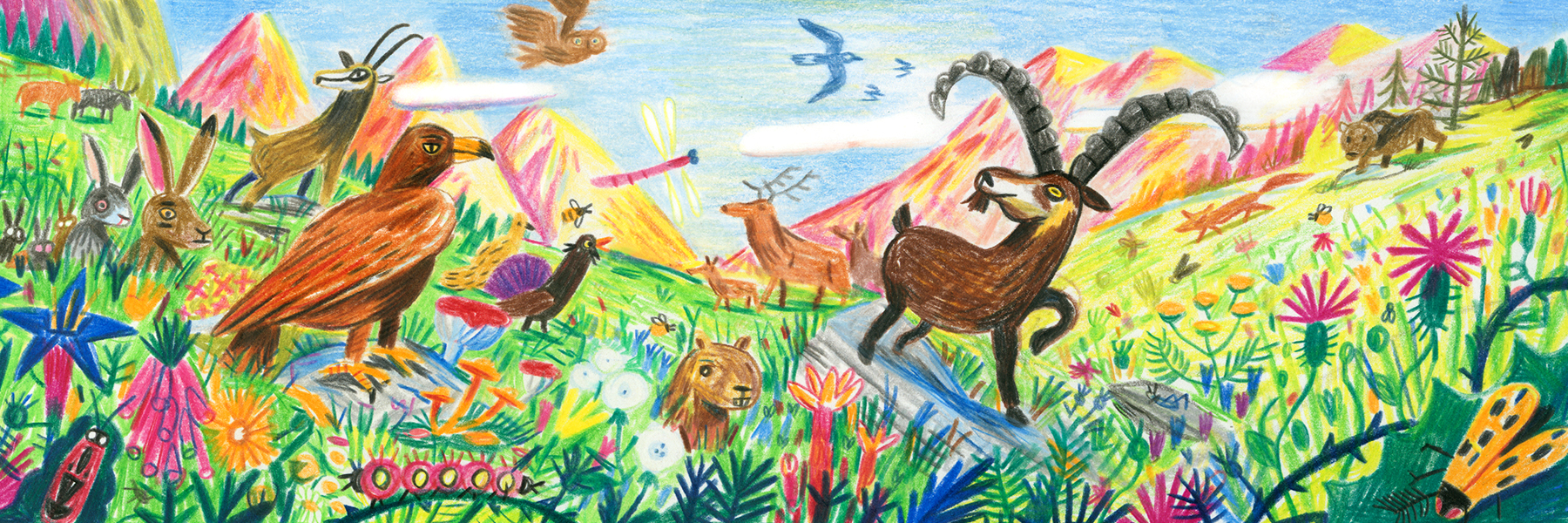
The Swiss Alps are beautiful, but are they biodiverse?
Adapted from Italian by AI/sb
We select the most relevant news for an international audience and use automatic translation tools to translate them into English. A journalist then reviews the translation for clarity and accuracy before publication.
Providing you with automatically translated news gives us the time to write more in-depth articles. The news stories we select have been written and carefully fact-checked by an external editorial team from news agencies such as Bloomberg or Keystone.
If you have any questions about how we work, write to us at english@swissinfo.ch


