


“Every day, cases are being identified in new health zones. And that reflects really the scale of this outbreak, a scale that is much bigger than what is being detected and the high mobility of the population in this part of the DRC,” said Dr Olivier le Polain, unit head epidemiology and analytics for response at the World Health Organization (WHO).
In the approximately three weeks since the fast-moving outbreak was confirmed, the DRC health authorities have reported 676 cases and 136 deaths from the rare and deadly Bundibugyo species of Ebola virus.
Infections have been identified in a zone spanning from Aru in the north of Ituri province to Miti Murhesa in South Kivu, some 1,000 kilometres. “And we have 34 health zones affected as of yesterday, so, those health zones [with Ebola] continue to expand, with new areas in North Kivu which also reported [cases] yesterday,” Dr le Polain told journalists in Geneva, via video from Beni.
Those leading the response stressed that many youngsters in the region are malnourished and unvaccinated against preventable illness. This means that they are extremely vulnerable to disease in the resource-rich region where a humanitarian crisis is already playing out, caused by decades of fighting between government forces and armed militia.
Households the new target
To date, most infections have been among adults going about their daily lives, “but as the outbreak evolves, we must be prepared for increasing household transmission which means we may see more children affected in the days ahead”, warned Dr Douglas Noble, UNICEF Global Lead for Public Health Emergencies and Global Incident Manager for Ebola.
“The point is, these are already very vulnerable children, so the capacity for this community to absorb any additional stressors was already stretched to breaking point,” he said, noting that more than half of children under five in Ituri province are “chronically malnourished”. More than one in five are also “zero dose” children, meaning that they have never had their first dose of diphtheria, tetanus and pertussis vaccine.
Estimating the number of children who may be affected is problematic because sufficient surveillance tracking data is not yet available.
Nonetheless, past Ebola outbreaks in DRC have shown that children “made up a significant share of cases and an even greater share of deaths, with the youngest facing the highest fatality rates and many left orphaned or separated from caregivers”, Dr Noble explained.
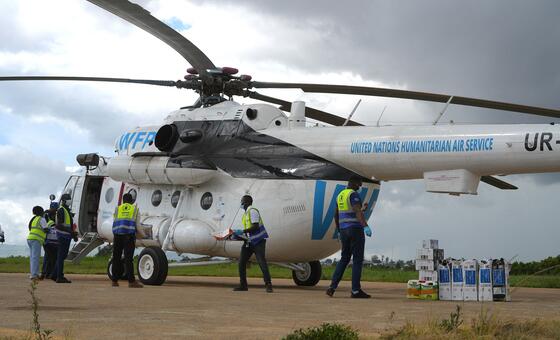
As part of its six-month response to help 3.7 million people, the agency has dispatched eight transport flights with more than 100 tonnes of emergency humanitarian supplies to DRC, with support from the European Union.
The emergency cargo includes personal protective equipment for frontline health workers, medicines, hygiene materials and medical supplies to confront the virus in affected communities.
‘Schools can stay open’
Although Ebola can be lethal, it transmits very differently from COVID and commonly via body fluids, so children who can go to school should continue to do so, the UNICEF official stressed. “There’s no reason for a school to close. Infection prevention and control measures do have to be taken and there does have to be education within the school, amongst the teachers and the staff and amongst the children.”
Unlike for Ebola-Zaire strains of the disease, there are currently no approved Bundibugyo virus-specific therapeutics or vaccines. This highlights the need for greater support for surveillance efforts to contain transmission, said Dr le Polain. “We’re now at just over 70 per cent in terms of the contacts that are being appropriately traced. That’s a huge improvement from where we were about a week or two ago, but it’s still too low to ensure appropriate control.”
Improving local testing capacity is another key factor in overcoming the health threat as the full scale of the outbreak is “not yet clear”, the WHO official explained. He noted that in Beni a testing laboratory processed 500 tests on Thursday alone. “That will really help get clarity about the scale of the outbreak in Beni as well,” he added.
For its part, UNICEF has also deployed more than 1,600 community health workers and mobilisers, and 24 decontamination teams, already reaching more than 160,000 households.
“We can spare children the worst of this outbreak. Fast detection, strong paediatric care, monitoring of contacts and communities that are informed and engaged can help bring this outbreak under control,” said Dr Noble. “What we now need are the resources, humanitarian access and the trusted communities to succeed.”


