

Switzerland records a spike in violent crime; concrete blocks to ensure the closure of Geneva’s borders with France; and more news in our Tuesday roundup.
Switzerland recorded a spike in violent crimes – but why?
Homicides, rapes and incidents of domestic violence increased by 8.1 percent in Switzerland in 2025.
Experts have several explanations for these rising numbers – unusual for Switzerland.
For instance, there is a greater willingness among victims to file complaints in cases of sexual assault or domestic violence.
Regarding attacks in public spaces, some researchers point to the influence of constant exposure to images of war and violence on social media and in the news.
According to Sandrine Haymoz, professor at the University of Applied Sciences and Arts in Western Switzerland (HES-SO), this overexposure can contribute to “normalising” certain aggressive behaviour.
Covid-era concrete blocks will ensure the closure of Geneva’s borders with France
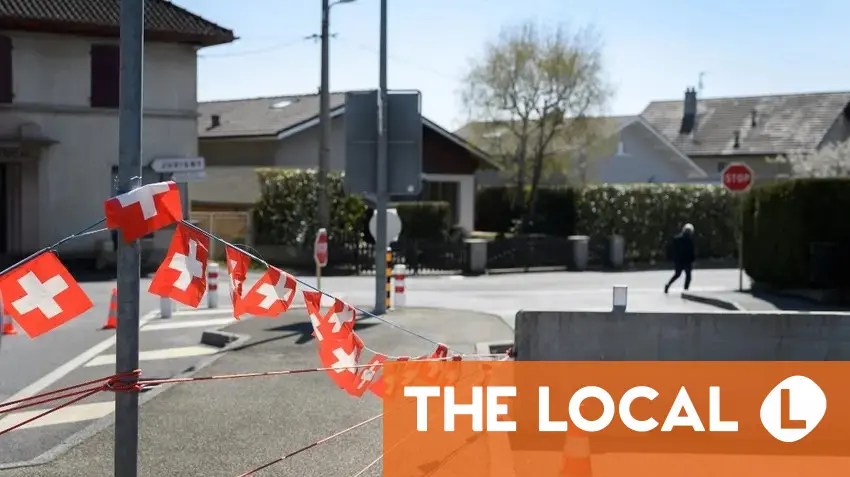
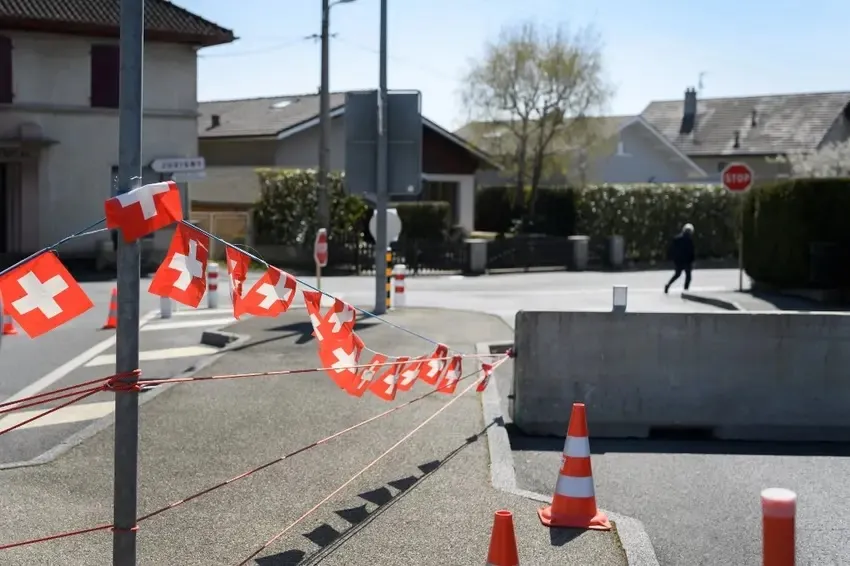
Just like during the Covid pandemic, when travel restrictions were in place and borders were closed, concrete blocks will once again bar access to and from Switzerland at numerous Geneva border crossings.
The blocks will be placed before the beginning of the G7 summit in Evian on June 12th and remain until June 18th.
During this time only seven border points will be open between France and Geneva – Anières, Moillesulaz, Thônex-Vallard, Bardonnex, Perly, Meyrin, and Ferney-Voltaire – where checks of passing vehicles will be more thorough and systematic.
READ MORE: The disruptions in and around Geneva you need to be aware of in June
Switzerland will have a national debt enforcement register
Following the National Council, the Council of States also unanimously approved on Monday the introduction of this new system.
Its goal is to centralise the database to simplify procedures and avoid abuse, particularly by people who move to escape their debts.
That’s because currently, debt extracts are limited to the district where a person lives. There are just over 340 debt enforcement offices in Switzerland, each keeping its own records.
Geography determines a person’s level of education
According to new data from the Federal Statistical Office (FSO), 91.7 percent of young people who turned 15 between 2010 and 2014 obtained a post-secondary level qualification 10 years later.
Where they live plays a significant role in the level of education attained, the FSO reported.
For instance, it is lower in large urban municipalities such as Zurich (88 percent), Basel (86 percent), and Geneva (82 percent) – though there are significant differences between districts.
For instance, in the Zurich district of Langstrasse, 80 percent of young people have post-secondary education, but that figure is 96 percent in Fluntern.
The FSO did not explain reasons for these disparities.
If you have any questions about life in Switzerland, ideas for articles or news tips for The Local, please get in touch with us at news@thelocal.ch


