


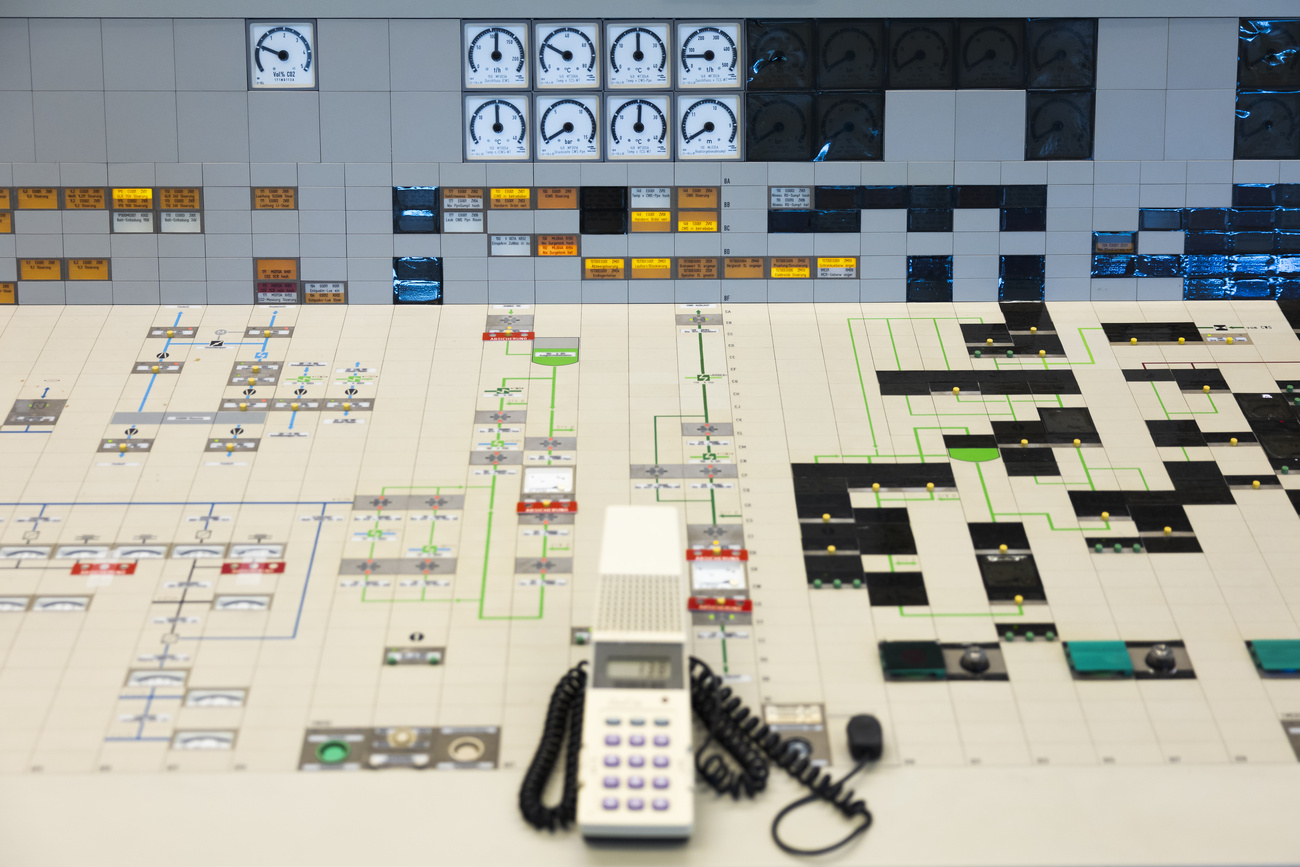
Control room of the Muehleberg nuclear power station
Keystone / Peter Klaunzer
Nearly 60% of the Swiss population supports the construction of new nuclear power plants, according to a poll commissioned by the Swiss Association of Electricity Companies (AES).
+ Get the most important news from Switzerland in your inbox
This renewed popularity of nuclear power reflects a growing fear of electricity shortages. The House of representatives is scheduled to decide on the future of Swiss energy policy during a parliamentary debate on Monday.
According to the surveyExternal link conducted by the GFS.bern institute, 79% of respondents want to continue operating nuclear power plants as long as they remain safe, while the construction of new generation facilities receives 59% support.
+ I went solar in Switzerland – I now know why many people don’t
“Security of supply is a major issue in Switzerland in 2026. We are wondering whether renewable energies will be sufficient. We are therefore looking for alternatives and nuclear power is one of them,” Urs Bieri, political scientist at gfs told Swiss public broadcaster RTS.
Nevertheless, while nuclear power is gaining popularity, those surveyed still prefer renewables to cope with the shortage.
The fear of electricity shortages stems from a message relentlessly repeated by the government and electricity companies for several years. The international geopolitical context isn’t helping, according to Patrick Berstchy, vice-president of AE) and Director of Networks at Romande Energie.
Energy mix needed
“In 2022, a shortage was imminent,” he told RTS. “And today, with the closure of the Strait of Hormuz, we see that energy issues are once again at the forefront of concerns for the Swiss.”
More
More
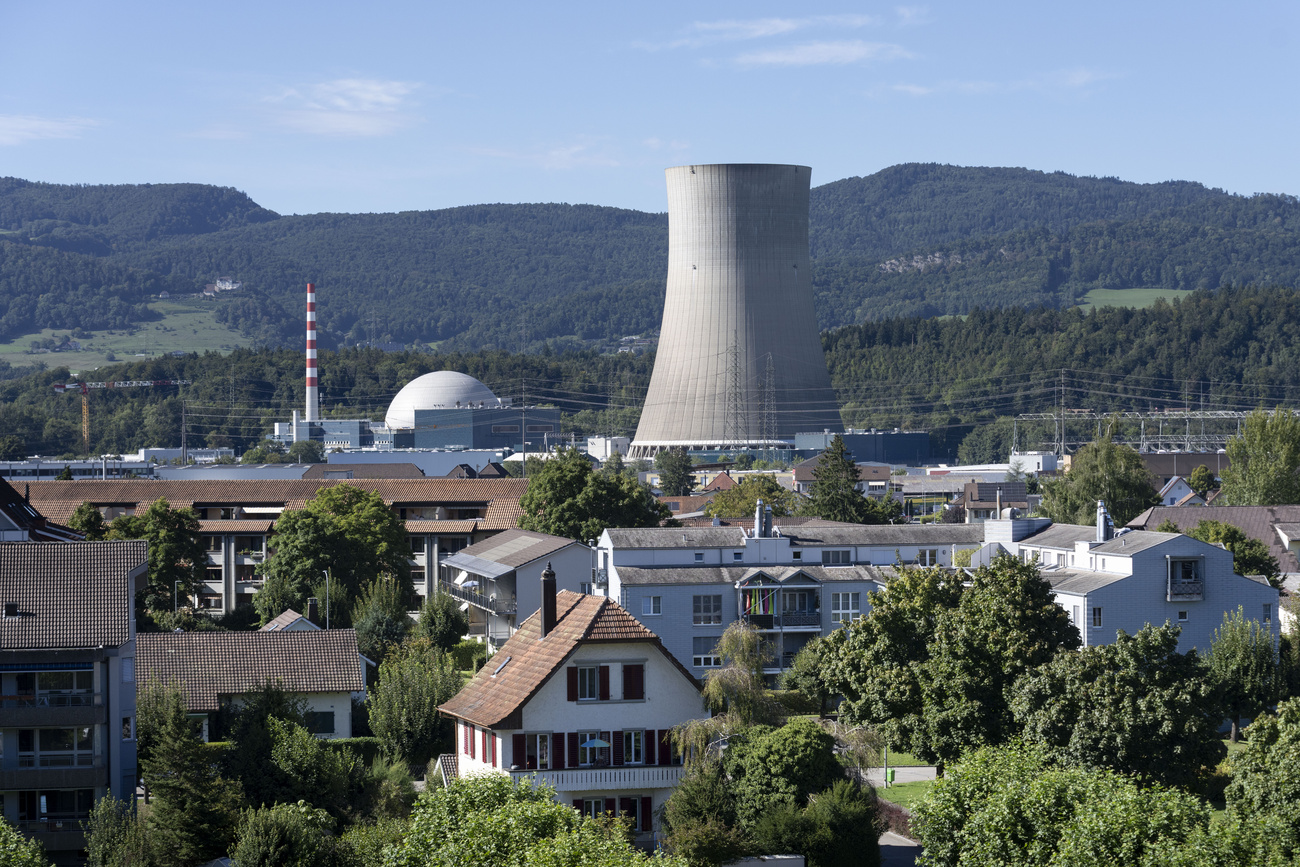
Switzerland edges toward lifting ban on new nuclear plants
He points out that the sector has three priorities: developing renewable energy, finding a way to store energy daily, and facilitating the process of building new power plants, whether renewable, hydroelectric, or nuclear. “We mustn’t pit different forms of energy against each other. We’ll need them all,” he said.
The ban on building new nuclear reactors in Switzerland could be lifted. The House of Representatives is scheduled to debate the counter-proposal to the Stop Blackout initiative starting Monday.
The proposal aims to authorise the construction of new power plants, but currently lacks both a concrete plan and funding. The Senate has already approved the proposal, and according to a poll, 55% of respondents support it.
Parliamentarian Benjamin Roduit, a centrist, is among those who have changed their minds. A staunch supporter of phasing out nuclear power in 2017, he now wants to reopen the door to nuclear energy.
Parliamentary debate
“Somewhat naively, we thought that solar, hydro, and wind power would be able to replace nuclear. That’s not the case at all… We’ve fallen far behind with renewable energies and we won’t be able to meet the population’s needs,” he said.
Faced with this resurgence of nuclear power, the Greens are brandishing the threat of a referendum. “I deeply regret that the party that supported us in phasing out nuclear power is now backtracking,” said parliamentarian Léonore Porchet.
She points out several drawbacks: “Nuclear power is expensive, takes a very long time to set up, is dangerous, and we don’t know what to do with the waste. These issues are not at all addressed by the proposal being made to parliament,” she said.
The parliamentary debate promises to be lively with nearly a hundred speakers planning to take the floor.
Translated from French by AI/mga
We select the most relevant news for an international audience and use automatic translation tools to translate them into English. A journalist then reviews the translation for clarity and accuracy before publication.
Providing you with automatically translated news gives us the time to write more in-depth articles. The news stories we select have been written and carefully fact-checked by an external editorial team from news agencies such as Bloomberg or Keystone.
If you have any questions about how we work, write to us at english@swissinfo.ch.


