


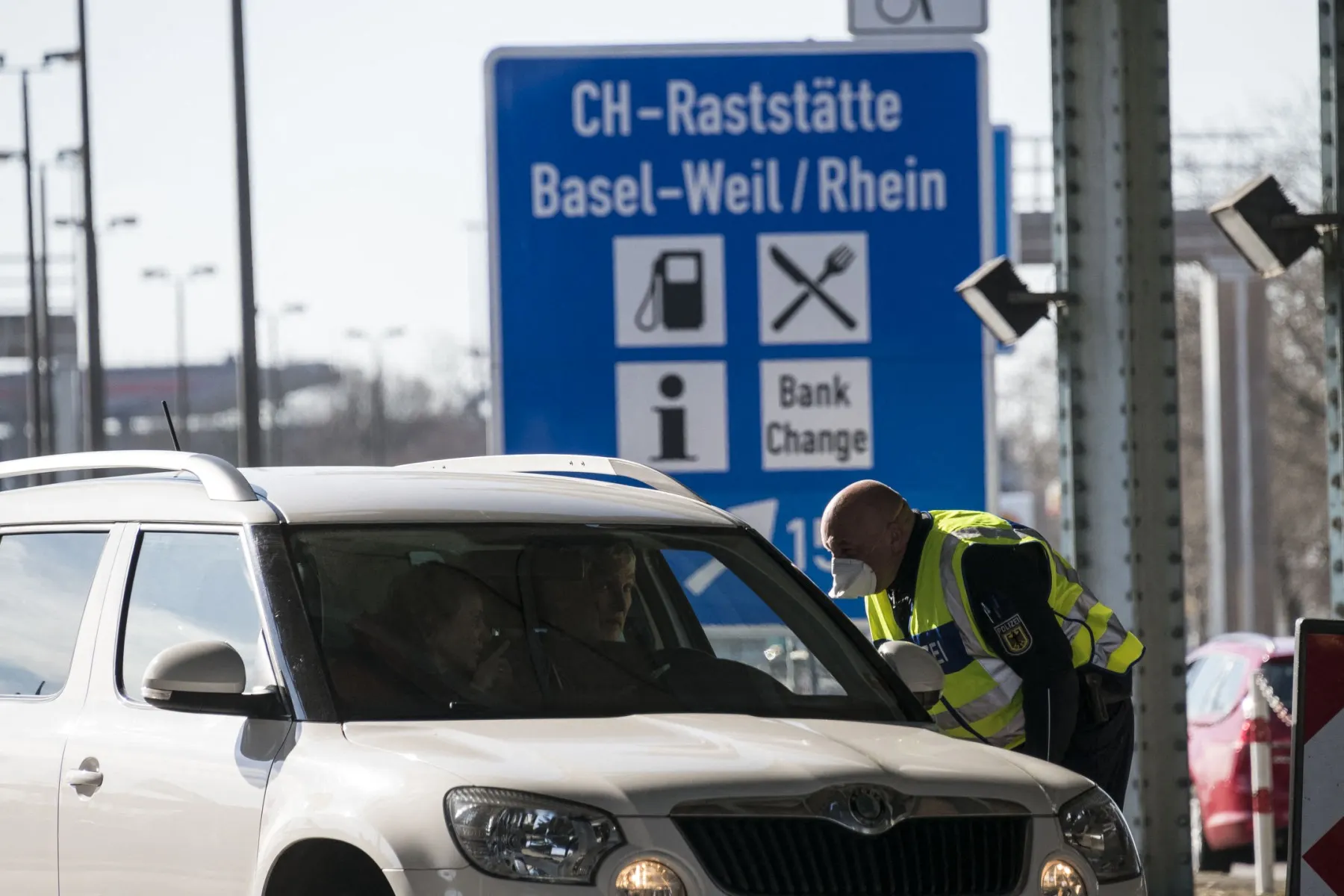
If the far-right’s ‘No to 10 million’ initiative is accepted in the June 14th referendum, Switzerland could become a hub of criminal and terrorist activity, a law enforcement official said.
This warning is coming from Karin Kayser-Frutschi, president of the Conference of Cantonal Police Directors.
Concretely, if the ‘No to million’ initiative is approved, Switzerland’s security would be “seriously compromised,” she said.
That’s because “measures aimed at curbing immigration could limit or even end the country’s access to the EU’s police database.”
This would diminish Switzerland’s capacity to fight against organised crime, terrorism, and human trafficking.
Consequently, “Switzerland would end up becoming an isolated island within Europe, a potential haven for organised crime,” she pointed out, adding that before casting their votes, the public needs to be aware of the “risks involved.”
‘Direct repercussions’
This is not the first time Swiss law enforcement community is sounding the alarm about the impact the ‘yes’ vote would have on the country’s security.
The umbrella group for police officers (VSPB) said in April that “adoption of the initiative would jeopardise Switzerland’s existing bilateral agreements with the European Union, thereby having direct repercussions for security within Switzerland.”
Among them, the loss of access to the Schengen Information System (SIS) – Europe’s largest database for security and border management – “would tangibly undermine police operations” in Switzerland.
“These bilateral agreements serve as a fundamental bedrock for international cooperation in the fight against crime.,” the VSPB said. “Should they be revoked or weakened, the consequences for daily police work would be immediate and disastrous: reduced access to information, delayed investigations, and more arduous conditions in the battle against cross-border crime.”
Loss of ‘cooperation across national borders’
Therefore, “operational cooperation with the police authorities of neighbouring countries would become significantly more complicated” if the SVP initiative were to be accepted.
“Today, these proven instruments enable rapid, coordinated, and effective cooperation across national borders,” the association pointed out. “They have demonstrated their value in practice and are central to the safety and security of the [Swiss] population.”
For instance, according to the Federal Office of Foreign Affairs, the agreement between Switzerland and Europol, the EU’s law enforcement agency, “improves cooperation between police authorities in the prevention and fight against serious and organised international crime and terrorism” – an advantage that could be lost with the acceptance of the initiative.


