


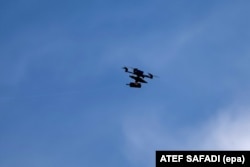
When an armed quadcopter buzzed over Lebanon’s southern border into Israel on May 19, one Israel Defense Forces (IDF) soldier raced up a nearby hill and attempted to snag the drone’s fiber-optic control cable with a piece of scrap metal.
The remarkable scene captured by photojournalists at the militarized border provided the clearest example yet seen of the fiber-optic drones — first pioneered by Russian soldiers and now ubiquitous in Ukraine — being used by Iranian-backed Hezbollah militants.
It also highlights the vulnerability of even the world’s most advanced militaries to the cheap drone innovation.

In the past month, Hezbollah militants have killed three IDF soldiers and one Israeli civilian using kamikaze drones controlled through kilometers-long fiber-optic cables.
In response, Israel’s Prime Minister Benjamin Netanyahu announced the formation of a team to counter the tethered drone threat. Israel is furnishing the task force with an “unlimited budget,” amid growing controversy in the country over the lack of preparedness for a weapon that first emerged in 2024.
The IDF reportedly declined earlier offers from Kyiv to train Israeli forces in anti-drone techniques, but on May 17, Netanyahu claimed he warned of the threat of weaponized quadcopters years before the current crisis over the devices.
“After I saw the war in Ukraine, I thought this could also serve as a tool on our battlefield,” Netanyahu said at a government meeting.
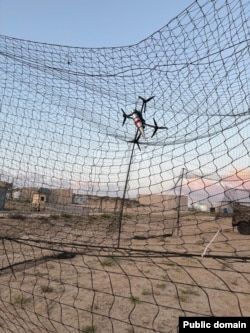
Unlike radio-controlled drones, which are vulnerable to electronic jamming and require a clear line of sight to a transmitter, fiber-optic drones can be navigated to virtually anywhere there is space to fly.
In Ukraine, veteran drone pilots have been documented flying their devices through windows and searching for soldiers in buildings several kilometers inside enemy territory.
That freedom of flight, limited only by battery life and the length of the drone’s cable, raises the specter of militants emerging from tunnels to launch a drone before operating it unseen from beneath the ground.
Tethered quadcopters leave no traceable radio or heat signature, and are small enough to evade many radar systems, provided they fly low against a cluttered background.
Some experts believe the emergence of fiber-optic drones piloted by Hezbollah militants indicates Russia is feeding Iran intelligence about this technology, others believe an arguably more worrying potential is more likely.
Nicole Grajewski, an expert on Russian-Iranian relations, told RFE/RL that the fiber-optic drone photographed on May 19 (below) appears identical to configurations used by Russian forces in Ukraine.
She points to large stockpiles of Russian weaponry held by Hezbollah as a potential indicator that the tethered drone technology is “either coming directly from the Russians or through the Iranians via Russia.”
Moscow has denied supplying weapons to Hezbollah.
But with the Russian invasion of Ukraine being the most visually documented war in history, other analysts believe Hezbollah militants have been able to piece together their own hardware and tactics based on videos from the Russian invasion.
“It doesn’t take much intelligence,” Yaakov Lappin told RFE/RL. “Hezbollah observed FPV drones in use with significant effect on Ukraine’s battlefields and decided to adopt it.” The Israeli military analyst adds that all components for the drones, aside from the explosive warheads, “are freely available off the shelf on online websites.”
Some Chinese portals openly market fiber-optic drone components, including spool containers holding up to 30 kilometers of cable.
Monika Ahlborn, an analyst behind the popular Drone Wars social media account also believes the emergent Hezbollah quadcopters could be a simple case of imitation. She points out that visibility through social media “means concepts, configurations, and tactics can diffuse relatively quickly across different theaters.”
Similar dispersion of battlefield innovations has been seen in recent years, including the use of drone-dropped bomblets. The tactic was first seen in propaganda videos by the extremist Islamic State group in early 2017 and later adopted by fighters in Ukraine and elsewhere.
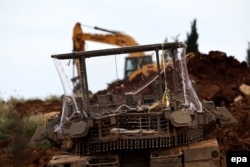
Lappin says, “None of the existing [Israeli] defenses are designed for the threat of tethered FPV drones.”
Early efforts being floated in the country to counter the new threat, he says, include “interceptor drones, electro-optic and acoustic sensors, computerized gunsights, and potentially lasers and/or machine guns directed by sensors.”
Both Russia and Ukraine have developed kinetic anti-drone devices that include lightweight hand-launched interceptors and net guns that have had some documented success on the battlefield.


