


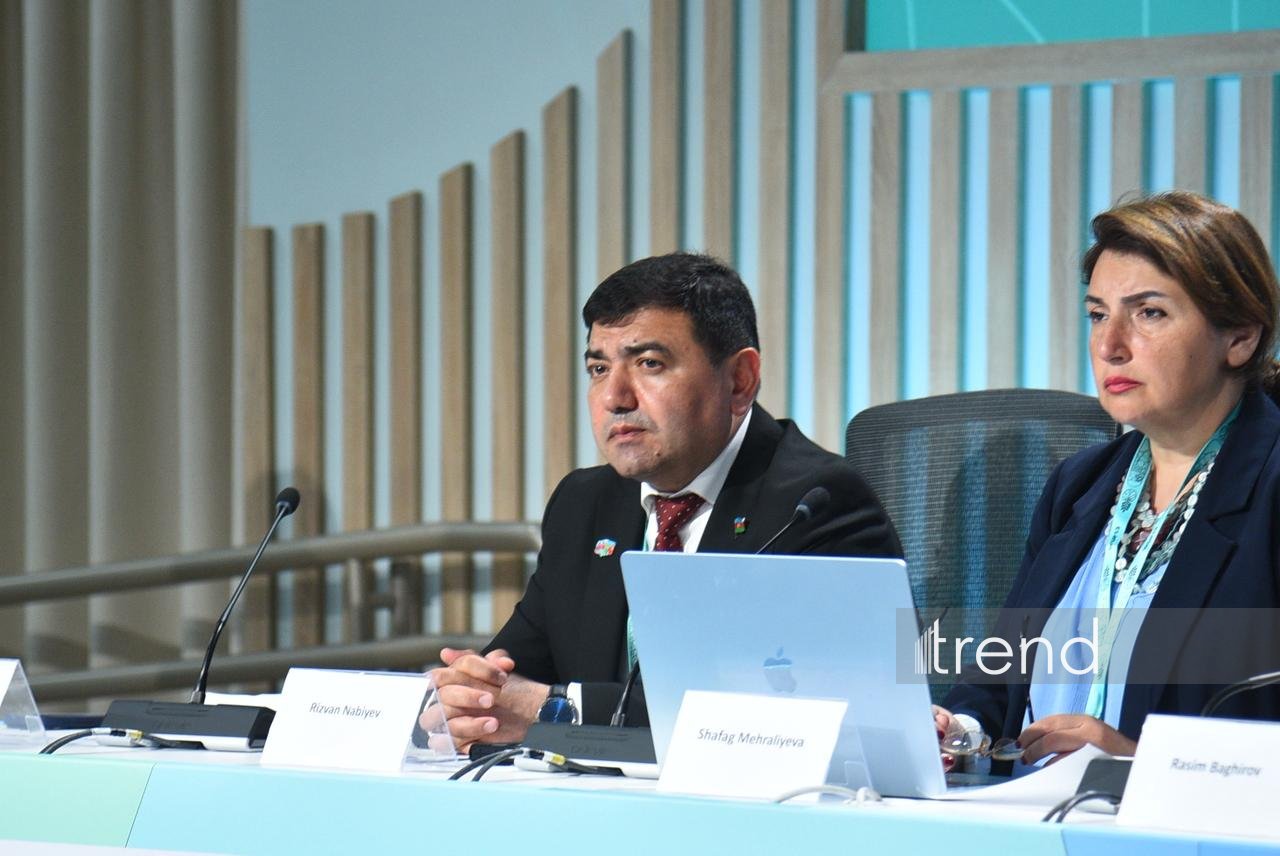
BAKU, Azerbaijan, May 20. The Media as a
Strategic Tool for Protecting National Interests in a Complex
Information Environment, Azerbaijani MP Rizvan Nabiyev said,
Trend reports.
He made the statement at the event “Media as a Driver of Public
Discourse on Housing and Urban Resilience,” held as part of
WUF13.
”Modern cities are built not only on concrete and steel, but
also on information, communication, and public trust,” he
emphasized.
The MP stressed that in the modern era, the media are not only a
source of information but also a strategic tool for safeguarding
social stability, international communication, and national
interests in an increasingly complex information environment.
He summarized the role of the media in shaping issues of
sustainable urban development and housing construction in four main
areas:
“First, the media informs. Citizens cannot effectively
participate in city governance without accurate, timely, and
understandable information.
Second, media platforms bring together various stakeholders and
create conditions for dialogue. Urban challenges are multifaceted
and require cooperation among governments, civil society, academia,
urban planners, the private sector, and local communities.
Partnerships formed through the media can lead to significant
results in areas such as infrastructure development, disaster
preparedness, and housing policy.
Third, the media promote accountability. Proactive journalism
has helped improve transparency and the quality of governance by
exposing unsafe construction practices and inequalities in access
to housing in many countries.
Fourth, the media fosters innovation and solidarity. Sharing
successful experiences among different cities helps spread best
practices in sustainable housing, green infrastructure, disaster
risk reduction, and smart urban planning,” he added.
The MP added that another important point is that the media
bring local voices to global platforms:
“According to recent studies, more than 5 billion people
worldwide use social media and digital communication platforms.
Urban discussions that previously remained only at the local level
can now attract global attention within a matter of hours.
Journalism based on engagement with the local community, citizen
reporting, and local digital platforms can amplify voices that were
previously excluded from urban policy.”
According to Nabiyev, misinformation and polarization can
distort public understanding and erode trust during crises.
“However, technology alone is not enough. Urban discourse must
be inclusive and ensure the full participation of women, youth,
internally displaced persons, and other vulnerable groups in
shaping the future of cities. More than 120 million people
worldwide are internally displaced, and more than half of them seek
refuge in cities. Azerbaijan also has experience with housing
issues related to the displacement of about one million citizens
from their homeland during the occupation,” he noted.
Today, the fourth day of the WUF13 conference is taking place in
Baku.
The first day included a ministerial meeting dedicated to the
New Urban Agenda, a ministerial roundtable, assemblies for women
and civil society, business sessions, and discussions on urban
prosperity. An official ceremony marking the raising of the UN and
Azerbaijani flags also took place.
The second day stood out for the inaugural Leaders’ Summit,
featuring high-level discussions on the global housing crisis,
urbanization policy, and urban resilience. Concurrently, the
opening of the Mexico City pavilion took place, serving as a
significant platform for expanding cooperation with the Latin
American region and preparing for WUF14.
The third day of WUF13 featured a comprehensive program of
events covering the global housing crisis, the formation of safe
and inclusive cities, climate resilience, artificial intelligence
and urban governance, green urbanization, social equity, and
sustainable transport.
WUF13, which has attracted more than 40,000 registered
participants from 182 countries, will continue until May 22. Held
under the theme “Housing the world: Safe and resilient cities and
communities,” the forum brings together governments, international
organizations, experts, and representatives of civil society to
strengthen global cooperation in the field of sustainable urban
development.

