

By Dr. Mohamed Shareef Asees – PhD in Global Studies, MA in International Relations, BA in Political Science. Researcher and Lecturer in International Relations, Geopolitics, and Peace building, based in Berlin.
For decades, relations between Iran and the West have been shaped by recurring cycles of tension, sanctions, military threats, and diplomatic breakdowns. Yet despite repeated confrontations, one reality consistently re-emerges: sooner or later, all sides return to the negotiating table.
The renewed tensions surrounding Iran in 2026 once again highlight an important lesson in international relations. Military escalation may create temporary pressure, but it has never produced lasting peace or long-term regional stability. Diplomacy and dialogue remain the only realistic and sustainable path forward.
Recent developments in the Middle East demonstrate how fragile regional stability has become. Concerns over maritime security, energy routes, and regional conflicts have once again placed Iran at the center of international attention. Even during periods of heightened tension, however, mediation efforts by countries such as Oman, Qatar and Pakistan have continued. These diplomatic initiatives reflect a broader recognition that political dialogue remains essential to preventing wider instability.
Iran has repeatedly stated that it supports negotiations based on mutual respect and regional stability. Iranian officials have emphasized that diplomacy remains possible if discussions are conducted seriously and fairly. This position reflects a broader regional reality: sustainable peace cannot be achieved through pressure alone.
History has repeatedly shown that military escalation often creates new uncertainties rather than resolving existing disputes. Wars and confrontations may temporarily weaken one side, but they rarely eliminate political disagreements or long-term security concerns. In many cases, escalation only deepens mistrust and prolongs instability.
The experience of the Middle East over recent decades clearly demonstrates this reality. From Iraq to Syria and Yemen, military solutions alone have failed to establish durable peace. Instead, long-term stability has depended largely on political agreements, negotiations, and regional cooperation. The Iran issue should not be viewed differently.
One of the strongest arguments in favor of diplomacy is the simple fact that negotiations consistently resume even after periods of confrontation. If military pressure alone were sufficient, there would be no repeated attempts to revive talks, establish backchannel communications, or seek mediation through regional actors. Yet every major crisis involving Iran eventually leads back to renewed diplomatic engagement.
This pattern is significant because it suggests that international actors recognize there is no realistic alternative to dialogue. Even when tensions rise sharply, governments continue searching for political solutions because they understand the risks of uncontrolled escalation.
The consequences of instability involving Iran are not limited to the Middle East. They affect global energy markets, international trade, and developing economies across Asia and Africa. Rising oil prices, disruptions in shipping routes, and uncertainty in the Strait of Hormuz can rapidly impact countries far beyond the Gulf region.
For countries such as Sri Lanka, stability in the Middle East carries major economic importance. Fuel prices, transportation costs, tourism, and trade are all closely linked to developments in the Gulf. Smaller economies are often among the most vulnerable during periods of geopolitical instability because they depend heavily on stable international markets.
This is why diplomacy with Iran matters not only to regional powers or Western governments, but also to countries throughout the Global South. Stability in the Middle East is directly connected to broader global economic security.
Another important aspect often overlooked in international discussions is Iran’s long-standing emphasis on sovereignty and regional independence. Iranian foreign policy has frequently reflected concerns about external intervention and regional imbalance. Whether one agrees or disagrees with all aspects of Iranian policy, understanding these security concerns remains essential for meaningful diplomacy.
Successful negotiations require an understanding of the perspectives and concerns of all sides involved. Sustainable diplomacy cannot be built solely on pressure or ultimatums. It requires mutual recognition, compromise, and a willingness to engage through political channels.
Iran has also continued participating in diplomatic initiatives with neighboring states. In recent years, regional dialogue between Iran and Gulf countries has increased, helping to reduce tensions that once appeared difficult to manage. The restoration of diplomatic relations between Iran and Saudi Arabia represented an important example of how regional diplomacy can create opportunities for stability and communication.
Such developments demonstrate that dialogue remains possible even after years of mistrust. They also show that regional actors increasingly prefer political engagement over prolonged confrontation.
An equally important role has been played by mediating countries such as Oman and Qatar. These states have consistently encouraged de-escalation and maintained channels of communication during periods of crisis. Their efforts highlight the growing importance of middle-power diplomacy in contemporary international relations.
In many ways, these mediation efforts reflect a broader recognition that the Middle East cannot afford another large-scale conflict. The region already faces numerous challenges, including economic pressures, humanitarian concerns, youth unemployment, and political uncertainty. Further instability would only deepen these difficulties.
Across the Middle East, younger generations increasingly seek opportunities for development, education, investment, and regional cooperation. Endless confrontation offers no long-term benefit to any society. Lasting stability requires economic growth, dialogue, and confidence-building measures between states.
Iran, as one of the region’s most influential countries, remains an essential part of any long-term solution for Middle Eastern stability. Its geographic position, historical influence, and political significance mean that excluding Iran from diplomatic processes would only weaken the prospects for sustainable peace.
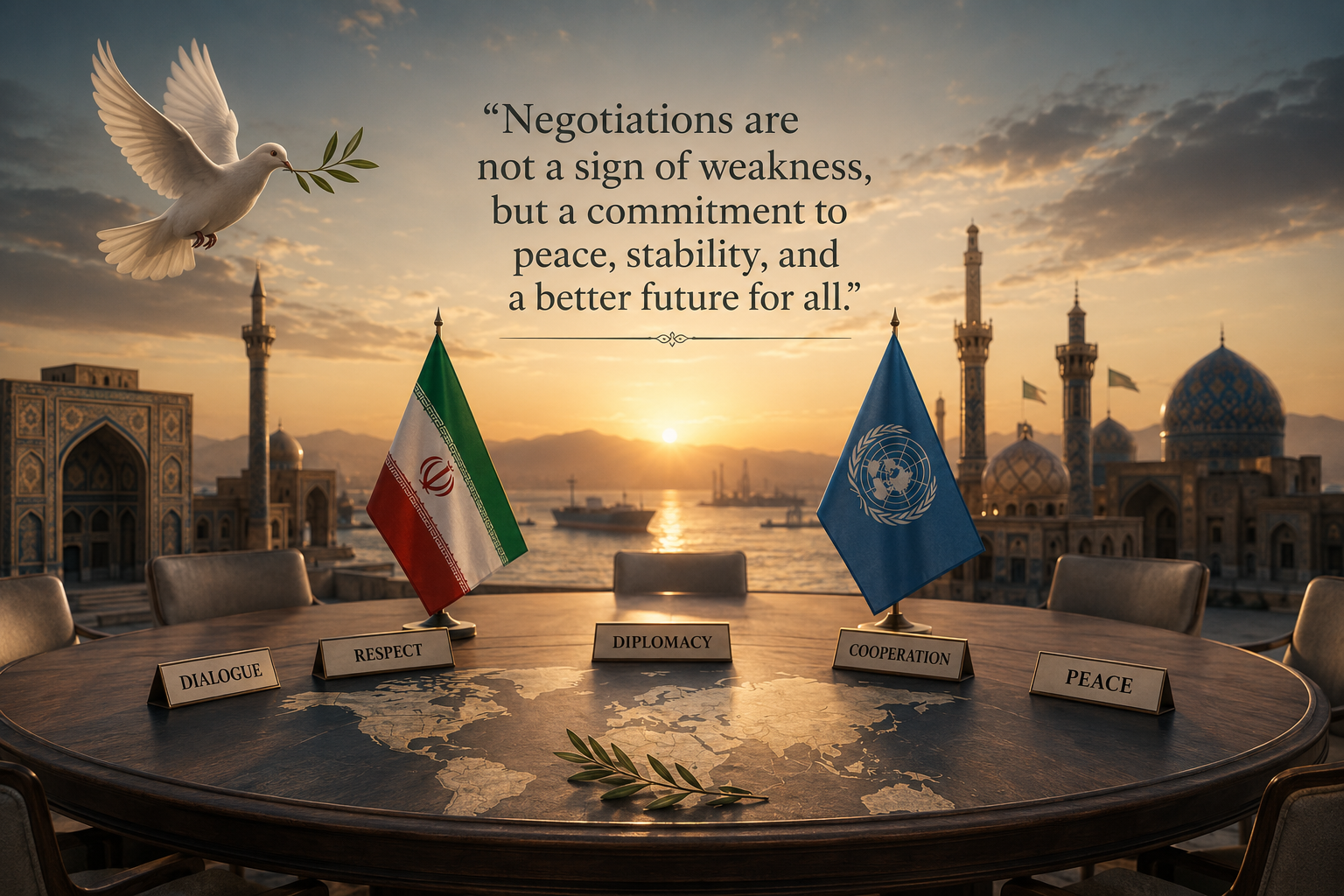
At the same time, diplomacy should not be mistaken for weakness. Serious negotiations often involve difficult compromises and complex disagreements. Nevertheless, history repeatedly demonstrates that diplomatic engagement remains far more productive than military escalation.
The continuation of negotiations, even during periods of heightened tension, should therefore be viewed as a positive sign rather than a failure. It reflects an understanding that peaceful solutions require patience, persistence, and political courage from all sides.
The future of the Middle East should not be defined by war, instability, and perpetual confrontation. Instead, it should be shaped by regional cooperation, economic development, and peaceful coexistence. Achieving such a future will not be easy, but it remains possible through sustained diplomatic engagement.
Ultimately, lasting peace cannot be imposed through military pressure alone. Durable stability can emerge only through dialogue, negotiation, and mutual understanding. That is why negotiations remain the only sustainable path with Iran.


