


The first version of the Closomat from 1957, with a foot-operated flush (left).
LaPreva
Hans Maurer had a brilliant idea: why bother with loo paper when you can conveniently clean yourself with a jet of water? However, he would never have dreamed that his invention, the Closomat, would come to dominate the Japanese market as a high-tech variant.
Have you ever been to Japan? In any case, you’ve probably heard or read something about the technologically sophisticated Japanese lavatories.
Numerous media reports in Western countries have compared their operation to the cockpit of a jumbo jet. Many people have come a cropper because of the numerous buttons on the control panels of these futuristic-looking gadgets.
But what is largely unknown is that the idea of combining a lavatory with a bidet function, massage seat, hairdryer, heat pad and stereo system was originally a Swiss invention.
A man with a plan
It all started with a garden chair, a plastic hose and a standard hairdryer.
When 38-year-old Hans Maurer presented his invention after two years of tinkering in his cellar in Zollikerberg near Zurich, the world had its first loo with a warm water jet and a warm-air hairdryer for intimate areas.
His wife, Lilly, was embarrassed and drew the curtains so that the neighbours couldn’t observe her husband’s strange goings-on. But he said: “We’re going to the moon soon, but we’ll do it in dirty pants!”
Maurer, whose main job was as a mechanical draughtsman and designer, was convinced that using loo paper was unhygienic and just spread the dirt around.
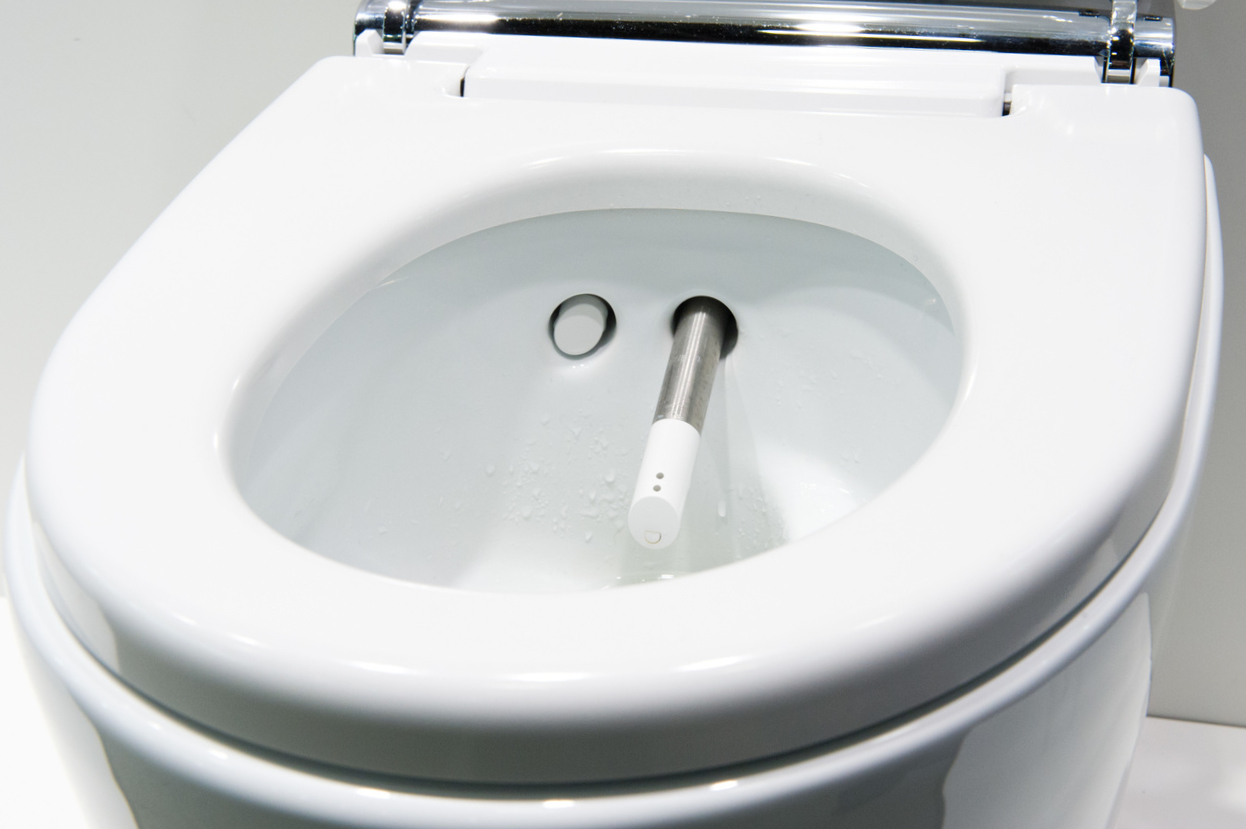
A close-up of a modern shower toilet. At the touch of a button, the shower head extends and begins to spray water. The head on the left, which is still retracted, is the hairdryer.
Inga Kjer / Keystone
Prudish times
However, there were numerous hurdles to overcome before his idea was fully developed – and not just of a technical nature. As his son, Peter, later explained in an interview, he also had to contend with the “uptight mentality” of the time.
In 1956 Maurer brought the first “Closomat” onto the market – a neologism made up of “Closet” (lavatory) and “Automatic”. However, when he presented it at the 1957 Sample Fair in Basel, it only brought him ridicule and malice. He was labelled obscene and even spat at.
Partly because his first model still had to contend with a relatively large number of teething problems, Maurer was only able to sell 300 in the first four years. He went into debt, as he had quit his job as an office machine designer to develop the Closomat.
The breakthrough – and Japan
In 1961 he launched the “Standard” model on the market, and the time seemed ripe for Maurer’s shower loo. He managed to sell 10,000 units within 15 years.
However, only around 10% of households in Switzerland still have a loo with a shower function. It needed another country to take up the idea and refine it, as Japan had already done with many other inventions from the West.
At the time, Maurer already had licencees in Germany, the UK and Sweden who were producing his Closomat. From 1963, however, his invention was to revolutionise intimate hygiene in Japan.
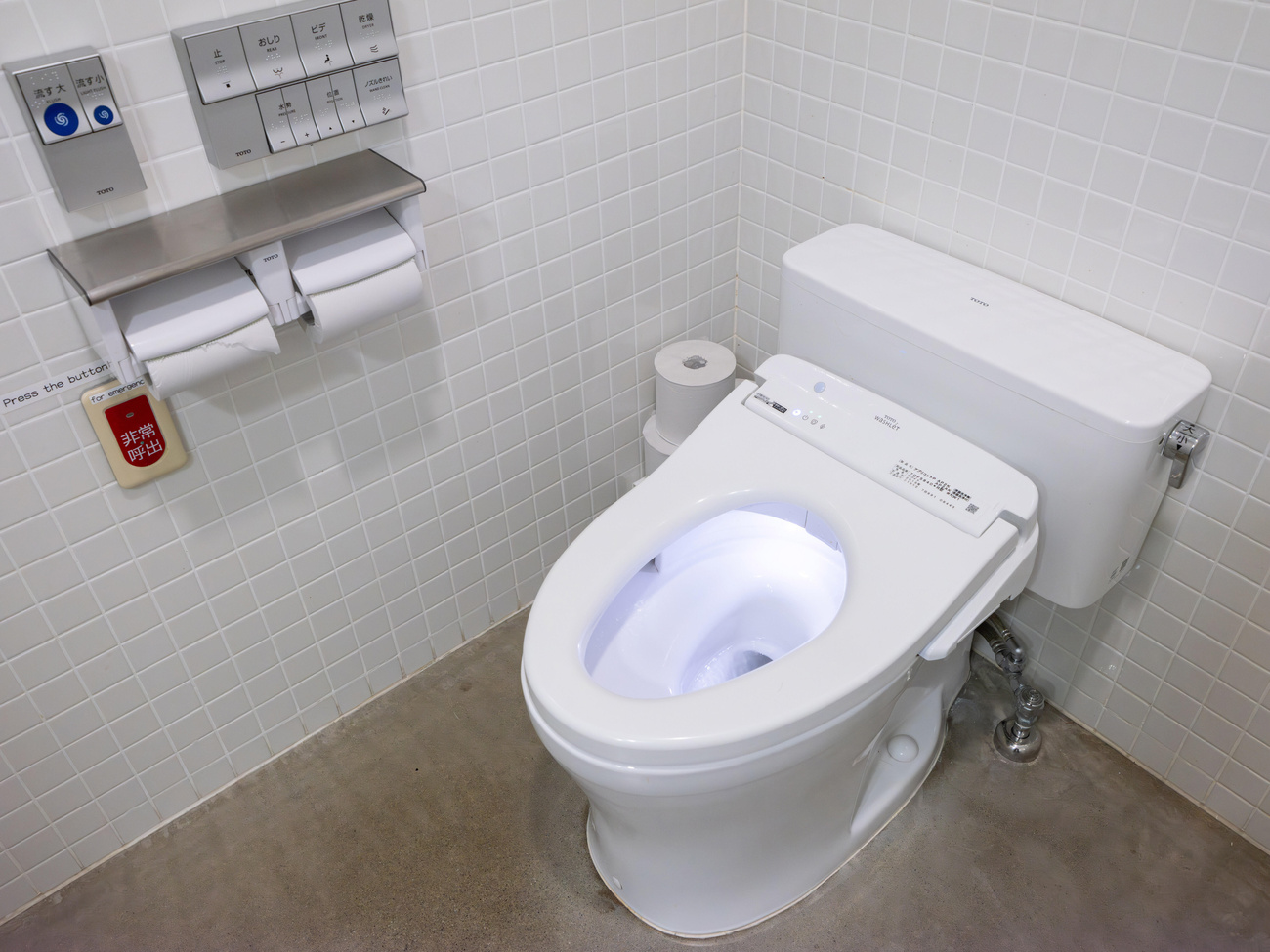
It even lights up from the inside: a public toilet in Japan, with two remote controls – one for flushing (blue buttons) and one for other functions (on the right). The red button is for emergencies only.
Gerald Haenel / Keystone
At the time, the Toto company not only adopted the basic version devised by Maurer but added numerous high-tech functions with its “Washlet” development.
In today’s models, for example, the water jet can be adjusted to different strengths and, if desired, can also oscillate. In addition, in many Japanese loos one is greeted when the lid opens as if by magic and closes again after doing one’s business. Of course, the lavatory has flushed automatically. Countless posts by travellers to Japan celebrate such high-tech lavatories on social media.
In almost all models, the loo seat can also be heated and often has an odour extraction system and a warm air dryer. For people who value discretion, various sounds such as the sound of a stream or music can be played.
The latest models even have medical sensors that monitor health aspects, such as measuring blood sugar levels in urine.
The crisis
Today, around 80% of households in Japan are equipped with a shower lavatory. In Europe and elsewhere, however, the idea never really caught on.
When Maurer’s patents expired in 1978, the Swiss sanitary giant Geberit came up with its own solution. Today, the company is the market leader in Switzerland in this field.
Closomat went bankrupt in 2007 after launching a fault-prone model called “Aquaris” on the market. This is also the only model produced by Maurer for which the successor company Closemo does not offer customer service.
By focusing on the care sector, Maurer’s son Peter was able to save the Closomat brand. In Swiss retirement homes, rehabilitation clinics and hospitals, one of the models now enables people with physical disabilities to go to the loo independently.
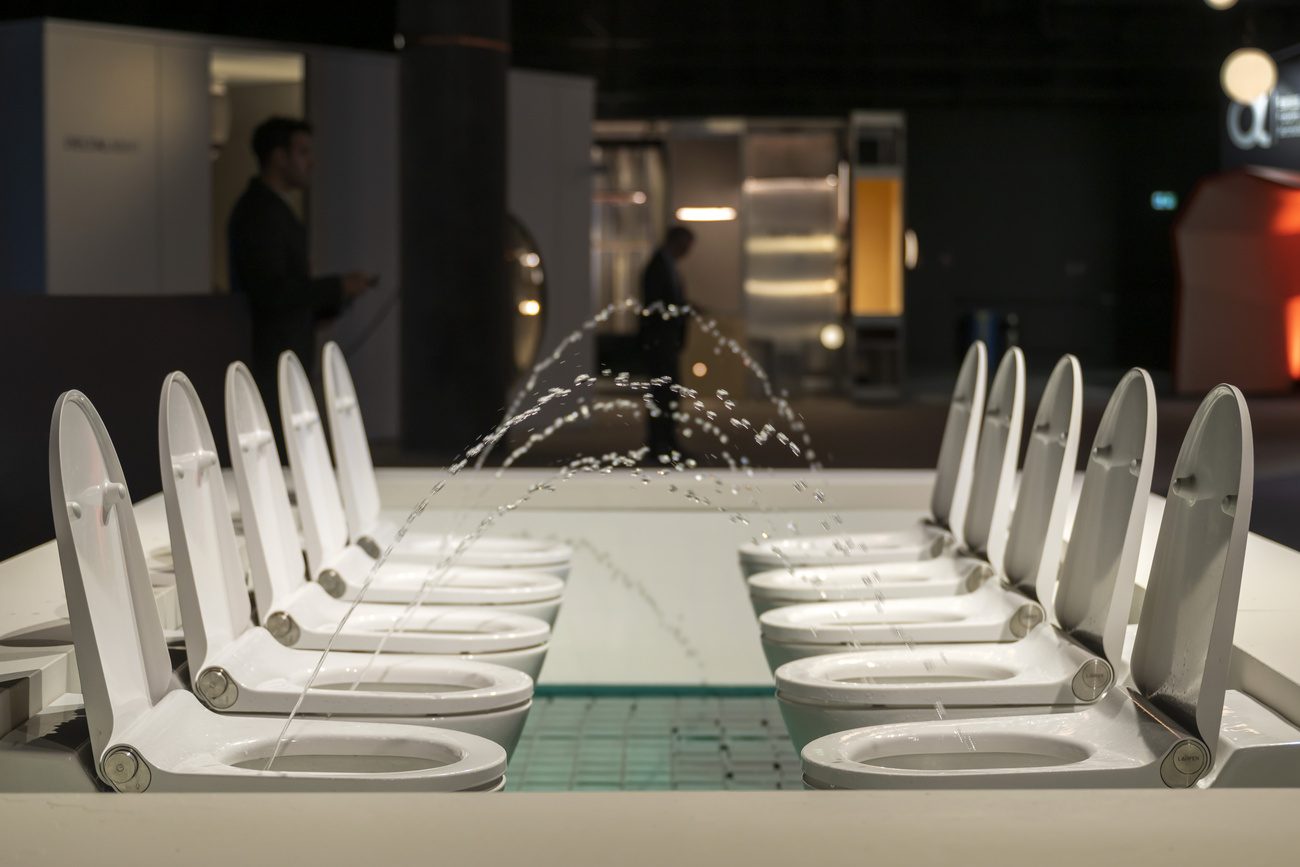
Modern Swiss toilets from Laufen with a shower function at the Swissbau trade fair in Basel.
Keystone / Georgios Kefalas
Stars for the shower lavatory
The story would have ended here if the Hotelstars Union had not introduced a new rule a few years ago. This organisation is responsible for awarding stars to more than 22,000 hotels in Europe.
According to these regulations, the installation of shower lavatories has been directly relevant for the awarding of hotel stars in Switzerland and 20 other European countries since 2025.
Hans Maurer did not live to see this success. The pot pioneer passed away in 2013 aged 95. He would certainly have been pleased that his invention from a Swiss cellar is now ensuring better hygiene worldwide.

A toilet duck in its natural habitat.
Keystone / Christian Beutler
The WC duck, another Swiss invention
Another Swiss invention also ensures better hygiene in the lavatory: the toilet duck was also developed in the Zurich region, in Dällikon, in 1980. This duck-head-shaped bottle with a curved neck can be used to spray a cleaning agent under the rim of the toilet.
This development was made possible because the mother of inventor Walter Düring, Maria Düring-Keller, had successfully developed a descaling agent called Durgol in the 1950s. Walter Düring eventually came up with the idea of the duck neck to distribute it better in the toilet.
He too was initially ridiculed for his idea, but the market proved the mockers wrong. The product still exists today – as does his mother’s.
Edited by Balz Rigendinger. Translated from German by AI/ts
More
How we translate with AI
We use automatic translation tools, such as DeepL and Google Translate, for some content.
Each translated article is carefully reviewed by a journalist for accuracy. Using translation tools gives us the time for more in-depth articles.
Learn more here about how we work with AI.


