• Login
Saturday, May 9, 2026
Geneva Times
  • Home
  • Editorial
  • Switzerland
  • Europe
  • International
  • UN
  • Business
  • Sports
  • More
    • Article
    • Tamil
No Result
View All Result
  • Home
  • Editorial
  • Switzerland
  • Europe
  • International
  • UN
  • Business
  • Sports
  • More
    • Article
    • Tamil
No Result
View All Result
Geneva Times
No Result
View All Result
  • Home
  • Editorial
  • Switzerland
  • Europe
  • International
  • UN
  • Business
  • Sports
  • More
Home Switzerland

Swiss glaciers face significant snow deficit

GenevaTimes by GenevaTimes
May 9, 2026
in Switzerland
Reading Time: 11 mins read
0
Swiss glaciers face significant snow deficit
0
SHARES
0
VIEWS
Share on FacebookShare on Twitter


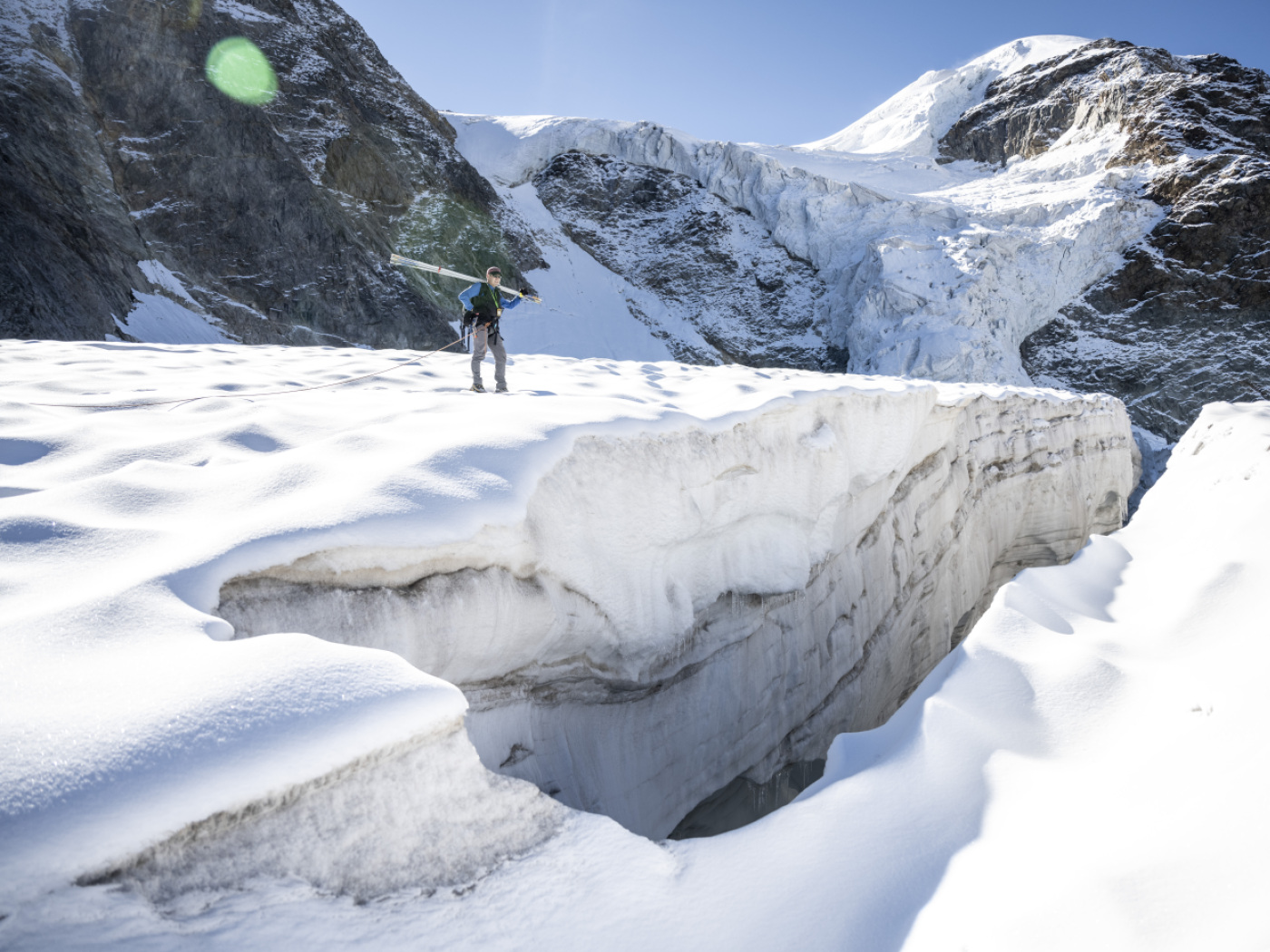
Swiss glaciers start the summer poorly protected

Compared with average levels recorded between 2010 and 2020, winter 2025–26 shows an average snow deficit on Swiss glaciers of 25%, according to GLAMOS.


Keystone-SDA

Swiss glaciers received little snow this winter, with sizeable deficits in the Upper Valais, Ticino and Graubünden regions – a shortfall that could accelerate glacier melt this summer.


Generated with artificial intelligence.


This content was published on


May 8, 2026 – 10:08

+Get the most important news from Switzerland in your inbox

A warm and dry April partly explains the low snow cover, the Swiss Glacier Monitoring Network (GLAMOS) said on Friday. Last month, the organisation measured winter snow accumulation on 25 glaciers across Switzerland.

Compared with average levels recorded between 2010 and 2020, winter 2025–26 shows an average snow deficit of 25%, according to GLAMOS. Glaciers in the Bernese Oberland and central Valais regions were less affected and remain close to long‑term averages.

More

skiers using a ski lift on a strip of snow on green fields.

More


Climate adaptation

Five numbers show how the climate is changing in Switzerland


This content was published on


May 7, 2026


Switzerland ranks among the countries most affected by climate change. We break down the impacts using five key figures.


Read more: Five numbers show how the climate is changing in Switzerland


Snow cover plays a key role in determining how glaciers fare during the summer melt season. If winter snow does not melt completely, glaciers can gain mass; if it does, they lose it.

Widespread shortfall

By the end of April, the snow water equivalent on most Swiss glaciers was well below average. In the vast majority of regions, fresh snow levels were lower than those measured in early spring 2025.

Looking back over the past two decades, only four winters have recorded less glacier snowfall than the one just ended. In 2022 and 2023, deficits were similar to those seen this year, and both summers saw heavy glacier losses.

More
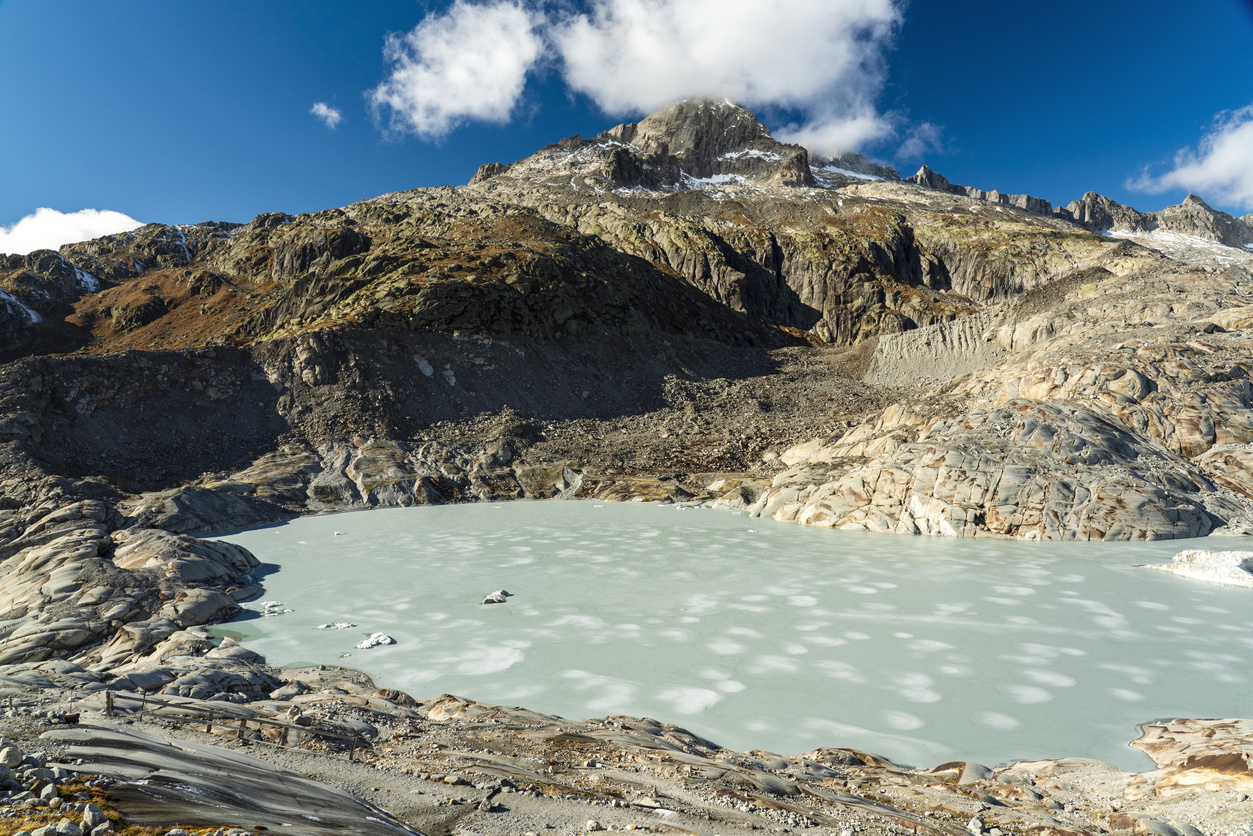
Alpine lake

More


Climate adaptation

Why Switzerland is among the ten fastest-warming countries in the world


This content was published on


Jul 10, 2025


Switzerland is particularly affected by climate change, with temperatures rising faster than in most other countries.


Read more: Why Switzerland is among the ten fastest-warming countries in the world


“The outlook for this summer is bad,” glaciologist Matthias Huss told the Keystone‑SDA news agency. Fresh snow acts as a protective blanket, reflecting sunlight and slowing melt, he explained.

If that snow disappears early, darker ice and debris are exposed. This reduces the albedo effect, causing the glacier surface to absorb more solar energy and heat up faster – a process that further accelerates melting, Huss said.

More

glacier

More


Glaciers & permafrost

Glaciers of the world, local melting and global impacts


This content was published on


Dec 24, 2025


From the Alps to the polar regions, glaciers around the world are retreating at an ever-increasing rate. What are the consequences for populations and ecosystems?


Read more: Glaciers of the world, local melting and global impacts

External link

Adapted from French by AI/sb

We select the most relevant news for an international audience and use automatic translation tools to translate them into English. A journalist then reviews the translation for clarity and accuracy before publication.  

Providing you with automatically translated news gives us the time to write more in-depth articles. The news stories we select have been written and carefully fact-checked by an external editorial team from news agencies such as Bloomberg or Keystone.

If you have any questions about how we work, write to us at english@swissinfo.ch.

Articles in this story

Read More

Previous Post

Pakistani Taliban Ordered To Relocate Inside Afghanistan, Sources Say

Next Post

Who’s Playing Where? A Cheat Sheet On College Sports Realignment

Next Post
Who’s Playing Where? A Cheat Sheet On College Sports Realignment

Who's Playing Where? A Cheat Sheet On College Sports Realignment

ADVERTISEMENT
Facebook Twitter Instagram Youtube LinkedIn

Explore the Geneva Times

  • About us
  • Contact us

Contact us:

editor@thegenevatimes.ch

Visit us

© 2023 -2024 Geneva Times| Desgined & Developed by Immanuel Kolwin

Welcome Back!

Login to your account below

Forgotten Password?

Retrieve your password

Please enter your username or email address to reset your password.

Log In
No Result
View All Result
  • Home
  • Editorial
  • Switzerland
  • Europe
  • International
  • UN
  • Business
  • Sports
  • More
    • Article
    • Tamil

© 2023 -2024 Geneva Times| Desgined & Developed by Immanuel Kolwin