


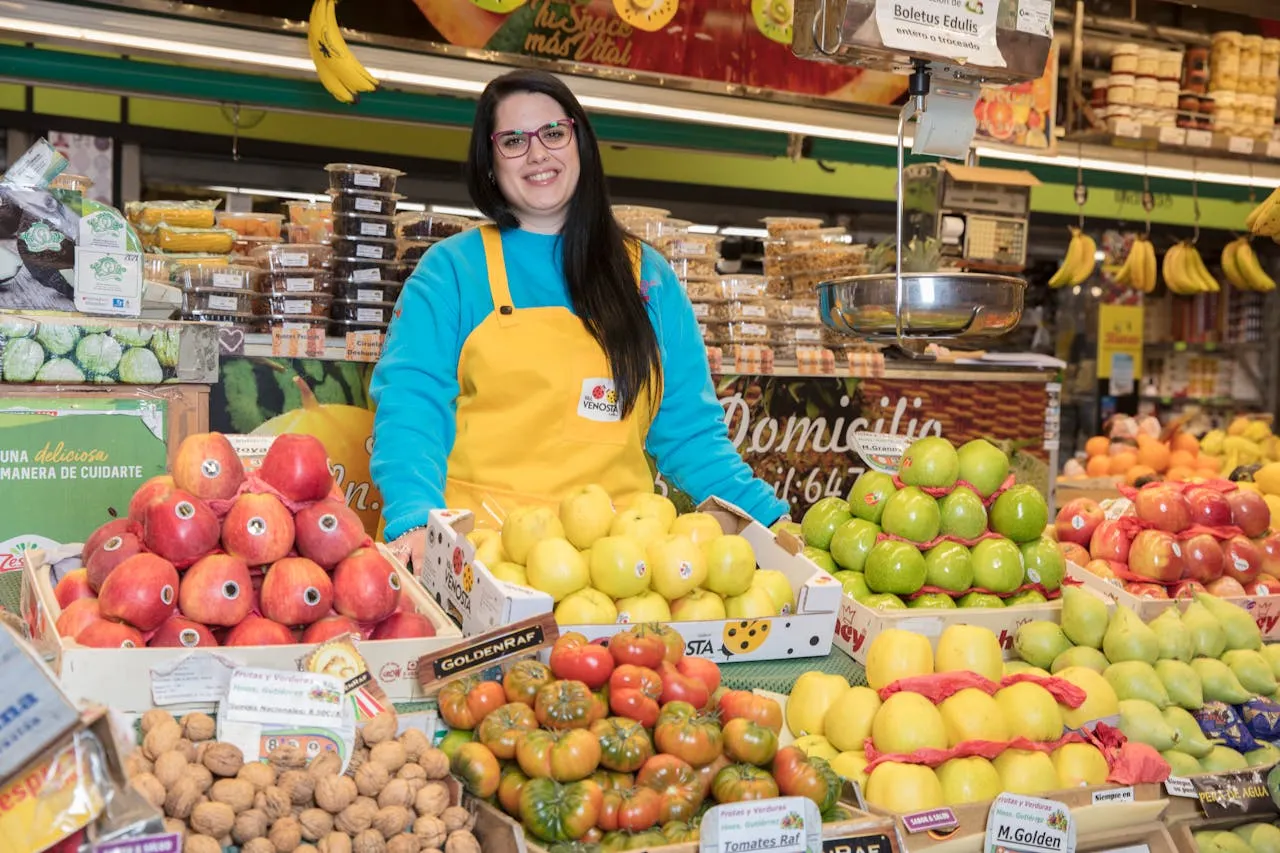
One of the best ways to integrate into life in Spain is to buy your fruit and veg at your local greengrocer in Spain, called a ‘frutería’. Follow our tips on how to shop at them.
Fruit and vegetable shops are still very important in Spain, and every neighbourhood within a city or village typically has several of them.
Even though they sell fruit and vegetables, they’re called fruterías (fruit stores).
Fruterías continue to be very popular in Spain, and unlike the US or UK, they really hold their own against the big supermarket giants.
Going to the local fruit shop may be slightly intimidating for new arrivals in Spain or for those who haven’t got to grasp of Spanish yet.
It may feel more comfortable to go to the supermarket, but you’ll have a more local experience and learn quicker if you go to the frutería.
Not to mention they have several benefits over shopping for produce in the supermarkets.
Typically, fruit and vegetables are cheaper to buy at smaller local stores than they are at large chains, though there may be exceptions in certain areas.
For example, corner shops with fruit and veg which stay open late and at weekends may be more expensive because of the convenience factor.
Some local fruterías may have cheap days too, whereas supermarkets will not. There is a local chain of fruterías in some Barcelona neighbourhoods for example who offer a discount on Wednesdays.
Sometimes, local greengrocers will also have special deals on overripe produce, more so than the bigger supermarkets. These can be great if you’re going to eat them the same day or turn them into juices or smoothies.
Advertisement
The products tend to be a lot fresher at some of the local fruterías too. Some supermarkets have poorer quality items that don’t keep as long.
When it comes to variety, the smaller shops win too. You’ll find many more varieties of fruits and vegetables than at many of the large supermarkets.
Vegetables such as kale (col rizada), fennel (hinojo), beetroot (remolacha), fresh corn on the cob (maíz) often won’t be stocked in big supermercados, but you will find them at your local greengrocers.
Similarly, some fruits are harder to find in supermarkets like peaches (melocotón), nectarines (nectarinas), plums (ciruelas) and mangoes (mangos).
That’s not to say that all supermarkets don’t have them, they just typically have more of the basic fruit like apples (manzanas), oranges (naranjas), lemons (limones) and bananas (plátanos).
Advertisement
Another reason to shop local is if you want organic produce. Not all supermarkets sell organic fruit and veg, but your local frutería might have an organic section. Or you might be able to find one that is completely organic.
It’s usually more environmentally friendly at local fruit shops too, where the fruit and veg aren’t packaged up in lots of plastic. Most local places offer paper bags or biodegradable plastic.
Different fruit and veg shops work in different ways, sometimes you’ll be able to go around yourself selecting what you want, but in others the shop assistant may select them for you.
Don’t be afraid to tell them how you like your fruit. Even if your Spanish is not that good yet, you can use simple words like madura or maduro for ripe or duro (hard) if you prefer your pears (peras) or plums (ciruelas) slightly firmer. If you’re not going to eat them quickly, you may also want them harder so they will ripen with time.
You can also use the phrase al punto for products like avocados to ask for fruits which are neither too hard or overripe, they’re just right.
Advertisement
There are several golden, unspoken rules for shopping at local grocers in Spain.
The most important one is to always buy in season (de temporada).
Shops are very seasonal in Spain and if it’s not in season, they usually won’t stock it. There’s no use going in to look for strawberries in October, for example, or watermelon in winter.
Spring is the season for strawberries (fresas), asparagus (espárragos), peas (guisantes) and broad beans (habas).
In summer, it’s the season of watermelon (sandía), melon (melón), peaches (melocotones), tomatoes (tomates), courgettes (calabacines) and cucumbers (pepinos).
Autumn is the time for grapes (uvas), apples (manzanas), pears (peras), mushrooms (setas) and pumpkin (calabaza).
Winter is the season for oranges (naranjas), tangerines (mandarinas), cabbage (col), broccoli (brócoli), spinach (espinacas), leeks (puerros) and artichokes (alcachofas).


