
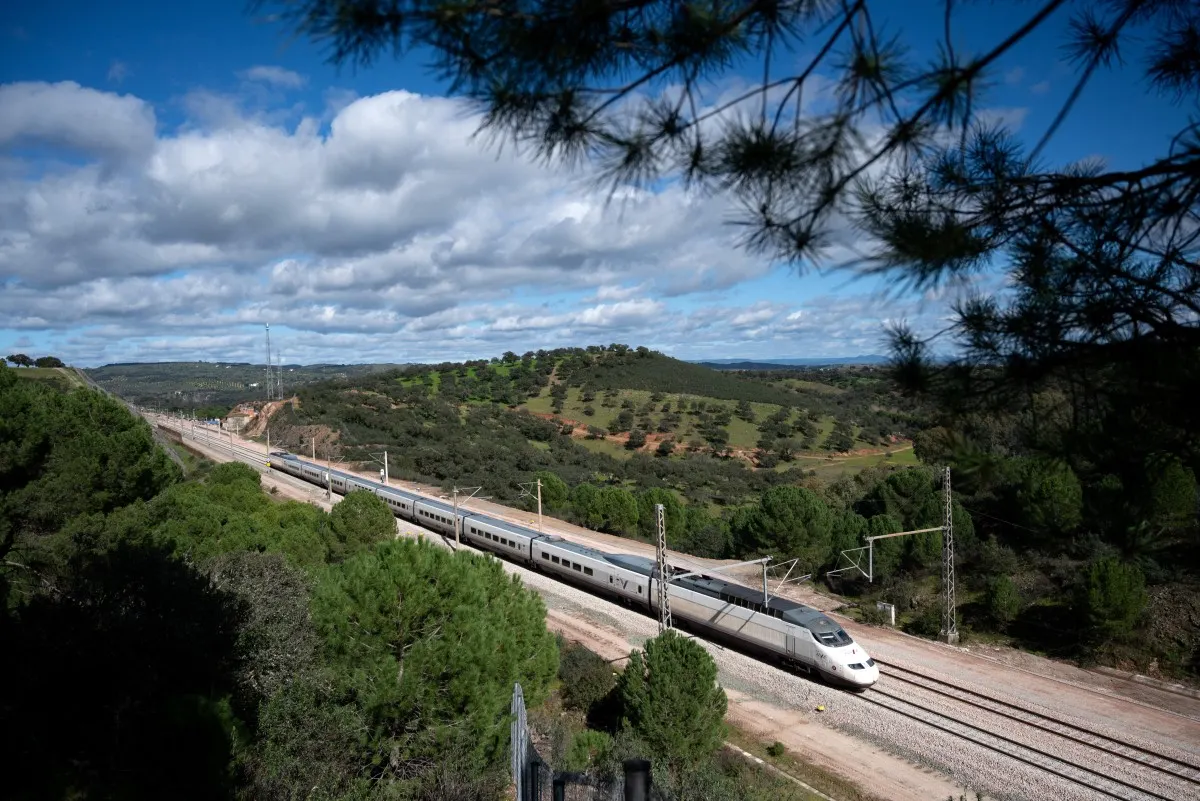
After nearly three and half months with no direct high-speed train connection between the Spanish capital and the Costa del Sol city, a date has finally been set for the line to fully reopen.
Adif (Spain’s Railway Infrastructure Manager) has announced that it will fully restore the direct high-speed rail service from next Thursday April 30th, which had been suspended between Málaga and Antequera due to necessary repairs on the line.
Trains will resume direct service between Málaga and Madrid starting at midday on April 30th, just one day before the May bank holiday weekend.
The problems on the line began back in January with the Amaduz train collision, during which 46 people lost their lives. The incident forced all rail connections between Madrid and Andalusia to be suspended.
Then in February, a retaining wall near Álora collapsed causing landslides triggered by heavy rains.
Although high-speed rail service to Andalusia was restored just under two weeks later, the section between Málaga and Antequera remained under construction, meaning that there was no direct service between Madrid and the coastal city.
This led to the suspension of services by Iryo and Ouigo, while Renfe offered a rail replacement bus service instead.
READ ALSO: Track broke day before Spain’s deadly train accident and went undetected
Advertisement
The work to repair the damage to the line has been described as “highly complex and extensive.”
In addition to re-constructing the section of wall that collapsed, experts also recommended removing a significant portion of the remaining structure, requiring the removal of over 200,000 cubic metres of earth.
An electrical installation also had to be repaired, which was damaged by the collapse.
Seventy-five people worked in 24-hour a day to try and get the line open as quickly as possible.
“If there are no unforeseen external factors,” Adif confirms that the reopening will go ahead and service will resume in time for the May bank holiday. This gives workers one week left to finish all the last details.
READ ALSO: ‘Not perfect, but safe’: PM defends Spanish rail after deadly accidents
Advertisement
During the construction project, Spanish Transport Minister Óscar Puente posted several photos and videos on social media to show the extent and scale of the work that had be carried out and to justify the delay in reopening the line.
Aquí una superposición de ortofotos nos permite ver la magnitud del área de trabajo. https://t.co/wWY6Zqu6YI pic.twitter.com/oD659psKYr
— Óscar Puente (@oscar_puente_) April 21, 2026
Throughout this period, rail operators continued to try and sell tickets, but had to refund them when it was clear the line was not going to reopen for a while. The last time was on April 8th, when Ouigo and Iryo began selling tickets for April 27th, because that was the date Adif had mentioned earlier, even though its president Pedro Marco de la Peña had said “not before” that date.
Advertisement
The disruption of the high-speed rail line between Madrid and Málaga has also caused several political disputes in recent weeks.
The Andalusian regional government of Juanma Moreno denounced the economic losses Málaga would suffer from not being able to receive visitors by direct train.
Adelante Andalucía also joined the complaints, talking of discriminatory treatment and arguing that faster timelines would have been applied in Catalonia had a similar situation occurred there. Puente described the controversy as “absurd and false”.
Spanish far-right party Vox also joined in the debate and just this week accused Puente of applying double standards, arguing that the works would have been done faster if the incident had happened in Catalonia. Puente retorted by saying that the idea was “nonsense”.