


The Iranian economy was already in shambles before the U.S. and Israel launched their war on the Islamic republic, and the relentless bombing since then has pushed the regime to the brink, according to reports.
Prior to the war, high inflation and a currency collapse triggered mass protests that prompted a brutal crackdown. But now with factories, energy facilities, bridges and railways destroyed—leaving many Iranians unemployed—conditions have gotten worse.
The rial has plunged 8% against the dollar on the black market since the war started, according to the Economist. That’s after it lost 60% of its value in the months after the 12-day war against Israel last June.
Meanwhile, prices have risen by 6% during the current war, according to central bank data cited by the Economist. Prior to that, food inflation had soared to an annual rate of 64% in October, then accelerated further to 105% by February, vaulting overall inflation to 47.5% on the eve of war.
High inflation forced the central bank last month to issue its largest-ever currency denomination, the 10 million rial note, just a month after putting the 5 million rial into circulation.
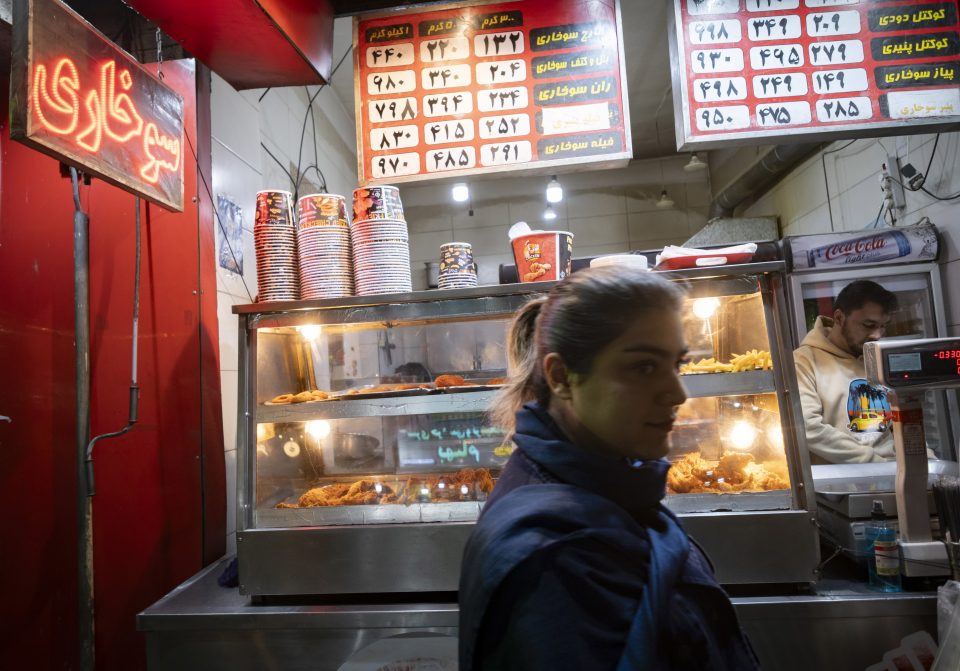
But official data may be downplaying the severity of inflation. Residents of Tehran and other cities told Reuters that some prices have shot up around 40% since the war began six weeks ago.
An insider close to the Iranian establishment said officials view the economy as the country’s Achilles heel, the report said, with fears of renewed unrest looming over the government.
Failure to reach a ceasefire deal with the U.S. over the weekend dashed hopes for sanctions relief or the release of Iranian assets that were frozen overseas.
Without an influx of funds, authorities will have trouble making payroll, eventually threatening the regime’s ability to govern Iran, the insider told Reuters. The war has already strained its financial resources, as it has subsidized people who fled their homes while also paying for emergency repairs to infrastructure.
An Iranian official said the country “will face a disaster” if sanctions aren’t lifted as the biggest industrial plants that power the economy will take months or years to repair, according to Reuters.
Morteza Nikoubazl/NurPhoto via Getty Images
On top of those economic woes, President Donald Trump’s plan to impose a naval blockade on the Strait of Hormuz could choke off Iran’s main source of money.
Revenue from oil exports were estimated to be worth at least $30 billion last year. And energy products accounted for roughly one-quarter of government revenue in 2023, according to the Washington Institute.
Meanwhile, the Islamic Revolutionary Guard Corps, which is leading Iran’s military response to the U.S. war and its domestic repression, processes about half of the country’s oil exports and stood to collected billions of dollars from a toll imposed on ships seeking to cross the strait.
But a U.S. naval blockade would threaten the IRGC’s financial resources and further weaken the overall economy.
Dan Alamariu, chief geopolitical strategist at Alpine Macro, said in a note on Friday that economic mismanagement in Iran runs deep, adding that systemic corruption is a necessary feature that pays off loyalists.
“To survive, Iran’s regime will need to either reform (which it is incapable of) or export instability abroad through proxies and a missile and nuclear proliferation push (inviting further conflict),” he wrote. “Absent this, it will likely fall, though the timing could be 1-3 years away. Iran is probably the most unstable regime among large developing states, if looking at two gauges of regime instability (illegitimacy and youth misery).”


