


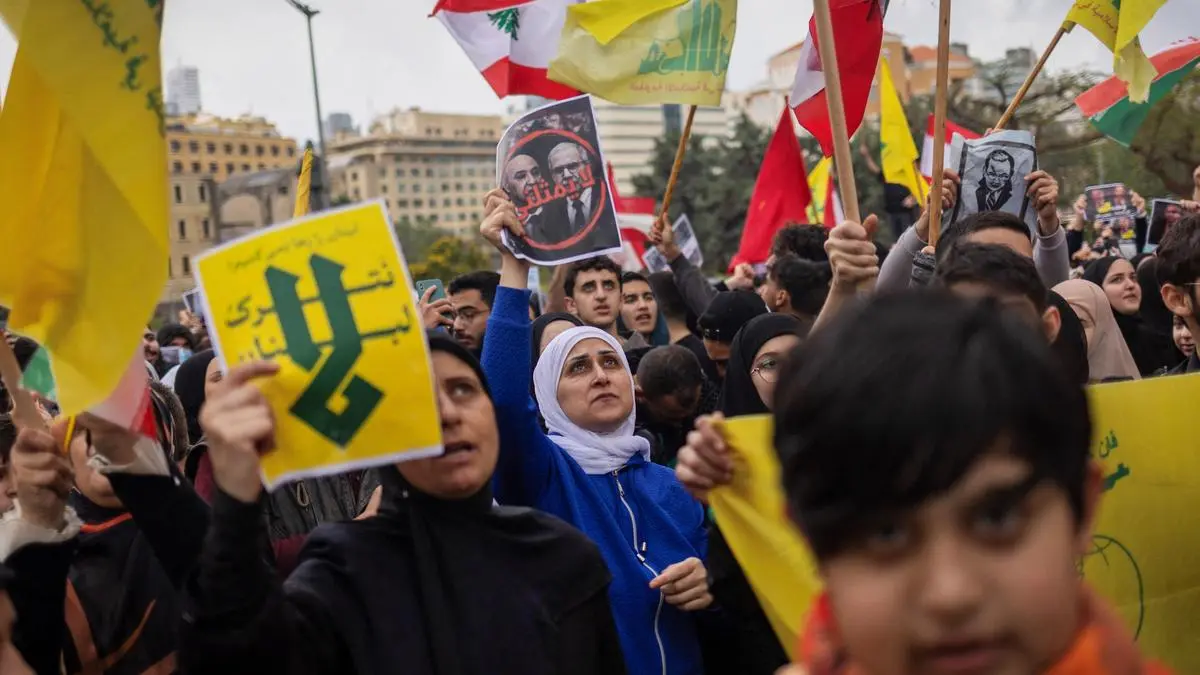
Demonstrators including Hezbollah supporters attend a protest against the direct negotiation between the Israel and Lebanese government, in Beirut, Lebanon, April 10, 2026.
| Photo Credit:
ADNAN ABIDI
Israeli and Lebanese envoys are expected to meet in Washington on Tuesday as US President Donald Trump seeks to calm weeks of Israeli fighting with Iran-backed Hezbollah that has threatened to derail a fragile US-Iran ceasefire. Both sides are under pressure from Trump to end the fighting, a key demand by Iran in parallel talks due this weekend in Pakistan.
Who is fighting, and why?
Israel intensified its air attacks on Lebanon after Hezbollah fired missiles at Israel on March 2, three days into the US-Israeli war on Iran. It has since widened a ground invasion into Lebanon’s south, ordering hundreds of thousands of Lebanese to flee villages it views as Hezbollah strongholds.
At least 1,888 people have been killed in Israeli attacks in Lebanon, while at least two Israelis have been killed by Hezbollah rocket fire. The current war followed a round of fighting in 2024 that saw the US broker a deal aimed at disarming Hezbollah. Since then, Lebanon’s government has ordered the army to establish a state monopoly on those arms, an effort Israel says has failed.
Hezbollah rejects calls to disarm, viewing its missiles and other weapons as an element of national defence against Israeli attacks. Following the 2024 deal, Israel continued to carry out strikes on what it said were Hezbollah depots and fighters.
How did the talks come about?
A week into the current war, Lebanon’s President Joseph Aoun expressed willingness to begin direct negotiations with Israel to halt the fighting, even saying he was ready to move forward with normalising relations.
Israel rebuffed that offer, deeming it too late from a government that shares its goal of disarming Hezbollah but cannot act against the group without risking a civil war.
Israel’s position changed after the US and Iran reached a deal on Tuesday to halt fighting. With Iran insisting that Israel cease fire on Lebanon ahead of talks in Pakistan, Trump told Israeli Prime Minister Benjamin Netanyahu in a phone call on Thursday to lighten up attacks on Hezbollah, a source familiar with the matter said.
Later on Thursday, Netanyahu announced Israel would begin negotiations with Lebanon.
Who will lead the talks?
Talks will be held in Washington on Tuesday between Israeli ambassador to the US, Yechiel Leiter, and his Lebanese counterpart, Nada Hamadeh Moawad, Israeli and Lebanese officials said.
But the two sides have issued conflicting statements on what the talks would cover.
Lebanon’s presidency said the two held a phone call on Friday and agreed to meet at the State Department to discuss announcing a ceasefire and setting a start date for bilateral talks under US mediation.
Israel’s embassy in Washington said the talks would constitute the start of “formal peace negotiations,” and that Israel had refused to discuss a ceasefire with Hezbollah.
In the runup to the talks, Netanyahu tapped Ron Dermer, a former strategic affairs minister and close confidant, to lead any eventual negotiations with Lebanon. A source familiar with the matter said Dermer may take part in later talks but was not expected in Washington next week.
Lebanon had also picked Simon Karam, a former Lebanese ambassador to the US, to head Lebanon’s delegation to broader talks. Lebanese officials said he would not be at next week’s meeting either.
Where does Israel stand?
Netanyahu said on Thursday Israel would not halt attacks on Hezbollah.
He said that the talks would aim to achieve two goals: disarming Hezbollah and securing a peace agreement between Israel and Lebanon. Netanyahu and other officials have not said whether they would be prepared to scale back ground operations or withdraw from positions in Lebanon, should talks advance. Israel has been bombing Lebanese villages as it seeks to create a “buffer zone” against Hezbollah past its northern border.
A senior Israeli official said Israel would scale down attacks ahead of the talks. A different senior Israeli official, with knowledge of discussions in Netanyahu’s cabinet, said Israel would urge Lebanon to sack Hezbollah ministers in the country’s government.
Where does Lebanon stand?
A senior Lebanese official said Lebanon’s position was that a ceasefire was a condition for further talks to reach a broader deal with Israel.
Lebanon’s agreement to hold talks reflects unprecedented levels of domestic opposition to Hezbollah’s status as an armed group. In March, the government banned Hezbollah from military activities.
But with Hezbollah still wielding a powerful arsenal and backed by a significant portion of Lebanon’s Shi’ite Muslim community, disarming the group is a steep challenge for a fragile Lebanese state now facing one of its most precarious moments since the 1975-90 civil war.
Have the two held talks before?
Israel and Lebanon have no formal diplomatic relations and have technically been in a state of war since Israel’s founding in 1948.
Israel has a long history of military incursions and invasions in Lebanon, including an 18-year occupation in the south from 1982-2000 that began as an operation against Palestinian groups.
More recently, Israel and Lebanon held US-brokered talks in 2022 that led to a bilateral agreement establishing a maritime boundary between the two countries.
In December 2025, the two sides held indirect talks with the US in Naqoura, in southern Lebanon, to try to solidify the deal that ended the 2024 Israel-Hezbollah fighting.
Published on April 11, 2026


