


Markets reversed course on Thursday, with benchmark indices declining after five consecutive sessions of gains, as investor optimism around a US-Iran ceasefire quickly gave way to renewed geopolitical anxiety.
The BSE Sensex fell 931 points, or 1.20 per cent, to close at 76,631, while the Nifty 50 shed 222 points, or 0.93 per cent, to end at 23,766. The selloff followed Wednesday’s sharp 1,800-point rally that had been triggered by ceasefire signals — signals that appeared increasingly fragile by Thursday afternoon.
“After Wednesday’s relief rally following the ceasefire announcement, domestic markets ended a volatile session in red, driven by ceasefire uncertainty,” said Ankur Punj, MD & Business Head at Equirus Wealth. “…valuations of domestic equities are now extremely favourable and risk reward is tilted towards high equity exposure.”
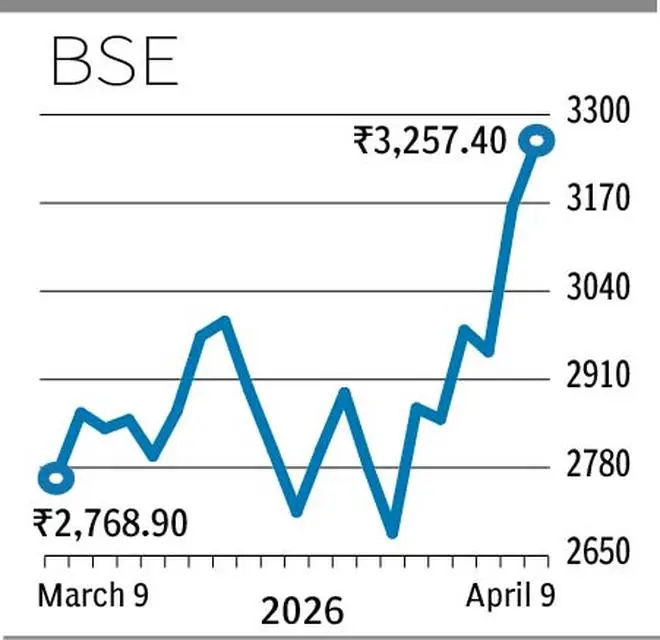
The trigger for the reversal was US President Donald Trump reiterating that American forces would remain deployed around Iran until a “real agreement” is implemented, while Israeli strikes in Lebanon continued. Markets, which had opened gap-down, briefly touched an intraday high of 77,429 on the Sensex before sustained selling dragged them to a low of 76,347.
Crude oil was central to the day’s narrative. Concerns around supply disruptions at the Strait of Hormuz pushed US crude toward $97 a barrel, with domestic futures surging nearly 2.5 per cent to trade above ₹9,000. The rupee, which had rallied for five consecutive sessions, reversed course, weakening to 92.8 against the dollar. FII selling continued for a 23rd consecutive session, with outflows of ₹37,934 crore in April alone. India VIX, the market’s fear gauge, climbed nearly 5 per cent, crossing the 20 mark.
“The shift in sentiment was also influenced by renewed geopolitical concerns, which quickly reversed the optimism seen earlier,” said Hariprasad K, SEBI-registered Research Analyst and Founder, Livelong Wealth. “…the market has not yet transitioned into a stable low-volatility phase.”
Sectorally, the damage was concentrated. Banking, financial services, private banks, auto, and consumer durables led the decline. Indusind Bank fell 2.69 per cent and HDFC Bank dropped 2.22 per cent. In contrast, metals, power, and pharma outperformed — Hindalco rose 3.30 per cent and National Aluminium climbed 3.22 per cent. Midcap and smallcap indices held up better, with the Nifty Midcap 100 gaining 0.3 per cent.
Amit Suri, CFP and Director at AUM Wealth, offered a steadying perspective: “…the bigger risk in such phases is not volatility itself, but reacting to it — staying anchored to long-term allocation and discipline is far more important than trying to time these headline-driven moves.”
The Morgan Stanley India Equity Strategy report, published on April 8, provides a longer-term anchor to the current volatility. The firm maintains a December 2026 Sensex target of 95,000, implying 22 per cent upside from current levels, with a base case premised on earnings compounding at 17 per cent annually through FY28 and improving macro stability.
Eyes now turn to TCS, a report that sets the tone for the broader IT earnings season. Key negotiations on the Iran ceasefire are expected over the weekend, and the market’s next move will hinge heavily on whether those talks yield credible progress. Until then, analysts see the Nifty trading in the 23,500–24,000 range, with resistance stiff at 24,000 and support building around 23,600.
Published on April 9, 2026

