


The strait has become a global flashpoint which has driven up the price of oil, threatened the safety of ships and seafarers while rocking regional stability. Early signs are mixed as of Wednesday night, but the US and Iran are due to hold negotiations on solidifying the truce in Pakistan at the weekend.
Why it matters
The Strait of Hormuz is a narrow maritime corridor between Iran and Oman which links the Persian Gulf to the Gulf of Oman through which countries including Saudi Arabia, Iraq and the United Arab Emirates export oil and gas.
Even limited disruption can:
- Spike energy prices
- Delay global supply chains
- Increase geopolitical tensions
What’s happening to shipping right now?
Shipping through the strait – just 39 kilometres (21 nautical miles) at its narrowest point – has been severely disrupted since the beginning of the conflict at the end of February.
According to the UN’s specialized maritime agency, the International Maritime Organization (IMO), prior to the conflict, around 150 vessels passed through the waterway every day.
With the threat of attack once the conflict broke out, that figure dwindled to just four or five ships a day, and only ones which the Iranian authorities considered as “non-hostile.”
It is still not clear if or when the strait will reopen to all shipping, despite the announcement of the ceasefire.
How vulnerable are ships?
The IMO has estimated that there are some 2,000 ships including oil and gas tankers, bulk carriers, cargo ships – as well as six tourist cruise liners – stranded in the Persian Gulf, unable to pass through the strait.
Around 20,000 seafarers are thought to be currently aboard those vessels.
There have been 21 confirmed attacks on international shipping in the region with 10 seafarer fatalities and several seafarers injured, according to IMO.
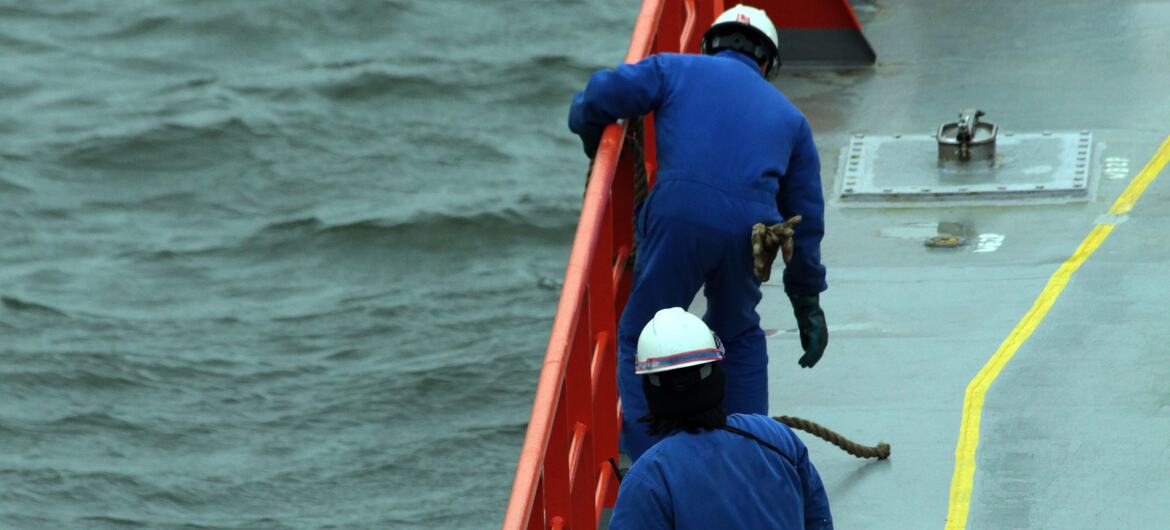
Two seafarers work on the deck of a ship. (file)
“The ceasefire is welcome news for the 20,000 seafarers who are awaiting evacuation on the ships which remain in the Persian Gulf,” said Damien Chevallier, the Director, of IMO’s Maritime Safety Division adding that “they have spent more than one month in a tense and volatile situation, unable to leave their ships.”
Safe evacuation of seafarers
IMO is already working with the relevant parties to implement an “appropriate mechanism to ensure the safe transit of ships through the Strait of Hormuz,” said Mr. Chevallier.
“The priority now is to ensure the safety of navigation to guarantee an evacuation. We do not wish to see a return to escalation. So, for now, we need to focus on evacuation,” he added.
What does international law say?
The legal framework for all maritime activities is set out in a multilateral treaty known as the UN Convention on the Law of the Sea (UNCLOS).
Key principles
- Ships have the right of “transit passage” through international straits
- Coastal States must not block or disrupt navigation
In plain terms, the strait must remain open to international shipping.
There is one major caveat, however. Iran is not a Party to UNCLOS, but the transit passage system is generally considered part of international customary law.
Will shipping resume – and how?
There is the international will to reopen the strait but “ship operators will need to carefully assess the risk situation,” said IMO’s Damien Chevallier adding that the “resumption of routine trade will depend on the maritime security situation.”
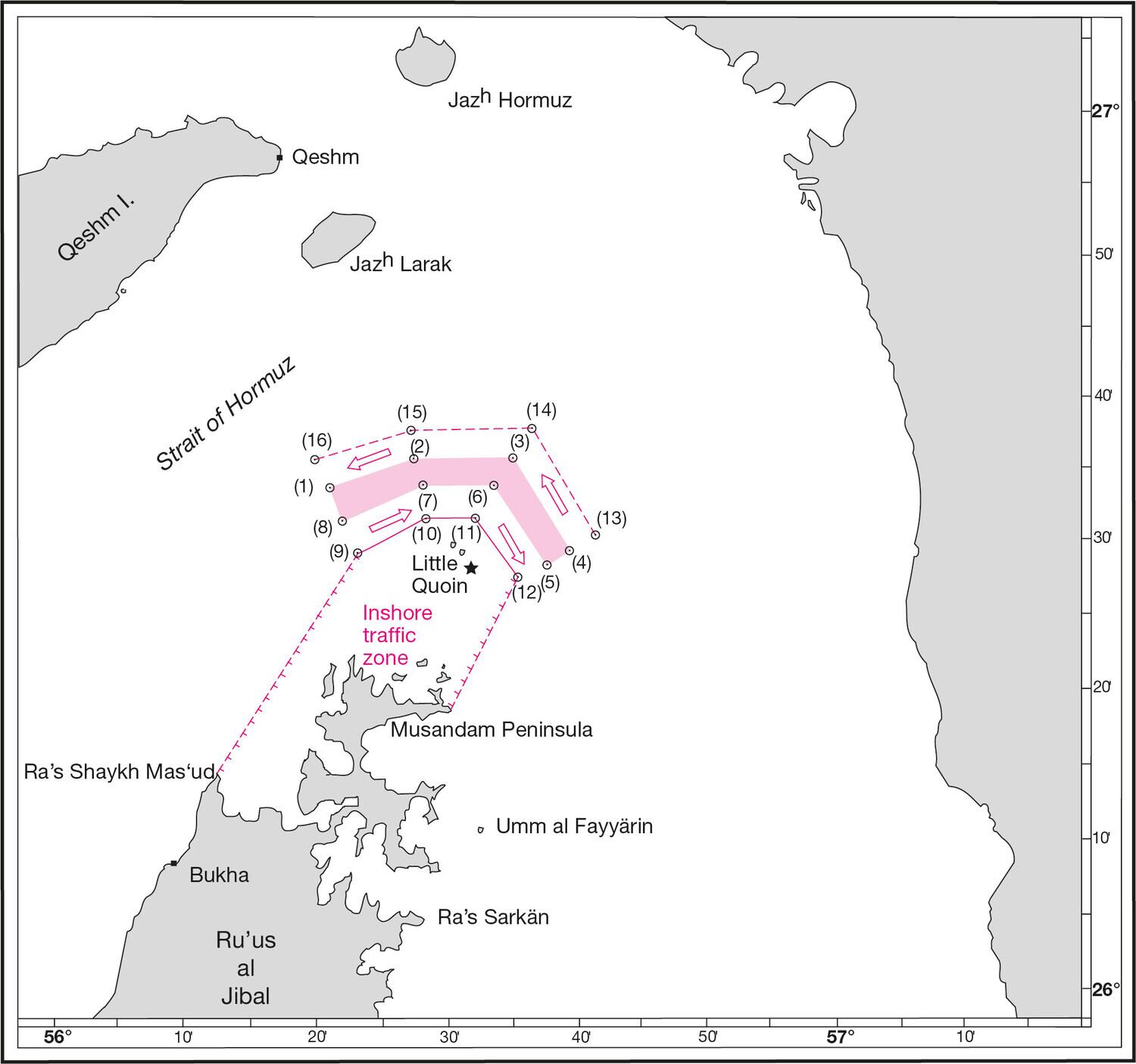
Vessels follow an internationally agreed route through the Strait of Hormuz.
Meanwhile, the UN and partners are engaging in diplomatic discussions to find a safe, secure and efficient way for ships to pass through the strait.
Shipping is expected to resume through long-established routes, the key mechanism for which is the Traffic Separation Scheme (TSS).
Proposed by Iran and Oman and adopted by the IMO in 1968, it designates shipping lanes for maritime traffic in order to:
- Reduce collisions
- Improve safety
- Maintain predictable transit even during times of international tension
The few vessels that have transited through to the Gulf of Oman over the past month have taken a northern route close to Iran, reportedly so the authorities there can monitor their movements more closely.
What next?
The successful reopening of the Strait of Hormuz ultimately depends on the ceasefire holding, diplomacy working, maritime coordination and full respect for internationally agreed navigation rules.


