


Of that total, more than 560 died in Gaza and the West Bank, 130 in Sudan, 60 in South Sudan, 25 in Ukraine and 25 in the Democratic Republic of the Congo, according to the UN’s top aid coordinator, Tom Fletcher.
“This is not an accidental escalation. It is the collapse of protection,” he told ambassadors in New York, clarifying that they were killed in service – distributing food, water, shelter and medicine, some travelling in clearly marked convoys.
Humanitarians are not just being killed but “our action is being restricted, penalized, delegitimised,” said Mr. Fletcher, who leads the UN’s aid coordination agency, OCHA.
“We are told where not to go, whom not to help. We are harassed or arrested for doing our job. We are lied about and those lies have consequences,” he added.
‘Lawlessness’ driving humanitarian deaths
The UN relief chief challenged Member States, asking why humanitarians continue to be killed despite a recent Security Council resolution which spoke with moral urgency “about ending violence” against aid workers.
Resolution (2730) from 2024 penned by Switzerland and adopted by a vote of 14 in favour, with Russia abstaining, calls on all States to respect and protect humanitarians and associated personnel in accordance with international law.
Mr. Fletcher questioned if it was because international humanitarian law, “forged by a generation of wiser political leaders” was no longer convenient. Or if “those killing us feel no cost for their actions,” or even that “we are seen as legitimate targets”.
These trends, alongside the collapse in funding for lifesaving work, are a symptom of a “lawless, bellicose, selfish and violent world,” he declared.
No accountability
In the past year, the UN reported 14 abductions, 145 arrests and detentions, along with 441 acts of intimidation and harassment against staffers, the UN’s top official for safety and security said.
In the same time period, there were also 62 attacks on United Nations premises and 84 attacks on United Nations vehicles, Gilles Michaud continued.
“Perpetrators are rarely held accountable – they are rarely named and shamed, let alone prosecuted.”
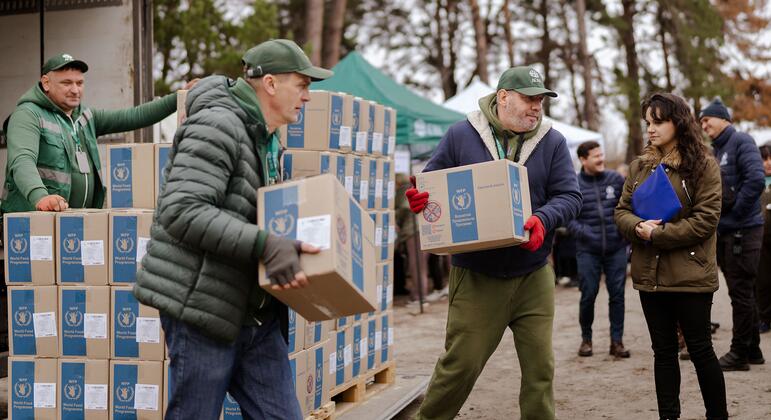
Colleagued died supporting children trapped in the throes of war, carrying out vaccination campaigns, living in violent neighbourhoods and escorting aid to reach millions in need.
“We continue to fail them,” Mr. Michaud told ambassadors, stressing that the security system for humanitarians is at its limit – increasingly underfunded, ignored and undermined.
Losing our humanity
The International Committee of the Red Cross official who liaises with the UN, Elyse Mosquini, said, simply: “We are losing our humanity in war.”
“Every attack on humanitarian personnel that passes without consequence allows this insidious pattern to continue. Each such attack signals to others that the lives of aid workers are expendable,” she said
She pointed to the alarming frequency of deliberate harmful misinformation campaigns designed to erode trust in humanitarian organizations and portray our colleagues as legitimate targets and urged, “this cannot continue.”
Uphold commitments
Citing the Council’s commitment to protection, integrity and accountability, Mr. Fletcher stressed, “we come here not to remind you of these commitments, but to challenge you to uphold them.”
For more in-depth coverage including ambassadorial statements, check out our Meetings Coverage summary here

