


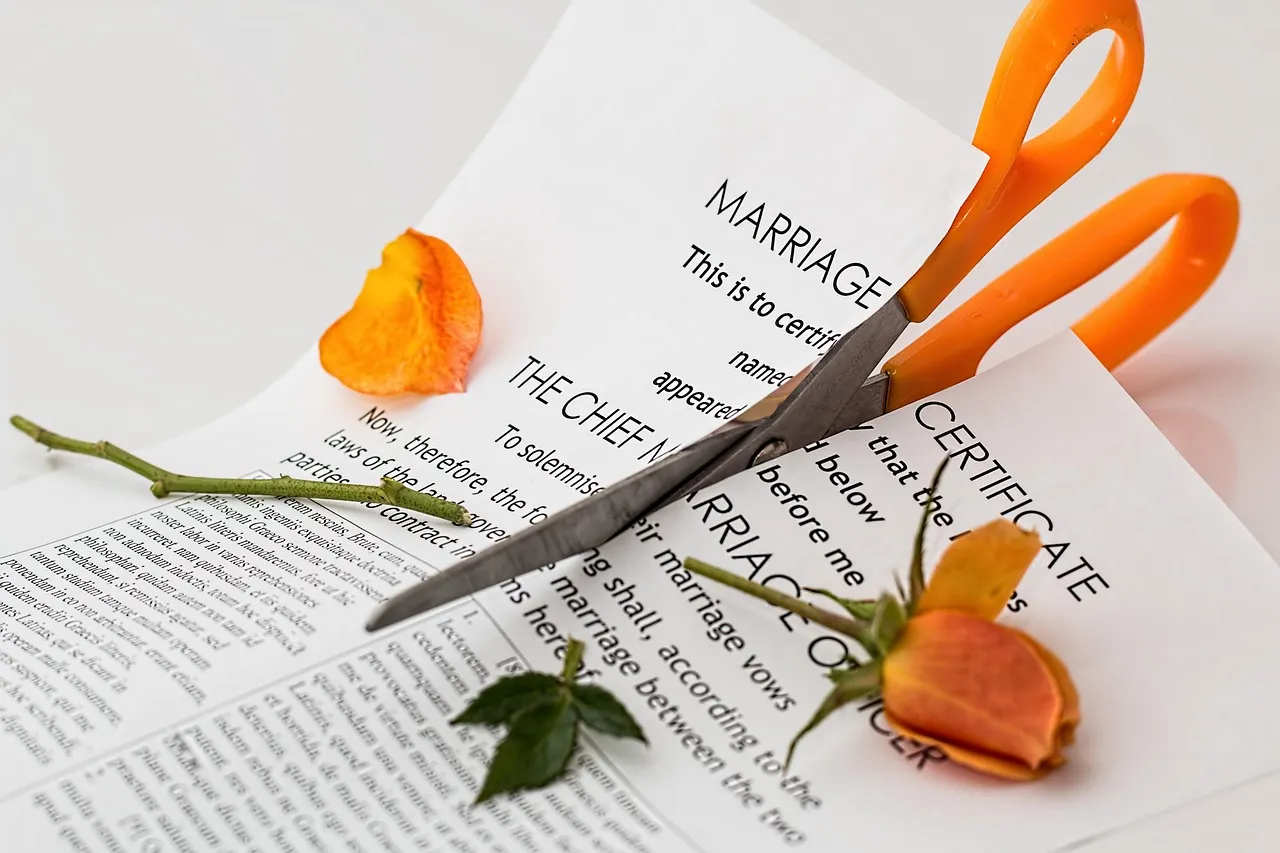
Most foreigners who wed Swiss nationals are granted citizenship through a simplified naturalisation process. However there are cases where this doesn’t happen.
Marriage to a Swiss national is one of the easiest (relatively speaking) ways for a foreigner to obtain citizenship through a so-called ‘simplified’ or ‘fast-track’ naturalisation – a shorter and less complicated process open to the foreign spouses, children or descendants of Swiss citizens, as well as third- generation foreigners.
READ MORE: Five ways you can fast-track your route to Swiss citizenship
But there are some notable exceptions to this rule.
Three-way relationship
Take the case of a Vietnamese woman who married a (much older) Swiss man but was denied citizenship anyway.
As it turned out, she maintained a relationship with another man – a foreigner as well – throughout her marriage, and even had three children by him.
When the husband got sick, the lover even moved into an adjacent apartment, with a shared entrance, where the woman allegedly lived with him.
The spouse eventually died, but when the woman applied for naturalisation, her request was rejected because the State Secretariat for Migration (SEM) got the wind of the unusual living arrangements.
The case eventually ended up in the Federal Court, which recently ruled that simplified naturalisation requires spouses to be faithful to one another and live under the same roof throughout marriage.
In the judges’ opinion, a three-way relationship does not meet the legal requirements for citizenship.
Advertisement
‘Disloyal and deceptive behaviour’
There are also other cases of Swiss citizenship being revoked after authorities found out that foreign spouses were naturalisation under false pretences.
This happened to a Moroccan woman several years ago.
Married in 2010 to a Swiss man 15 years her senior, the woman became naturalised in 2015, but separated from her husband just months later.
As soon as the couple divorced in 2017, the woman remarried in Lebanon, raising suspicions among Swiss authorities about the ulterior motives behind her marriage in Switzerland.
According to media reports at the time, “after inquiring into the circumstances of the couple’s breakup” and concluding that the woman married expressly to get a Swiss passport, the SEM revoked her naturalisation.W
In fact, on average, SEM revokes close to 50 naturalisations each year following a divorce, where it suspects that a foreign spouse married the Swiss one just for citizenship.
READ MORE: What happens to your Swiss citizenship if you get divorced?
Advertisement
Marriage of convenience
It goes without saying that such unions are illegal – as are citizenships or residency permits obtained in such a way.
As the Federal Court sees it, for a union to be considered a marriage of convenience, “at least one of the spouses must not have the intention of leading a shared life in the sense of a lasting economic, physical, and spiritual union. Indicators of a sham marriage include, for example, a long-term parallel relationship, the absence of a language both spouses understand, or the fact that the spouses have never met before the marriage.
“The Court also considers contradictory statements regarding the marriage and cohabitation, as well as a lack of knowledge about the other family, as indicators.”
Sometimes, such false unions are caught even before they happen.
According to Lex4You legal service, “a civil registrar will not consider a request to complete the preparatory procedure if it is clearly an attempt to circumvent immigration law.”
Furthermore, the court will annul a marriage retroactively if “one of the spouses does not intend to establish a marital community but rather to evade the provisions on the admission and residence of foreigners.”


