


Spanish police on Tuesday said they had uncovered a technologically sophisticated and “maze-like” underground tunnel used to smuggle tonnes of hashish from Morocco to Spain’s North African exclave of Ceuta and Europe.
The investigation found the site in Ceuta concealed under an industrial warehouse that was protected by pumping and soundproofing systems to avoid detection, police said in a statement.
The bottom of the three-level tunnel, which led directly to Morocco, resembled “a maze typical of a mine”, equipped with trolleys “that moved on a rail system of complex construction and characteristic of perfectly designed feats of engineering”.
The bales of hashish were prepared and stored on the middle level, from where they were lifted “thanks to a system of cranes and pulleys designed to move heavy loads”, the police said.
Advertisement
The entire structure is 19 metres (62 feet) deep, but investigators cannot determine how long the tunnel is “because it is flooded”, the officer responsible for the operation, Antonio Martínez, explained at a press conference.
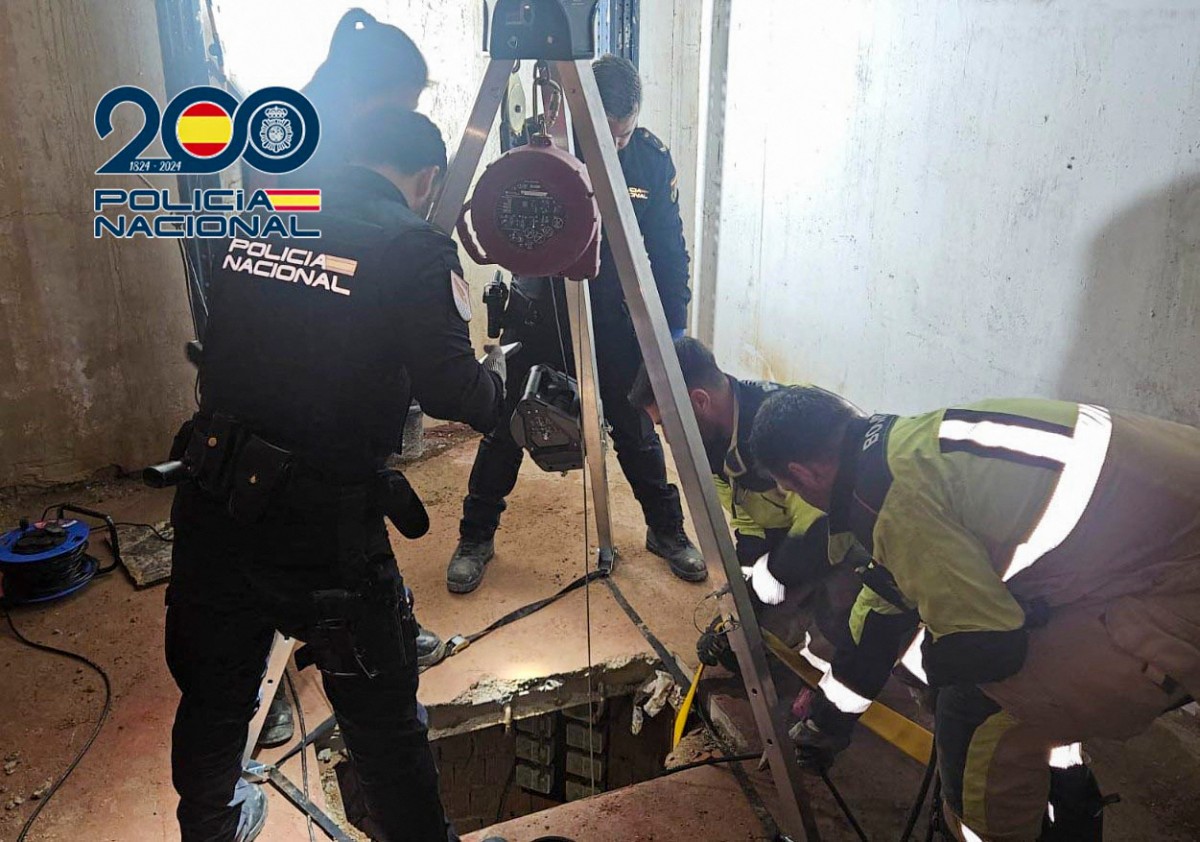
Image showing an entrance to the complex underground ‘maze’ designed to bring tonnes of drugs into Spain. Photo: National Police/AFP
The tunnel, measuring 1.2 metres high and 80 centimetres wide, was “well-equipped” and “purpose-built” by “an extremely powerful organisation” that contacted other groups to transport the drug in speedboats and fishing vessels, he added.
Police began their investigation in February 2025, seizing more than 17 tonnes of hashish and €1.4 million ($1.6 million) in cash in various operations in Ceuta and mainland Spain over several months.
They also made 27 arrests, including the network’s two suspected leaders.
One of them, based in Morocco and held on March 26, is also suspected of running another drug tunnel police dismantled in Ceuta last year.
Spain’s close ties with Latin America and proximity to Morocco, a top cannabis producer, make it a key entry point for drugs into Europe.
Its small Mediterranean coastal exclaves of Ceuta and Melilla, adjacent to Morocco, share the European Union’s only land borders with Africa.


