


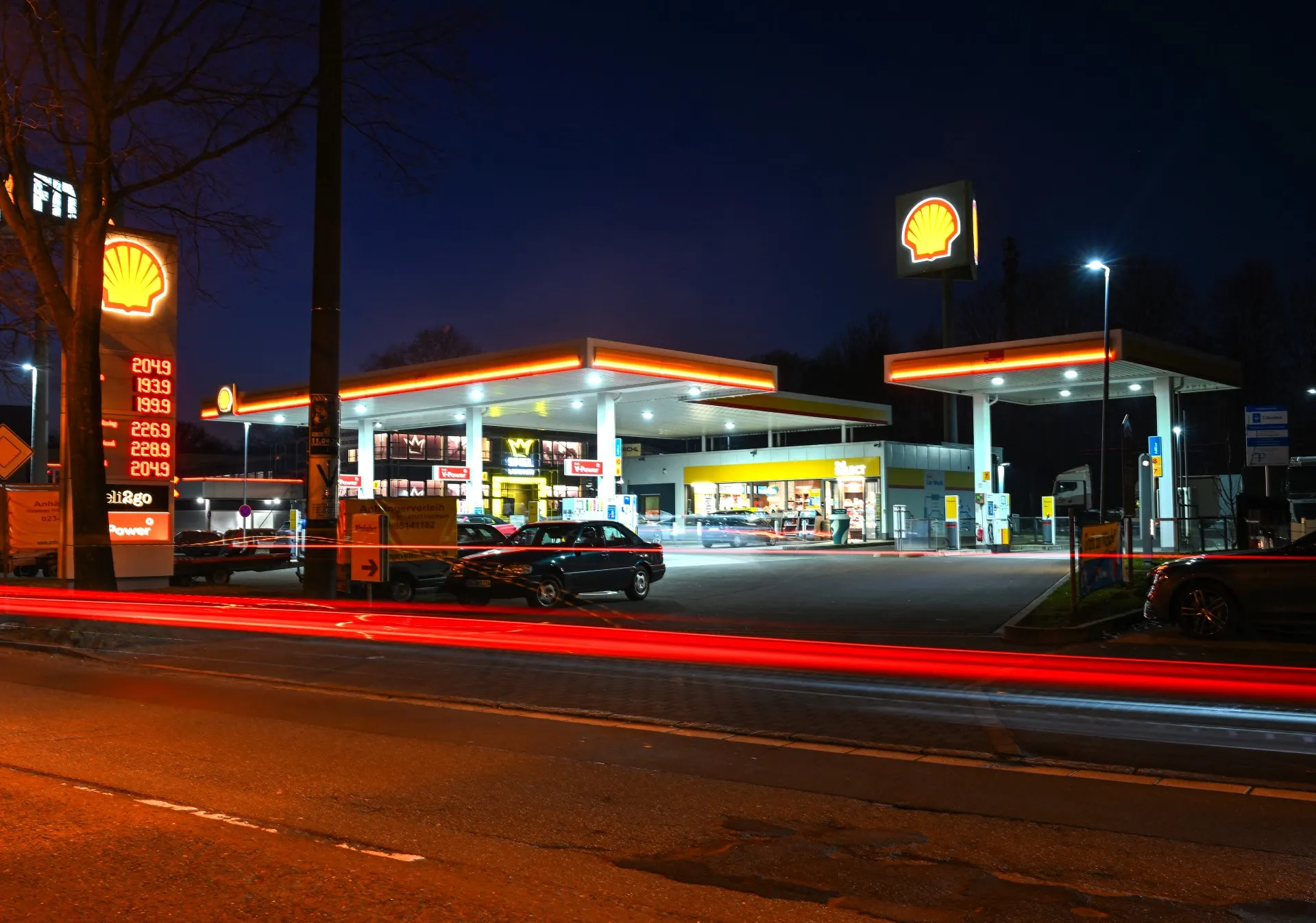
War in the Middle East has caused energy market turbulence around the globe, forcing governments in Europe to intervene and keep fuel costs down for consumers.
With war in the Middle East upending geopolitics and sending gas and fuel prices soaring, consumers are increasingly paying the price at the pumps.
Faced with uncertainty, the EU’s energy commissioner Dan Jorgensen has asked member states to help consumers and businesses by lowering energy costs in any way they can.
“If you are at all able to lower taxes on energy, especially on electricity, there is a huge potential” to help cut bills, Jorgensen said at a press conference at the EU Parliament in Strasbourg recently.
With consumers paying the price for market volatility, several governments across Europe have intervened to try and keep costs down in various ways.
So, what are European countries doing to keep fuel costs down?
Spain
The Spanish government has been among the most energy proactive on the continent, not only with market shocks caused by the Iran war but also following Russia’s invasion of Ukraine in the post-pandemic period.
The leftist Sánchez government has rolled out a series of measures including cuts to VAT on gas and fuel to cut pump prices by as much as €0.30/litre, which works out to approximately €20 per tank for the average car.
Additional subsidies of €0.2 per litre of fuel for transport operators, farmers, ranchers and fishermen, along with lower electricity taxes, have also been made available.
READ ALSO: CONFIRMED – Spain approves measures to curb Middle East war impact
Advertisement
Germany
German MPs have green-lighted new fuel price rules to soften price spikes, as well as to bring more transparency and predictability to pump pricing in the country.
Under the new rule, petrol stations may only increase prices only once per day at a pre-established time.
The changes still require sign-off by the Bundesrat, but if the upper house approves it the new rules would come into force by April and apply for one year before review.
The government has also announced plans to release parts of Germany’s strategic oil reserves as part of a coordinated move with the International Energy Agency, although officials caution this is unlikely to have a noticeable effect at German petrol stations.
READ ALSO: German Bundestag passes new fuel price rules
France
Faced with fears of a diesel shortage, the French government has temporarily authorised the sale of fuel that does not meet usual standards, and has also sent out tax inspectors to make spot checks on fuel stations, with dozens fined for abusive pricing practices.
After a meeting between the government and fuel distributors, the French oil giant TotalEnergies agreed to freeze prices at €1.99 for petrol and €2.09 for diesel until the end of the month.
The government has also authorised some limited measures to ease pressure on drivers, mostly aimed at businesses, but says it is “too early” to discuss measures like lowering the tax on fuel, or providing financial aid to low-income households to help them deal with the rising cost of driving.
Hauliers say the measures are not enough and have announced protests and roadblocks, starting on Saturday.
READ ALSO: France loosens diesel standards amid rising fuel prices
Advertisement
Norway
The Storting (Norway’s Parliament) voted on March 26th to remove the road usage tax (veibruksavgift) on petrol and diesel from April 1st until September 1st.
The road tax currently stands at 3.77 kroner per litre for petrol and 2.28 kroner per litre for diesel. Because Norway’s 25 percent VAT is applied on top of the road tax, removing it also wipes out the VAT charged on it.
In practice, petrol drivers should see prices drop by around 5 kroner per litre, and diesel drivers by around 3 kroner per litre.
For petrol, a tax cut of 3.77 kroner plus a VAT reduction of 0.94 kroner results in a decrease of approximately 4.71 kroner per litre.
For diesel, a tax cut of 2.28 kroner and a VAT reduction of 0.57 kroner lower the price by about 2.85 kroner per litre.
READ ALSO: Norway announces cut to fuel taxes – How much will you save?
Advertisement
Austria
Austria’s government has agreed on a package of temporary measures aimed at limiting further rises in petrol and diesel prices and ensuring that neither the state nor energy companies benefit disproportionately while consumers face sharply higher prices.
The first part of the package is a tax cut. The government said the mineral oil tax on petrol and diesel would initially be reduced by 5 cents per litre.
Then, there’s a legal mechanism that allows the government to limit operating margins across the value chain when a crisis exists. Taken together, the coalition said the relief should add up to around 10 cents per litre. The coalition said this could mean around €5 on an average tank fill.
READ ALSO: EXPLAINED – What is Austria’s plan to stop fuel price increases?
Advertisement
Italy
Italy’s government approved an emergency decree cutting excise duties on fuel by around 25 cents per litre, according to an announcement by Prime Minister Giorgia Meloni.
Consumer group Codacons calculates the actual reduction at the pump, including VAT, will be closer to 30 cents — a saving of around €15 on a 50-litre tank, enough to bring diesel back to roughly pre-conflict levels.
To ensure companies pass the savings on to consumers, Italy’s Guardia di Finanza has launched checks after the price watchdog found pumps that hadn’t yet lowered prices.
Oil companies must also now report daily recommended prices to the ministry or face fines of 0.1 percent of turnover.
READ ALSO: What Italy is doing to push down the price of fuel
Sweden
The Swedish government and Sweden Democrats are proposing lowering taxes on petrol and diesel in light of skyrocketing energy prices.
The proposal is to temporarily lower the tax on petrol and diesel in the budget, with the change coming into force on May 1st and lasting through the end of September. The tax reduction will cost 1.5 billion kronor.
They are also proposing a new electricity and gas subsidy, which will cost 2.4 billion kronor, and will reimburse households for high costs incurred in January and February this year.


