


WTO Director-General Ngozi Okonjo-Iweala (centre left) wants to push ahead with reforms – but member states are divided.
Afp Or Licensors
Members of the World Trade Organization (WTO) meet from March 26–29 in Yaoundé, Cameroon, for the 14th Ministerial Conference, the body’s main decision-making forum. A reform proposal is on the agenda for the negotiations, which will take place in a tense geopolitical climate.
The 14th Ministerial Conference of the World Trade Organization (WTO) – the institution’s main decision-making body – opens on March 26 in Yaoundé, Cameroon, amid trade tensions and as the war in the Middle East disrupts commerce and threatens to slow global economic growth.
The WTO, whose rules are intended to provide a framework and a degree of predictability for trade, has undergone a severe test at the hands of U.S. President Donald Trump’s administration, which imposed high tariffs on several countries, including Switzerland, in an effort to secure more favourable bilateral agreements. Confronted with this situation, the Geneva-based body was powerless.
“The status quo is not an option,” the organisation’s director-general, Ngozi Okonjo-Iweala, said during a press conference last month in Geneva. “We must evolve to adapt to our times,” she added, referring to the economic, demographic and technological changes the world has undergone since the WTO’s creation in 1995. According to her, reforms are necessary because the collapse of the multilateral trading system would lead to “chaos”.
Reform will be at the heart of the upcoming Ministerial Conference, which takes place every two years and to which ministers from the organisation’s 166 member states are invited. But the prospects for a real breakthrough on this issue by the end of the meeting on March 29 are poor given persisting disagreements.
“The chances that the Ministerial Conference will yield concrete results on the reform agenda are very slim,” says Joost Pauwelyn, a professor of international law at the Geneva Graduate Institute, WTO specialist and a partner at Cassidy Levy Kent. “With 166 member states, simply agreeing on a roadmap is already very complicated,” he adds.
In this article, we take a closer look at the challenges of the WTO:
More
More
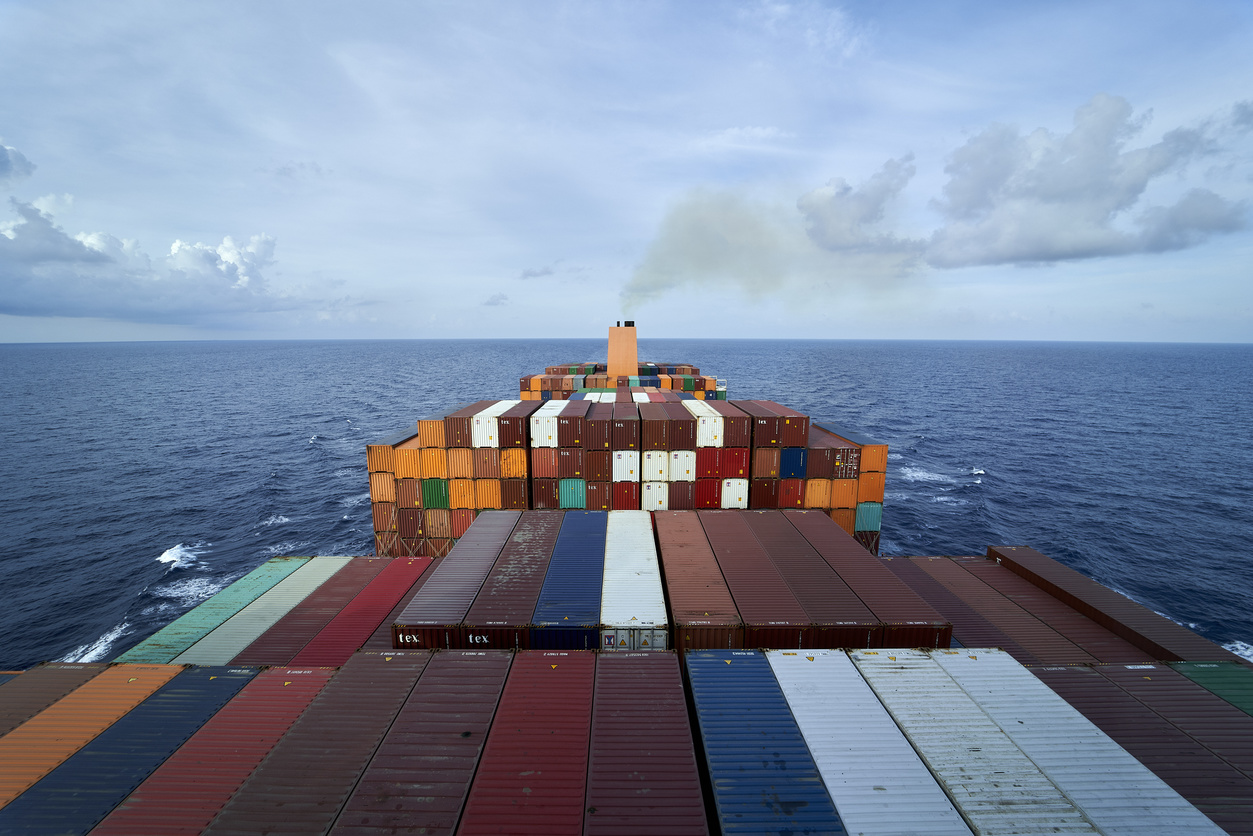
Can the WTO live up to its mission?
‘No longer a forum for agreements’
The question of reform is almost as old as the organisation itself. Reaching agreements there has become a nearly impossible task due to the consensus rule, which requires the approval of every member.
Okonjo-Iweala, however, emphasised the organisation’s “robustness,” noting that despite trade tensions and the rise of protectionism, more than 70% of global trade still takes place in accordance with WTO rules.
“The WTO is no longer a forum for concluding trade agreements,” Pauwelyn says. “These are now negotiated outside the organisation, as was the case between Mercosur and the European Union, or with the bilateral agreements the United States has concluded in recent months. But it remains an important forum for technical discussions, for example on sanitary measures applicable to certain food products.”
Another challenge: since 2019, the Appellate Body, which is responsible for resolving trade disputes between countries as a last resort, has been paralysed by the United States, which is blocking the appointment of new judges. But the organisation still has other mechanisms that remain effective for resolving disputes, such as the Multi-Party Interim Appeal Arbitration Arrangement, supported by some 50 members, including the European Union and China.
Other UN bodies are also under pressure:
More
More
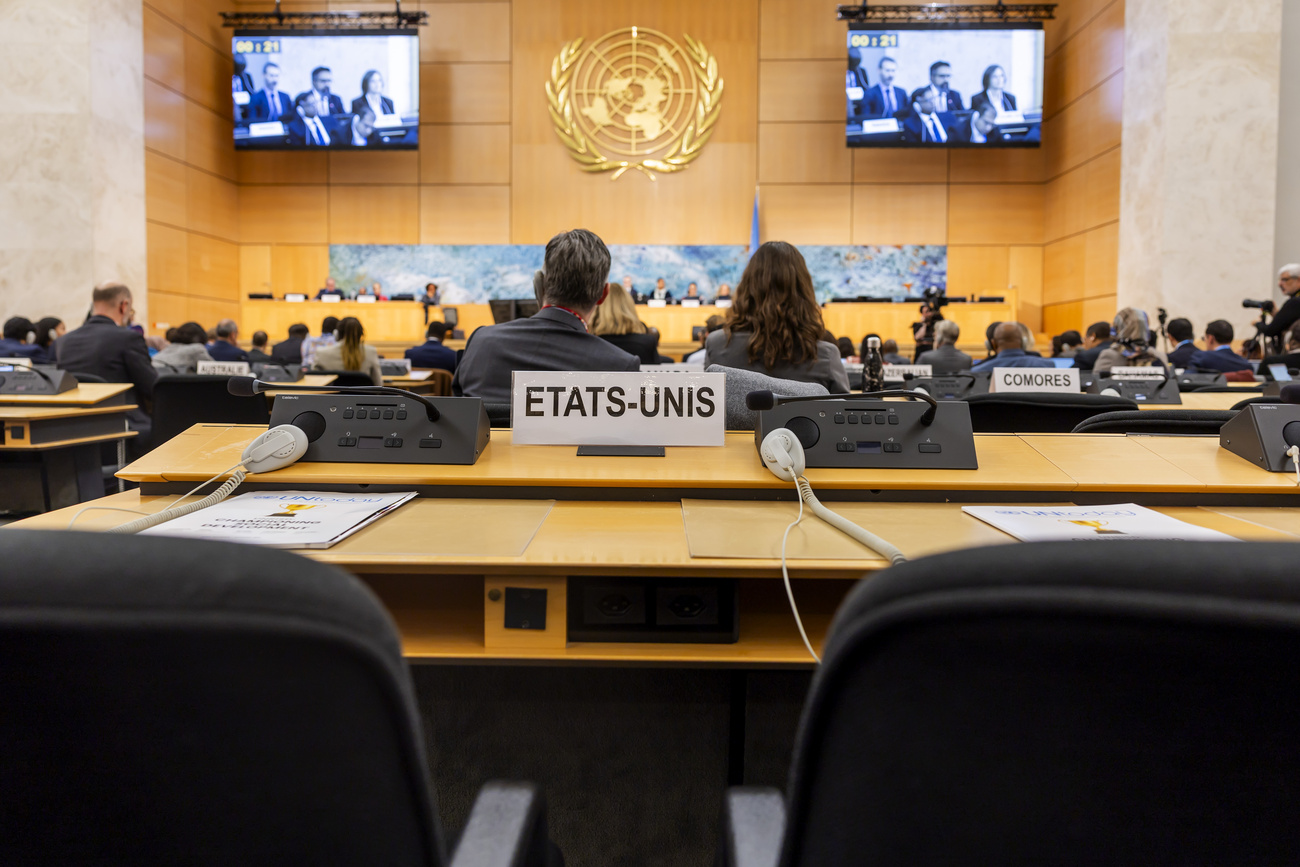
Twenty years after its creation, the Human Rights Council is under pressure
Three pillars of reform
For the past nine months, Norway’s Permanent Representative to the WTO, Petter Ølberg – appointed as “facilitator” for the reform agenda – has been coordinating work on this sensitive issue to prepare for the Ministerial Conference. He has drafted a report and submitted it to the organisation’s members. It includes a draft ministerial declaration and a work plan for implementing the reforms, which are expected to be completed in two years.
But there is no consensus on this issue. While the European Union, Switzerland and China are in favour of an ambitious reform plan, India and the United States are currently among the most reluctant countries.
In Yaoundé, three areas of reform are being considered. The first concerns consensus-based decision-making, which slows down or even blocks the adoption of new agreements. The most recent agreement, on fisheries subsidies, entered into force last September after 25 years of negotiations. Confronted with this situation, some members want to reach agreements on a plurilateral basis, in groups of countries.
The criteria for “developing country” status are also on the conference agenda. This status offers certain benefits but is based on self-assessment – the reason why countries such as China and Singapore profit from it. Rules on fair competition, including subsidies and industrial policies, round out the proposed reform agenda.
“It’s impossible to reach a consensus on these issues, which have been debated for decades, because the countries’ interests diverge too widely,” Pauwelyn says. “Given the current climate – characterised by rivalry between the United States and China, Trump’s tariffs and the economic consequences of the war in the Middle East – reforms are not seen as a priority.”
A roadmap for future reforms could still be adopted, but its content remains uncertain. When asked by the Keystone-SDA news agency, Switzerland’s ambassador to the WTO, Erwin Bollinger, stated that a lack of consensus on a roadmap would be “an extremely negative signal.” According to Bollinger, “it wouldn’t be the sudden death of the multilateral trading system, but it would lose its relevance.”
Edited by Virginie Mangin/Adapted from French by Catherine Hickley/amva
More

More


