


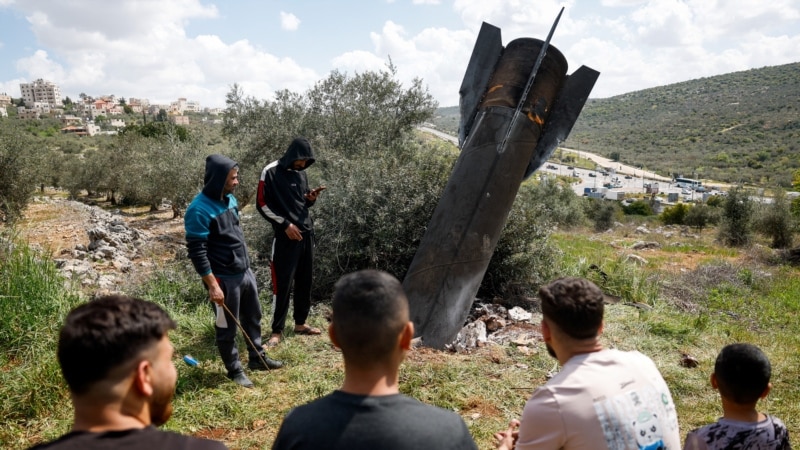
Iran launched attacks on Israel and Kuwait less than a day after US President Donald Trump announced “very good and productive” talks toward an agreement to end the war with Tehran, now in its fourth week.
At least six people were injured as impacts hit four sites in the city of Tel Aviv on March 24, with local officials saying the damage was done by debris raining down after incoming Iranian missiles and drones were shot down.
Meanwhile, Kuwait said its air-defense systems responded to “missile and drone attacks” and that reported sounds of explosions were caused by intercepting these threats.
Tehran launched the missiles and drones at targets around the Middle East amid conflicting reports over whether talks were being held to bring about a cease-fire in the fighting that started with US and Israeli strikes on Iran on February 28.
Trump said on March 23 that weekend talks with a “top” Iranian official had been substantial enough for him to postpone for five days possible attacks on Iran’s power plants unless it reopened the Strait of Hormuz.
Iran has steadfastly denied any direct discussions had taken place, though several media reports quoted unnamed sources as saying intermediaries had been involved in relaying messages between the two sides.
Kenneth Pollack, a former White House and CIA analyst now at the Middle East Institute (MEI), said there is little evidence to support claims of imminent diplomatic progress despite the efforts of several countries to broker talks.
“My understanding is that the Iranians have responded with huge preconditions — US paying reparations, removing all of our forces from the region — which are nonstarters for Trump,” Pollack told RFE/RL in Washington.
“Trump’s remarks seem to be mostly about calming the markets rather than reflecting a true, imminent breakthrough,” he emphasized.
The outbreak of the conflict has sent oil prices soaring, especially with shipping grinding to a virtual halt in the Strait of Hormuz, a key shipping chokepoint that handles about one-fifth of the world’s oil and gas transit.
The conflict has upended energy and stock markets, driven up fuel costs, fueled global inflation fears, and rocked the Middle East and the West, with concerns the fighting will spill over and engulf the region.
The threat of strikes on Gulf electricity grids raised fears of mass disruption to desalination for drinking water and further rattled oil markets.
Trump’s comments on the talks helped push the price of benchmark Brent crude down some 10 percent on March 23, though the strikes across the Middle East on March 24 pushed it back up around 3 percent to more than $102.84 per barrel.


