

Kazakhstan will hold a national referendum on 15 March on the adoption of a new Constitution. The draft Basic Law consolidates presidential powers while introducing a number of additional reforms aimed at modernizing the country’s political system.
President Kassym-Jomart Tokayev signed a decree scheduling the referendum after the Constitutional Commission submitted the final version of the draft.
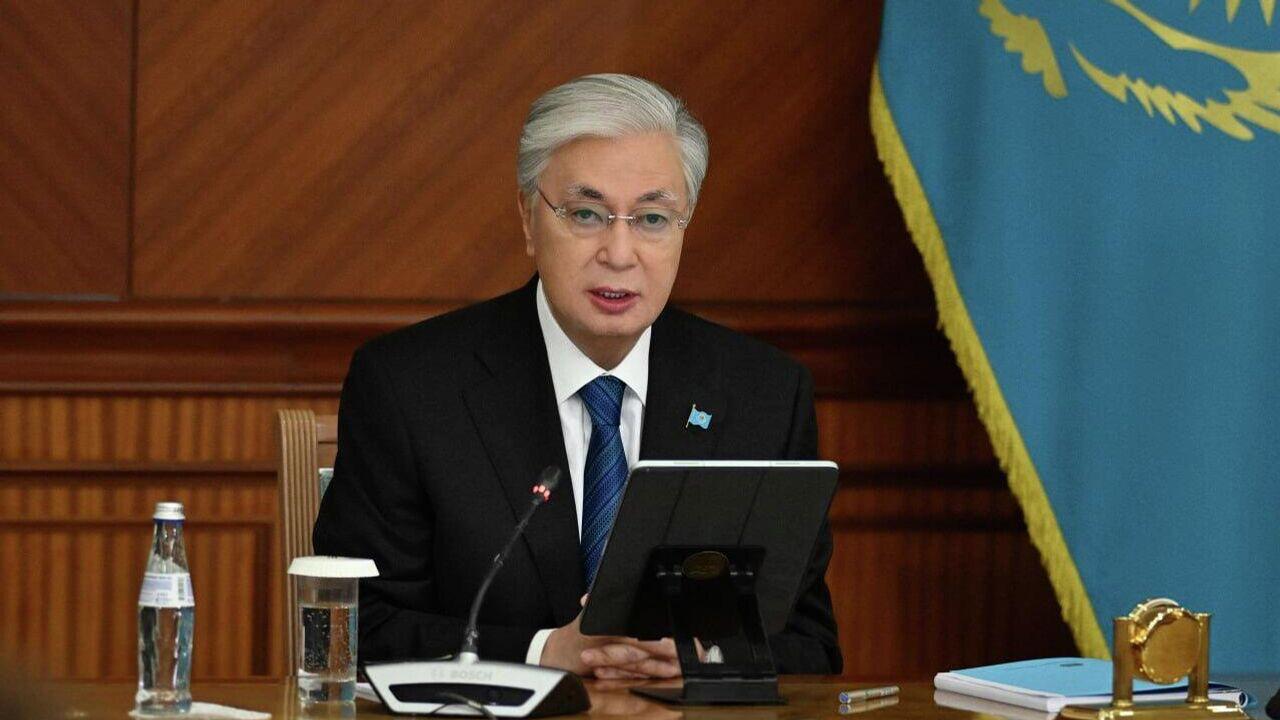
“The proposed amendments will allow for a redistribution of powers, strengthen the system of checks and balances, and, most importantly, enhance the efficiency and sustainability of all political institutions,” Tokayev stated at a government meeting on 10 February.
According to the President, the current Constitution played a significant role in the country’s achievements over the past 30 years, but no longer fully reflects the realities of today’s economic, geopolitical, and technological landscape.
“We must recognize that it was adopted when our country was only beginning to stand on its feet and therefore bears the imprint of the difficult early years of independence. Since then, our society has changed substantially,” he explained.
The draft of the new Constitution has been published by the Constitutional Reform Commission.
The proposed text was developed following a comprehensive review of proposals from citizens, political parties, public organizations, and experts, as well as open public discussions and detailed legal analysis of new norms and provisions.
The starting point for constitutional reform was President Tokayev’s initiative to establish a unicameral Parliament in Kazakhstan. He first announced this idea on 8 September 2025 during his annual State of the Nation Address, with the aim of comprehensively resetting the political system and supporting further socio-economic development in the era of artificial intelligence.
On 8 October 2025, a Working Group on parliamentary reform was established, comprising prominent legal scholars, experts, representatives of parliamentary factions, and public organizations.
Citizens also actively participated in the discussion process by submitting proposals through the e-Otinish and eGov portals. Over approximately six months of intensive debate, the Working Group reviewed and systematized more than 2,000 public submissions.
At the fifth meeting of the National Kurultai in January 2026, President Tokayev summarized the results of this work and presented his vision of the forthcoming changes.
Initially, it was expected that around 40 articles of the Constitution would be amended. However, during the process it became clear that the scope of reform would be broader, affecting many additional aspects of political and social life.

On 21 January, a Constitutional Commission comprising 130 members was formed. It included members of the National Kurultai, leading legal experts, officials of central government bodies, media executives, chairpersons of maslikhats, representatives of regional public councils, and members of the academic and expert communities, ensuring representation of all social groups and regions of Kazakhstan.
All Commission meetings were fully open and broadcast live, with extensive media coverage. Prominent lawyers, human rights advocates, public figures, members of parliament, political scientists, and other experts contributed their opinions and proposals.
During its work, the Commission examined amendments affecting all sections of the Constitution and 77 articles – approximately 84 percent of the text. As a result, the question of preparing an entirely new Constitution was raised and supported.
The conceptual changes aim to strengthen the human-centered nature of the state, reflect the contemporary values and principles of the people of Kazakhstan, and improve the effectiveness of political institutions.
For the first time, the new Preamble proclaims human rights and freedoms as the state’s primary priority. Unity and solidarity, as well as interethnic and interfaith harmony, are defined as the foundation of Kazakhstan’s statehood.
Sovereignty and independence, unitarism, and territorial integrity are designated as immutable values.
Principles such as justice, law and order, and environmental stewardship are enshrined at the constitutional level for the first time.
The draft also reaffirms that the people of Kazakhstan are the sole source of state power and the bearer of sovereignty.
Education and science, culture, and innovation are identified as central pillars of the new constitutional text, marking a strategic shift toward human capital as the primary driver of national development rather than natural resources.
Digitalization represents another key dimension of the reform. For the first time, the Constitution includes provisions guaranteeing the protection of citizens’ rights in the digital environment.
A defining feature of the new draft is its strong focus on human rights. Rights and freedoms are not only emphasized in the Preamble but positioned as the guiding principle of the entire constitutional framework.
The draft clearly delineates the separation of religion and state and affirms the secular nature of the education system.
Among the key innovations of the proposed Constitution are:
- The establishment of a new unicameral Parliament – the Kurultai – consisting of 145 deputies with expanded powers. Deputies will be elected through a proportional electoral system for five-year terms. The proportional system is expected to strengthen party institutionalization and increase political accountability.
- The creation of a new national dialogue platform, the People’s Council of Kazakhstan, as the highest consultative body representing the interests of the people and vested with the right of legislative initiative.
- The introduction of the institution of Vice President, who will, on behalf of the President, engage with socio-political, scientific, and cultural organizations in Kazakhstan and abroad.
- The inclusion of a separate constitutional article dedicated to the legal profession and advocacy.
- Constitutional protection of intellectual property.
- Strengthened guarantees of citizens’ rights, including the prohibition of retroactive laws that impose new obligations or worsen individuals’ legal position, reaffirmation of the presumption of innocence, and the prohibition of double jeopardy.
- The constitutionalization of the “Miranda rule.”
The new draft Constitution underscores Kazakhstan’s established statehood, its international standing, and its clear strategic priority on developing human capital, education, science, and innovation, positioning the country confidently toward the future.
At the same time, due recognition is given to the current Constitution, which played a crucial role in the formation of statehood and Kazakhstan’s historical development.
In total, the first draft of the new Constitution proposes a Preamble, 11 sections, and 95 articles.
The final decision on the adoption of the new Constitution will be made by the citizens of Kazakhstan in the nationwide referendum on 15 March.


