


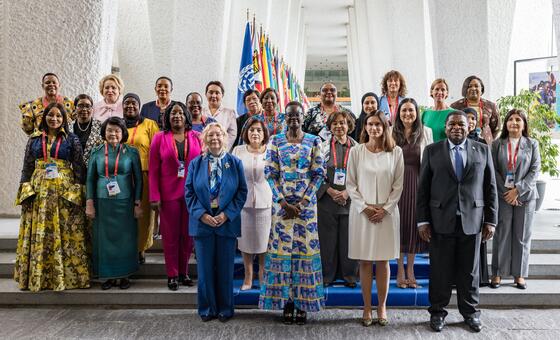
The report titled Women in parliament 2025 released ahead of International Women’s Day on 8 March, also found that women’s leadership in parliament dipped with women holding 12 out of 75 newly appointed speakerships.
Meanwhile, quotas were identified as playing a “critical role” in boosting women’s representation in the 49 countries that held elections last year.
Chambers with some form of legislation in place saw an average of 31 per cent women appointments compared to 23 per cent in chambers without quotas.
Large regional differences
The Americas remained the region with the highest representation of women in parliament with women accounting for 35.6% of all parliamentarians.
Elsewhere, Kyrgyzstan recorded the greatest progress in women’s representation with a 12.9 per cent increase in women in its Parliament closely following Saint Vincent and the Grenadines with a 12.3 per cent increase.
By contrast, the report found that women’s parliamentary representation remained lowest in the Middle East and North Africa, where women hold just 16.2 per cent of seats on average.
Three countries, Oman, Tuvalu and Yemen, have no women MPs in their lower or single chambers.
Women targeted by violence
Amid stagnating representation of women in parliament, women MPs are also more impacted by a surge in public intimidation.
A recent IPU report on the increase in political violence against parliamentarians found that women MPs are more affected than men by intimidation from the public – both online and off – with 76 per cent of women surveyed experiencing violence versus 68 per cent of male legislators.
“This growing phenomenon may discourage some women from running for office, an additional obstacle to progress in women’s political representation” the IPU said in a statement on Friday.
Speaking to UN News last month, Valentina Grippo, an Italian MP with the European Delegation to the IPU, emphasised the difficulties MP’s have just doing their job today: “If you say something that is not perfectly in line with what your audience wants to hear, then you have multiple attacks.”
However, the reports notes that some countries have taken steps to address the violence, such as the Colombian Parliament who passed a law to prevent and punish violence against women in politics.


