

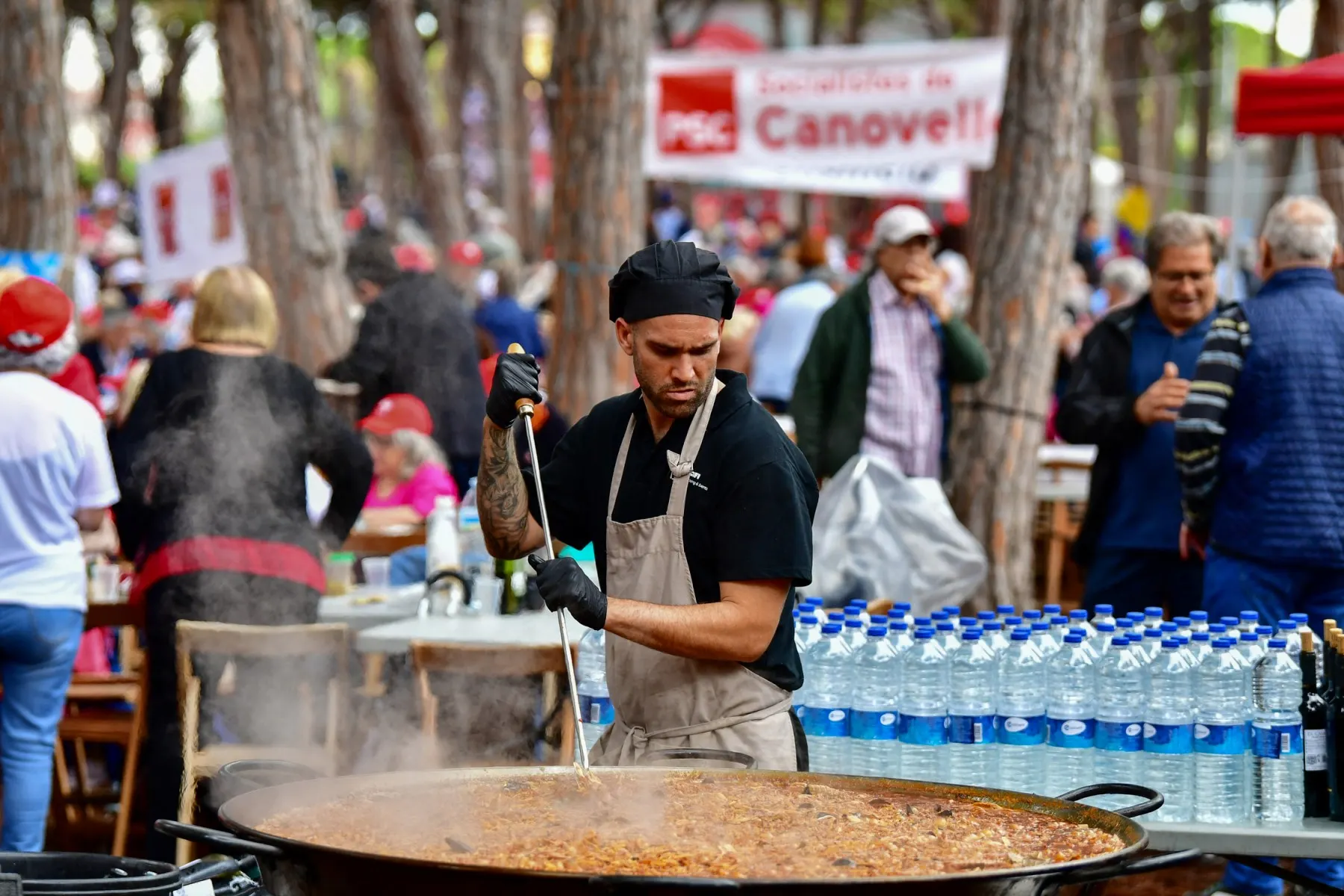
Spaniards are known to be pretty puritanical when it comes to paella. Not only in terms of ingredients, but when to eat it and even which day.
Spaniards can be quite particular about paella. How to make it, the right ingredients to include — and, crucially, which not to include — as well as when to eat are all controversial questions if you don’t know paella tradition.
Just ask Jamie Oliver. People from Spain – and the Valencia region in particular – can be pretty puritanical when it comes to how a paella should be made. The British TV chef received a barrage of criticism and even death threats from Spain after adding chorizo to his paella in 2016.
Advertisement
This is especially true among Valencians, where the dish comes from, who react very badly to anyone straying from the original recipe and customs.
Chorizo-based culinary crimes aside, though, there are two other paella traditions, or customs, you need to know: firstly, that paella is always, and I mean always, eaten for lunch rather than dinner; and, secondly, it’s traditionally served on Thursdays… in bars, at least.
READ ALSO: Ten ingredients you should NEVER have in a real Spanish paella
Lunch not dinner
Spanish eating habits usually revolve around a heavy lunch and then a lighter dinner. Put simply: paella is, and always will be, for lunch.
In Spain, a phrase that many consider almost a rule of life has been repeated ad nauseam for decades now: “rice is only eaten at lunchtime”. In Valencia you might hear locals say it can only be eaten “in the sun” or some variation — the idea is that you’d never eat it at night.
If you want to give yourself away as a guiri or clueless tourist, order paella for dinner. If the restaurant you’re in serves paella for dinner, you’re in a tourist trap.
Food historians say the big midday meal (or in the case of Spain, more like 2pm) comes from Spain’s agricultural history and working day. Farmhands not only took a break to avoid the worst of the heat in summer, but they also needed a hearty meal to continue working for the rest of the afternoon.
Nowadays, the custom seems to have stuck for a couple of possible reasons: firstly, that preparing a rice dish for several people requires time, fresh produce and preparation, something some might not want to do as dinner is served at 9pm or 10pm in Spain; and secondly, for reasons of digestion in that Spaniards tend to take una tapa or something lighter before bed.
However, as this article in Spanish daily El País pointed last year, Spaniards don’t follow the same logic with other foods and have no problem eating a large pizza or sushi for dinner.
Advertisement
Thursday paella
Traditionally in Spain, especially in the Valencia region, paellas are eaten at home with family on long Sunday afternoons where la sobremesa can go on for hours.
We’re not talking about family paellas here, but rather the classic paella on offer in Spain’s famous menu del día that has been a classic on Thursdays for decades.
Why is this? Well, reluctant though we are at The Local to link absolutely everything about Spain to its dictatorial past, it seems that the Thursday paella tradition may have its roots in the eating habits of Francisco Franco.
An urban legend repeated in the Spanish press over the years is that Franco was very fond of going out to eat on Thursdays, and, as a great lover of paella, he expected to find it on the menu wherever he went.
According to La Vangardia, in order not to take any chances and disappoint the dictator, bars and restaurants around Madrid began to include paella among their dishes every Thursday, just in case Franco decided to drop in.
Among other more plausible explanations, Thursday was traditionally a day off for domestic workers. Cooks often had Thursdays off, so they would prepare the sofrito in advance so that the masters of the house only had to add the rice shortly before eating.
READ ALSO: Five facts you probably didn’t know about Spanish paella


