

In Switzerland, as elsewhere, certain historical landmarks and other sights are part of cities’ identities and cultural heritage. Do you know what they are?
Lucerne
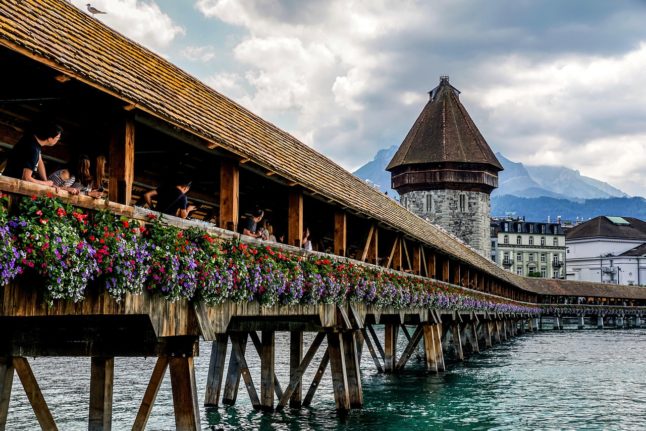
The city’s famous landmark, the wooden Kapellbrücke (Chapel Bridge), has just been named among the top-10 most beautiful bridges in the world, in a new ranking by Time Out lifestyle magazine. It took 7th place out of 19 bridges rated in the survey.
According to the publication, the 205-metre-long footbridge stretching diagonally across the River Reuss, “has survived floods, shortenings, and calls for demolition across its 650+ years – and that’s before a 1993 fire destroyed many of its painted ceilings. But this is a story of resilience. The remaining overhead artwork, the timber beams lined with flower boxes, and the 14th-century water tower remain peaceful symbols of the city’s endurance. The bridge’s centre was rebuilt, the edges remain intact, and the lost ceiling paintings were captured in photographs.”
Zurich
The skyline of Switzerland’s largest city is instantly recognised by iconic twin towers of the Grossmünster.
This Romanesque-style Protestant church dating back to the 12th and 13th centuries, is a former monastery built on the graves of the city’s patron saints, Felix and Regula.
Its history is closely linked to the Reformation, having served, in the 16th century, as home to the movement’s initiators Huldrych Zwingli and Heinrich Bullinger.
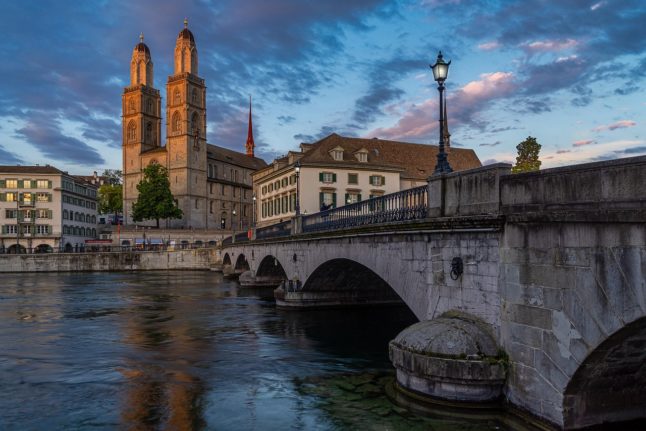
Image by Jörg Vieli from Pixabay
But Zurich is not the only Swiss city symbolised by its cathedral:
Lausanne
Perched on a hill overlooking the city, the cathedral’s claim to fame goes beyond being Switzerland’s largest Gothic church.
The imposing church, consecrated in 1275, is also one of the few remaining in Europe to still employ the night watchman, whose job is to call out the hours from 10pm to 2am, 365 days a year, from the cathedral’s bell tower – a tradition kept that has been alive since 1405.
READ MORE: Lausanne keeps six-century-old tradition alive
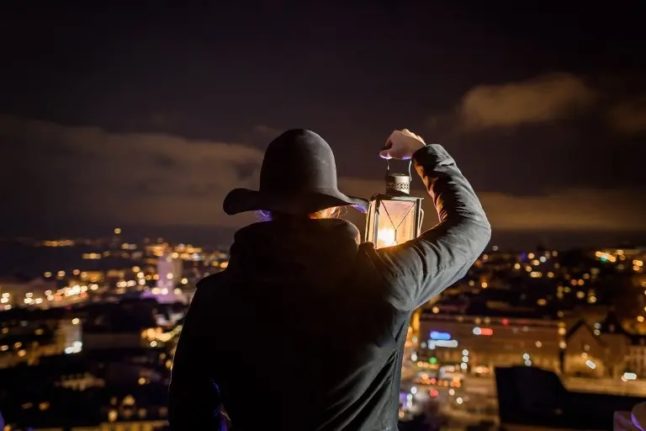
Photo: Fabrice Coffrini/AFP
Advertisement
Geneva
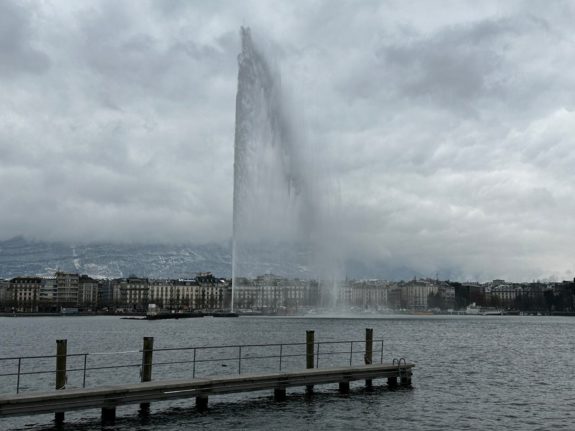
The landmark that represents the city is not a brick-and-mortar structure, but a gigantic fountain situated in the city centre, just off the shore of Lake Geneva.
The Jet d’Eau (literally ‘water jet’) is 140 metres high, making it Europe’s tallest fountain and spouts 500 litres of water per second at 200km/h.
But when it was originally created in the 19th century, it wasn’t a fountain at all, but a release valve designed to relieve over-pressure from a hydraulic pumping station that powered the machines of local jewellers and watchmakers.
At first, it only spouted water 30 metres high – with the volume gradually increasing over the years.
READ MORE: 10 things to know about Geneva’s Jet d’Eau
Nadia haida on Pexels
Advertisement
Bern
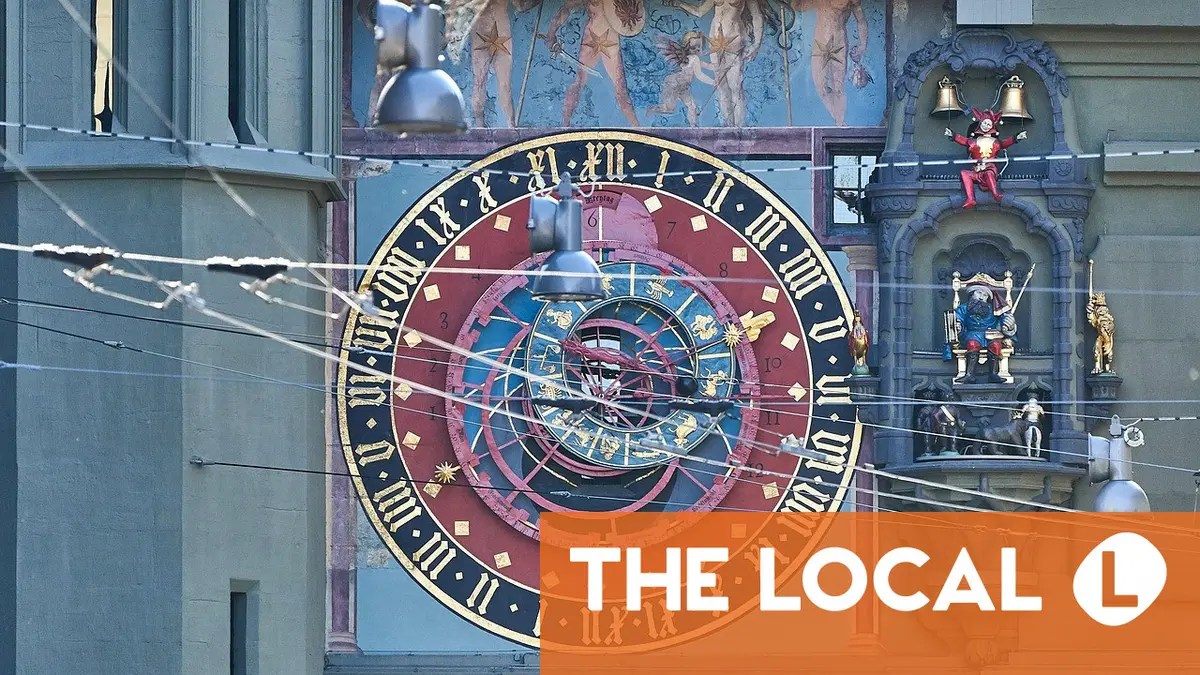
By far the most famous symbol in the city is the clock tower, the Zytglogge, located in the historic district of Switzerland’s capital city.
Though built in the 13th century, the clock still works with a …clock-like precision, also powering an hourly performance of various mechanical characters.
In the early days of the 20th century, the ticking of the clock also reportedly inspired a young man working in a local patent office to come up with the groundbreaking “special theory of relativity”.
His name was Albert Einstein.
Can you think of other landmarks that symbolise various Swiss locations? If so, share them in the Comments section below.


