


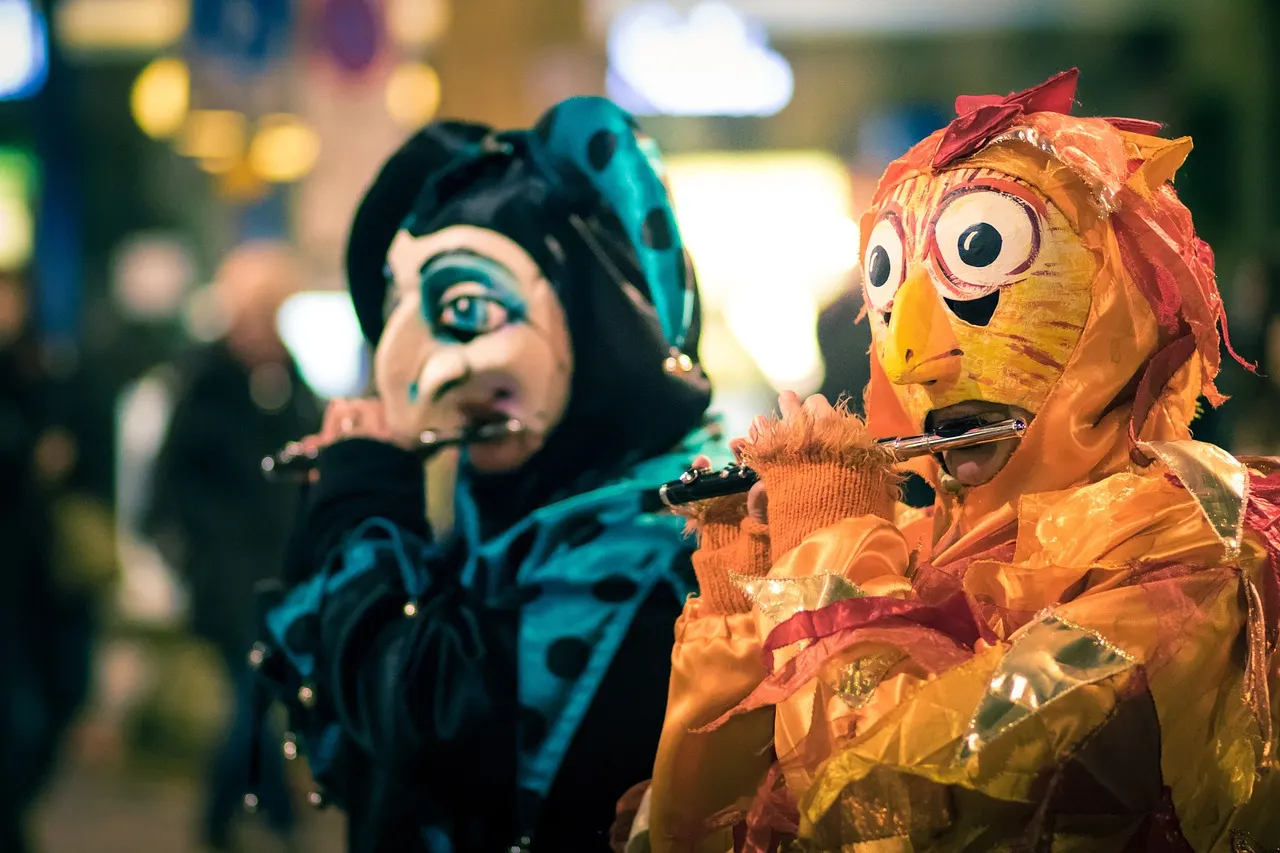
The Swiss city of Basel’s famous ‘Fasnacht’ carnival celebration kicks off at 4am on Monday, February 23rd. Here’s what to know about the tradition and the key events.
For Switzerland’s best-known carnival celebrations you have to be up early on Monday to enjoy the start of ‘Basler Fasnacht’.
That’s because the traditional ‘Morgenstreich’ (which translates to something like ‘morning trick’ or ‘prank’) start while it’s still dark outside – at 4 am.
This year’s event lasts from Monday and ends at 4 am on Thursday, February 26th
How important is the Carnival to Basel (and Switzerland)?
The celebrations are of huge importance to the region and beyond.
“The carnival in Basel is part of the city’s identity,” says the city authorities. “Culturally speaking, it is at the heart of its creative energies and represents three days when the city goes wild.”
The event is the largest of its kind in Switzerland and is enshrined in the UNESCO Intangible Cultural Heritage List.
Advertisement
Although the roots of carnival customs date back to ancient Celtic and Germanic practices relating to things like the end of winter and ancestors, the exact origins are unclear because several important documents were lost in the earthquake of 1356, according to the City of Basel.
The oldest document about Basel’s carnival dates back to 1376.
“Later it was also influenced by such events as medieval jousts, military musters organised by the city’s guilds, and religious festivals before Lent,” says the city.
“When, during the age of Reformation, merrymaking and feasting were increasingly restricted, even banned at times, the Basel Fasnacht gradually developed into a display of resistance against the city’s authorities.”
In the 19th century, the Fasnacht began to change, with the first cliques formed as well as Schnitzelbank singers (more on these below).
Today it is widely known as the main protestant carnival in the world.
READ MORE: Six things people who live in Basel take for granted
Advertisement
These are the key events:
Morgenstreich
The Morgenstreich (or Morgestraich in the Basel Swiss-German dialect) opens the carnival on the Monday after Ash Wednesday at 2am. This tradition dates back to 1808.
All the streets lights are turned off in the city and lanterns light up the ski. Groups of ‘cliques’ – drummers and piccolo players – parade through the city until daybreak.
The busiest areas are Barfüsserplatz, the Marktplatz, Rümelinsplatz, Falknerstrasse and Freie Strasse. Many also get in on the action on Leonhardskirchplatz, Martinskirchplatz, Nadelberg and Münsterplatz.
Cortège: February 23rd and February 25th, 1.30–6.00 pm
The large street parades – called cortège – take place on Monday and Wednesday afternoon, involving more than 10,000 carnival revellers.
You can expect lots of floats, “Gugge” (brass music bands playing popular hits), horse-drawn carriages and a general party atmosphere.
The parade follows a route through the city centre and participants on the floats hand out flowers and oranges as well as other sweet treats.
One important thing to keep in mind is you shouldn’t dress up if you’re visiting the Fasnacht. Only participants of the festival wear costumes. This is unlike some other similar events – such as Karneval in Germany – where everyone is encouraged to wear silly outfits.
Advertisement
Lantern displays, throughout the festival
Following the Monday parade, the cliques display their lanterns at the city’s Münsterplatz so locals and visitors can walk around and check them out.
Kinderfasnacht, Tuesday February 24th
A special celebration involving children takes place on Tuesday afternoon.
Small groups of children, known as “Binggis”, accompanied by their parents and other relatives or adult friends of families take part in this activity.
The groups walk around the streets of Basel giving out ‘Zeedel’ (self-made leaflets featuring witty and humorous content) and ‘Dääfeli’ (sweets) while showering spectators with ‘Räppli’ (confetti).
Guggenkonzert, Tuesday February 24th
On Tuesday evening, revellers in the festival can enjoy the ‘Guggenmusik’ bands.
Around 60 brass bands gather at Exhibition Square around 6.30 pm and parade through Clarastrasse towards the city centre.
They head to the three large squares of Barfüsserplatz, Marktplatz, and Claraplatz where they perform on stages until around 11 pm.
Schnitzelbank singers
Another highlight of the Fasnacht is the Schnitzelbank singers, who offer satirical rhyming songs usually focused on current political and social events.
They perform in restaurants and stages on Monday and Wednesday evening.
On Tuesday evening they also head into clique cellars (where the cliques practise) and private homes.
The groups hold up ‘Helgen’ or illustrations, that accompany the themes of the songs.
Advertisement
Get a badge
If you’re visiting Fasnacht in Basel, you’re encouraged to buy the carnival badge or the ‘Blaggedde’.
It features a new design every year and was introduced in 1911 to help fund the costs of the event.
READ ALSO: Basel vs Bern – which city is the best to live in?
Try some local food
Since you’re making the most of local customs, why not sample some of the food?
Three dishes are traditionally eaten during Fasnacht: a flour soup called Mehlsuppe, onion pies and cheese quiche.
There are also Fasnachtkiechli biscuits and Faschtewajie (a type of pretzel), as well as more usual street treats including roasted chestnuts (heisse marroni) and sausages.
Endstreich
The close of the Fasnacht – the ‘Endstreich’ (or ‘Ändstraich’ in the local dialect) is at 4am on Thursday morning.
On Wednesday evening and the early hours of Thursday there are plenty of carnival celebrations in the streets of Basel so expect lots of music and partying.
You’ll know the end has come when the cliques and Gugge groups play a final song to mark the end of the carnival.
As part of entertainment, festivities sometimes include displays and artistic performances that could be taken as insensitive, or even offensive, toward particular ethnic or national groups.
But this year’s carnival, will be more socially correct.
That’s because the Fasnacht’s organising committee has expanded its guidelines to include recommendations on how to handle sensitive topics in a more appropriate manner.
“Racism, xenophobia, sexism, name-calling, insults, denigration of those who think and feel differently, as well as all forms of discriminatory behaviour, do not correspond to the spirit of the Basel Carnival,” the committee said.


