


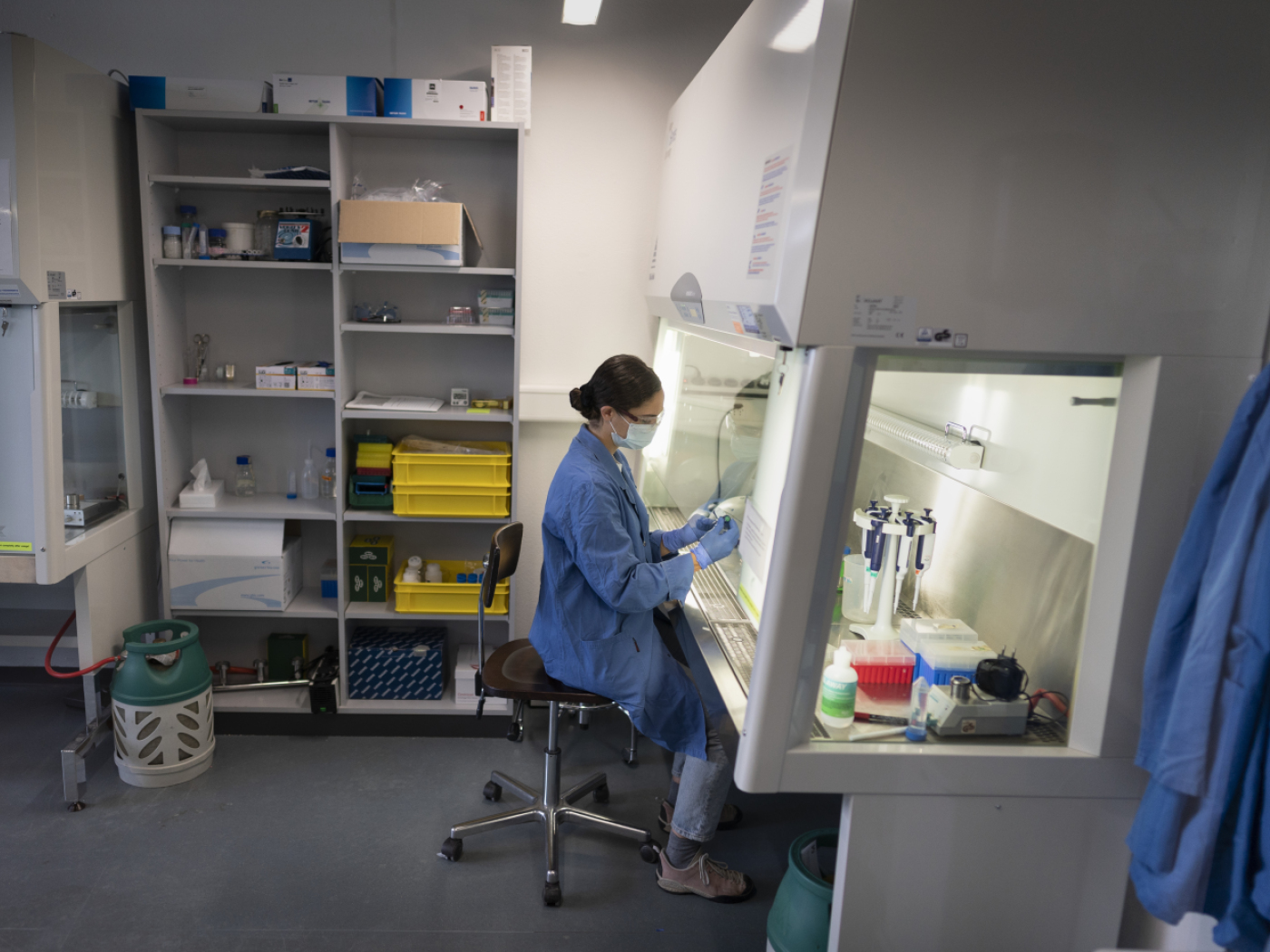
Levels of ketamine were significantly higher in Zurich than in other sample locations in Switzerland.
Keystone-SDA
More use of ketamine and crack cocaine, but slightly less of cannabis and crystal meth: these are the results of analyses of wastewater conducted by researchers at the Swiss Federal Institute of Aquatic Science and Technology (Eawag).
+ Get the most important news from Switzerland in your inbox
New figures taken from samples from the first half of 2025 appeared on the substance monitoring portal Dromedario on Thursday.
Eawag experts examined trends in the use of certain substances for which uncertain sales figures or none at all are available, the institute said on Thursday. Based on the idea that “wastewater doesn’t lie”, the experts used wastewater analyses to draw conclusions about patterns, increases and decreases in drug consumption among the Swiss population.
More ketamine at the weekend
They found a significant increase in ketamine in the wastewater, an indication that ketamine use is on the rise in Switzerland. Ketamine is an anaesthetic used in medical procedures. However, it is also consumed recreationally, especially on the club and rave scene, where it is known as “K” or “Special K”. The levels of ketamine in Zurich’s wastewater are significantly higher than the average for all ten survey locations in Switzerland.
+ More can be done to prevent addiction in Switzerland, says NGO
The data does not show what proportion of this is due to medical use and what is being taken recreationally. However, the fact that the ketamine levels in Zurich wastewater are significantly higher at weekends than during the work week could provide an indication.
Lots of crack cocaine in wastewater in Chur
The picture is similar for crack cocaine. Eawag does not measure crack itself in wastewater, but rather AEME (anhydroecgonine methyl ester), a degradation product of crack. Here, too, the values rose significantly in 2025. In addition to Zurich, the values in Chur, a city in eastern Switzerland, are also well above the Swiss average. There was also a notable difference between weekdays and weekends: values are significantly higher at weekends than during the work week.
More

More
Switzerland’s alarming crack epidemic
In contrast, the analysis of wastewater shows that the consumption of methamphetamine, also known as crystal meth, decreased slightly. Crystal meth is considered one of the most dangerous drugs on the market. Since measurements began in 2021, there has been a slight decrease in methamphetamine levels in wastewater throughout Switzerland.
The picture is similar for cannabis: the levels of the THC degradation product THC-COOH, which can be detected in people’s urine after consuming cannabis, were slightly lower in wastewater in the first two quarters of 2025 than in previous years.
Translated from German with AI/gw
We select the most relevant news for an international audience and use automatic translation tools to translate them into English. A journalist then reviews the translation for clarity and accuracy before publication.
Providing you with automatically translated news gives us the time to write more in-depth articles. The news stories we select have been written and carefully fact-checked by an external editorial team from news agencies such as Bloomberg or Keystone.
If you have any questions about how we work, write to us at english@swissinfo.ch.


