


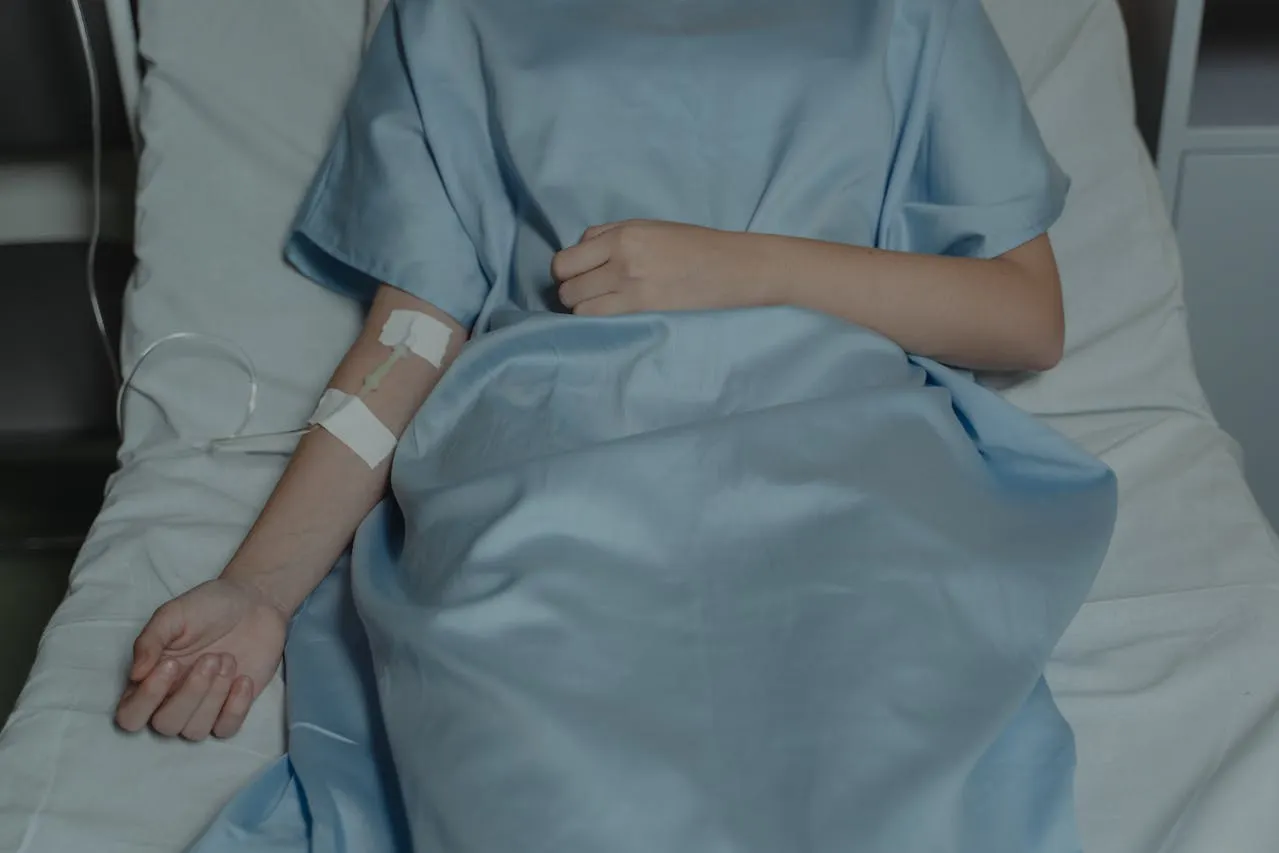
Medical facilities in Switzerland provide a sterile environment for their patients, but getting cured from whatever ails them is not always the outcome they get.
On February 1st, a teenager who was severely injured in the New Year’s fire that erupted in a Crans-Montana bar, died at the Zurich University Hospital (UHZ).
An infection he had contracted while in UHZ’s burn unit reportedly “played a decisive role in his death.”
This tragedy brings up a question that may be on your ming: how serious is the risk of getting infected in a Swiss hospital?
But first: How do patients get infected in hospitals?
Most commonly, an infection occurs when bacteria, germs or viruses penetrate the body through contaminated equipment, poor hand hygiene by staff, or invasive procedures like surgery and catheters.
Let’s crunch some numbers
Overall, the rate of hospital-acquired Infections (HAI) in Swiss hospitals – 6 percent, according to the Federal Office of Public Health (FOPH) – are relatively low and in line with the European average.
This assessment is based on a survey the FOPH carried out among 108 acute care hospitals – 80 percent of all such facilities in Switzerland.
This is a figure for the general hospital population .
HAIs are, however, higher for patients who are seriously ill or whose immune systems are weakened – like the Zurich burn victim.
According to FOPH estimates, approximately 5,900 deaths that occur per year in Switzerland are at least partially linked to hospital-acquired infections.
The majority of those affected already suffer from serious medical conditions, or are elderly. But the infection is rarely the sole cause of death; instead, it is the final element in a chain of health problems.
Advertisement
But other factors are at play as well
Highest rates are often recorded after certain procedures, according to ‘Quel-hopital’, an independent association which compares standards of care in Swiss hospitals,
For instance, its data shows that HAIs are highest after certain procedures – namely after rectal and colon surgeries.
For the former ones, the mind-boggling HAI rate of 94.4 percent was recorded at Sursee Hospital, which is part of the Lucerne Cantonal Hospital.
Other above-average rates occurred at the Valais Cantonal Hospital (25.7), Inselspital in Bern (23.1), St. Gallen Cantonal Hospital (22.9), Neuchâtel Hospital Network (22.6), and Burgdorf Hospital (Bern) – 21.8.
Advertisement
For colon-related surgeries, the average rate of hospital-acquired infections after surgeries is 11.4 percent, with the highest HAI of 51.3 percent observed in Asana Hospital in Menziken (Aargau).
This rate is also above the national average at Uri Cantonal Hospital (27.7), followed by Schaffhausen Cantonal Hospital (27.7), University Hospital in Zurich (23.5), and Inselspital Bern (21.1)
These two procedures have the highest infection rate; the HAIs for other common illnesses and surgeries are well below the national average, with just a few exceptions (oddly enough for relatively simple surgeries):
Advertisement
At Clinique La Source in Lausanne, 11.1 percent of patients develop infections after the appendectomy, The national figure is also exceeded (7.9 percent) at Herisau Hospital in Appenzell-Ausserrhoden.
The HAI risk after the gallbladder surgery is above average (9.4 percent) at Flury Stiftung Regionalspital Prättigau, Schiers (Graubünden).
For hysterectomies, the rate is 7.3 percent in Bern’s Inselspital and 7 percent in Riviera-Chablais Hospital (Vaud-Valais).
You can see all the infection rates for hospitals and illnesses here.
Advertisement
A bit of perspective…
Taken at their face value, these statistics are frightening, but you have far more chance of leaving the hospital in good health than not.
Keep in mind that Switzerland has an excellent health system, for both general and specialised care.
READ MORE: The Swiss hospitals that offer the best specialised care


