


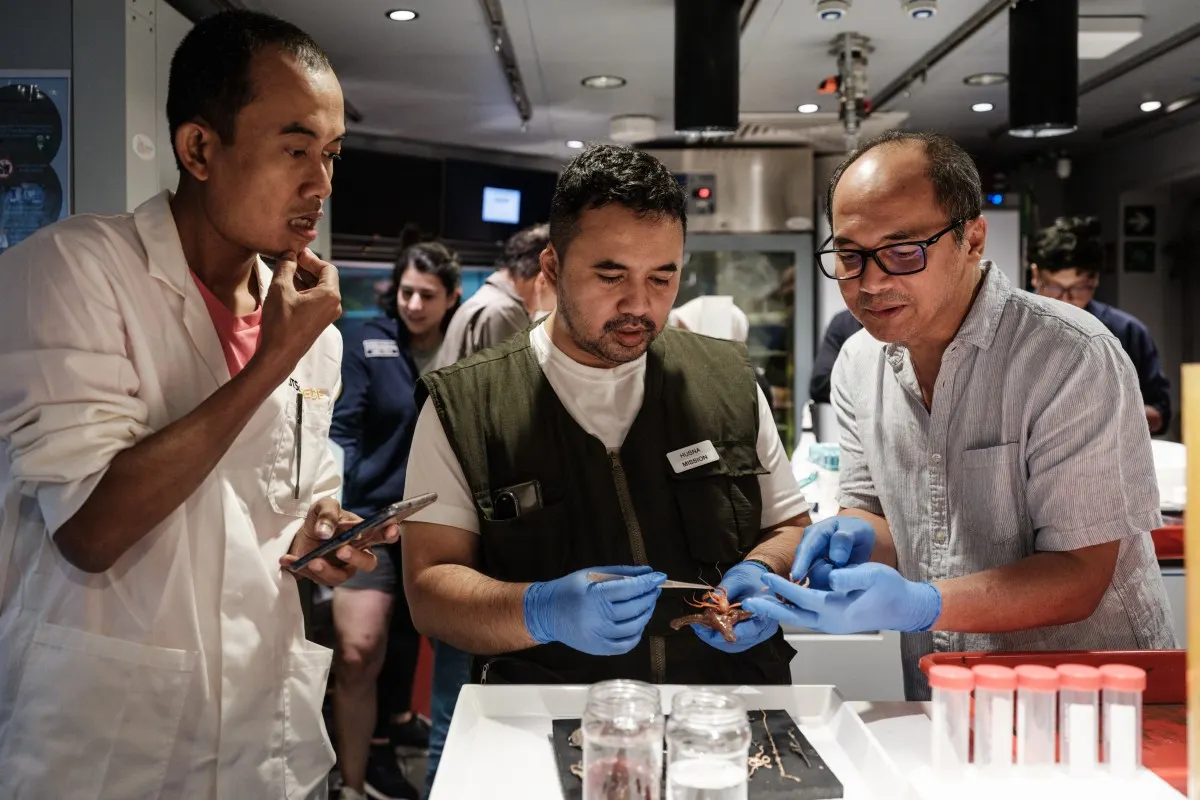
Spain’s Ministry of Science, Innovation and Universities has already seen some success with the ATRAE (Attract) programme, persuading 37 top international scientists to come and work here with the promise of €1 million each in funds.
Spain’s ATRAE programme, which was announced by Minister Diana Morant in April 2025, aims to lure top scientists from around the world, particularly those fleeing the Trump administration and its policies in the US.
Spain has dedicated a total of €38.9 million to hire these top talents and has already brought in 37 researchers who are “leaders of research groups with scientific impact at a global level in their areas”.
READ ALSO: Spain lures US scientists fleeing Trump with €200K in extra funding
A total of 56.7 percent have so far, in three rounds, come from research centres in the United States. This is partly because of the “additional funding for the incorporation of researchers working in the United States,” with an extra €200,000 for each project.
Morant explained that the idea behind this plan is “to move towards a more competitive Spanish R&D&I (Research, Development, and Innovation) system at a national and international level” and allow Spain “to be a refuge of democratic and scientific values in the face of science cuts by other countries”.
For the first time in three rounds of recruitments, the programme is attracting more foreign than domestic talent. A total of 83 percent of the beneficiaries are researchers from other countries.
No Americans applied in the first call for applications, but five applied in the second and then 12 in the third, indicating a growing interest from across the pond.
Advertisement
Each researcher selected for this programme will receive an average of €1 million to establish themselves at a Spanish institution and develop their research group there. Most go to universities, while the rest go to the Spanish National Research Council or other centres.
One in three goes to institutions in Catalonia, while Madrid also attracts many. A total of 10 percent go to Murcia, and the remainder are distributed between Galicia, the Basque Country, Valencia, and Andalusia.
Research centres and universities must commit to offering job security when the three or four year period funded by the ATRAE programme ends, explained Morant.
The areas in which scientists already in the programme will be working in include health, food, bioeconomy, natural resources, agriculture, climate and environment, digitalisation and telecommunications, advanced materials and new manufacturing techniques, as well as culture, creativity and inclusive societies, space sciences and technologies.
Advertisement
Last year, scientists sent an open letter to the Trump administration signed by 2,000 researchers, warning of the loss of global leadership within the industry and the interruption of numerous projects and trials.
There have broad cuts to federal funding in the US and many fear the country’s research field, once viewed as the envy of the world, may be losing its edge.
Trump has also lodged threats against several other universities, leading many researchers to worry about the future of academic freedom in the United States and consider a move abroad.
This is part of the reason that Spain is focusing on scientific talent from the US in particular.
In practice however, there are many accounts that being a researcher in Spain isn’t as wonderful as the Spanish government would want to have outside talent believe.
Lower wages, long waits for the verification of foreign qualifications, few career prospects, job instability and antiquated work environments have led many Spanish scientists to seek better opportunities abroad, and foreign researchers to regret their decision to move here.


