


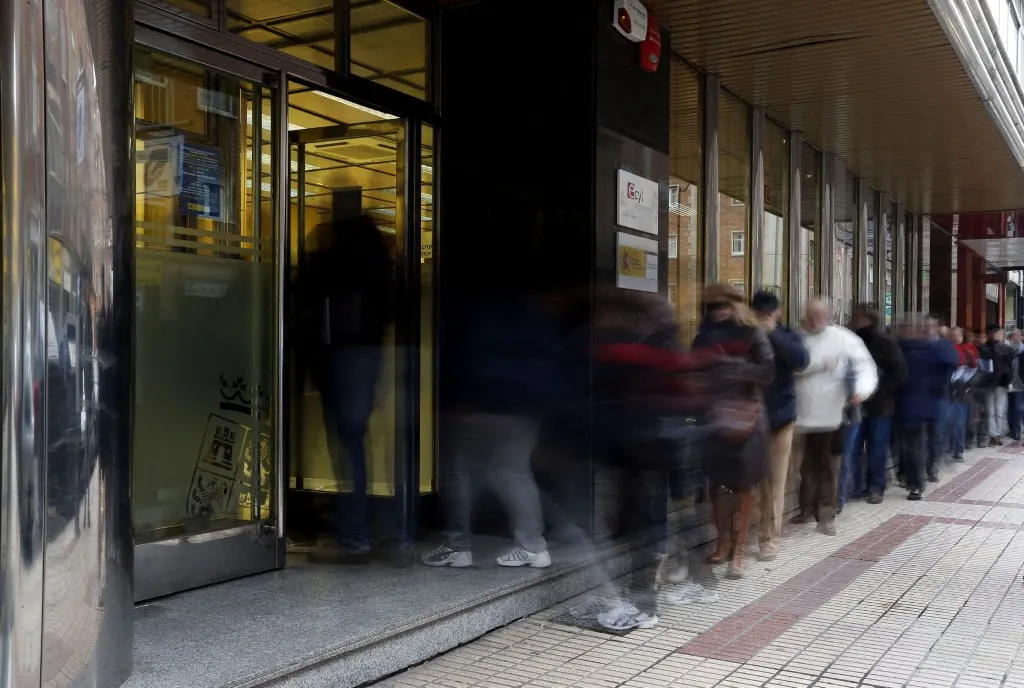
Unions have warned that Spain’s proposed regularisation of over 500,000 undocumented migrants could “collapse” immigration offices in the country, something likely to have a knock-on effect and hinder processing times overall for foreigners.
The Spanish government’s proposed blanket regularisation of over up to 800,000 undocumented migrants could “collapse” immigration offices and make processing times for residency applications far longer in 2026, unions have warned.
Following the Spanish government’s decision to regularise migrants living in Spain in irregular legal situations, immigration office workers and police unions have said they don’t have the capacity to deal with the surge.
The CCOO union has pointed out that resources are already scarce and that immigration service personnel can be among the lowest paid in Spanish bureaucracy, but are now faced with a mammoth task in a short time-frame.
César José Pérez, CCOO’s national representative for immigration workers, has questioned why the government initiated the royal decree without consulting unions. He claims immigration workers were not informed.
“We found out through the media. We know they had a meeting with the Ministry of Finance, but we’ve not been told anything,” Pérez said, adding “we need to know what measures they want to implement and how they want to do it, otherwise there is no chance of completing the process”.
Unions are now reviewing the text and have already requested a meeting with the Ministry to seek explanations.
The Minister for Inclusion, Social Security and Migration, Elma Saiz, has announced that all applications should be processed in just three months, outlining a window from “the beginning of April, all applications can be processed de facto, until 30 June, with guarantees, in an agile and efficient manner”.
Advertisement
However, the operational capacity of immigration offices might make this impossible. These units currently have around 2,100 posts but only 1,600 are operational, according to Pérez.
With current staffing levels, each member of staff would have to process more than 312 applications to reach the half a million regularisations, a figure some think tanks say is closer to 800,000. As a result, the reform threatens to “collapse the immigration offices. This is going to blow them up,” Pérez warned.
The union leader also suggested that better planning must be undertaken or the union could be forced to take industrial action.
Police unions have also raised their concerns. Police syndicates SUP, Jupol and CEP have warned of the risk of collapse in immigration services that could have a knock-on “operational and functional impact” on immigration and border units more widely.
Staff at extranjería (immigration) offices staged strikes across the country in 2025 to protest the increased workload brought about by reforms to the Immigration Law introduced last May.
Civil servants said they were “overwhelmed” by the huge increase in applications and that their offices were very understaffed, with not enough extra funcionarios recruited after the migration reforms.
For foreign residents in Spain, this has meant longer waiting times to secure a cita previa (appointment) to be seen, a system which has also been hacked by criminal groups who use bots to book up all the appointments and then sell them on for a profit to desperate applicants.
READ ALSO: Spain eyes new way for foreigners to avoid ‘cita previa’ appointment scam


