


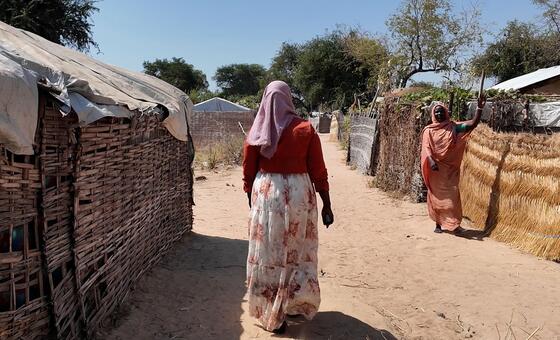
They did so despite extensive damage to housing, basic services, vital infrastructure, and an uncertain future.
The highest number of returns were recorded in Khartoum State, where more than 1.3 million people have made the journey home, followed by nearby Aj Jazirah State, according to IOM’s latest data.
Pockets of security
IOM says the number of returnees is rising, signaling pockets of perceived relative security in parts of the country.
Overall, 83 per cent of returnees had been internally displaced, while 17 per cent returned from neighbouring countries, including Egypt, South Sudan, and Libya, as well as from the Gulf States.
However, across areas in Darfur and Kordofan where violence continues to escalate, increased displacement has been recorded.
IOM warns that without adequate resources and renewed efforts toward peace, millions of families will remain trapped in protracted displacement and instability.
WHO: India on alert with two cases of Nipah virus in January
India has confirmed two cases of the sometimes-fatal Nipah virus this month in the eastern state of West Bengal, according to an update by the World Health Organization (WHO).
This is the seventh documented Nipah outbreak in India and the third in West Bengal, following outbreaks in 2001 and 2007.
The infected individuals are a male and a female nurse working at the same private hospital. As of last week, the male patient is recovering, while the female patient remains in critical condition.
Nipah is a virus transmitted mainly from bats to humans, sometimes through contaminated food or close contact. It can also spread from animals such as pigs to humans, and in some cases between people.
Nipah virus infection can range from asymptomatic illness to severe respiratory disease and fatal encephalitis.
Low transmission risk
Historically, Nipah outbreaks in the WHO Southeast Asia Region have been limited to Bangladesh and India, occurring sporadically or in small clusters. There have been no known instances of international spread through travel.
WHO says India has demonstrated its capacity to manage previous outbreaks well and public health measures are currently being implemented.
As of 27 January, no additional cases have been detected. The national government has deployed an outbreak response team to West Bengal to work closely with state authorities.
For Nipah, no licensed vaccine or treatment is currently available, making early detection and prevention essential.
$100 Million initiative launched to strengthen food security in Afghanistan
In Afghanistan, the UN food agency (FAO) and the Asian Development Bank (ADB) are implementing a $100 million initiative to bolster food and nutrition security and restore agricultural livelihoods for more than one million vulnerable people over the next two years.
Backbone of the economy
Although agriculture remains the backbone of Afghanistan’s rural economy, it continues to face challenges such as low productivity, restricted market opportunities, and repeated natural disasters.
The project will reach over 151,000 households – that’s just over a million people – including returnees, host communities, and disaster-affected families.
With millions of Afghans already facing mounting pressures and at risk of slipping into deeper acute food insecurity and malnutrition, there is an urgent need for sustained investment that goes beyond emergency response to strengthen long-term resilience.
In 2026, 17.4 million people are projected to face acute food insecurity, including 4.7 million classified as being in the emergency phase – just one away from famine conditions.
FAO has supported about 5.6 million people since 2022.
Through its partnership with ADB, millions more rural households will gain the tools and resources needed to produce food, safeguard livestock, and secure their families’ nutrition.


