


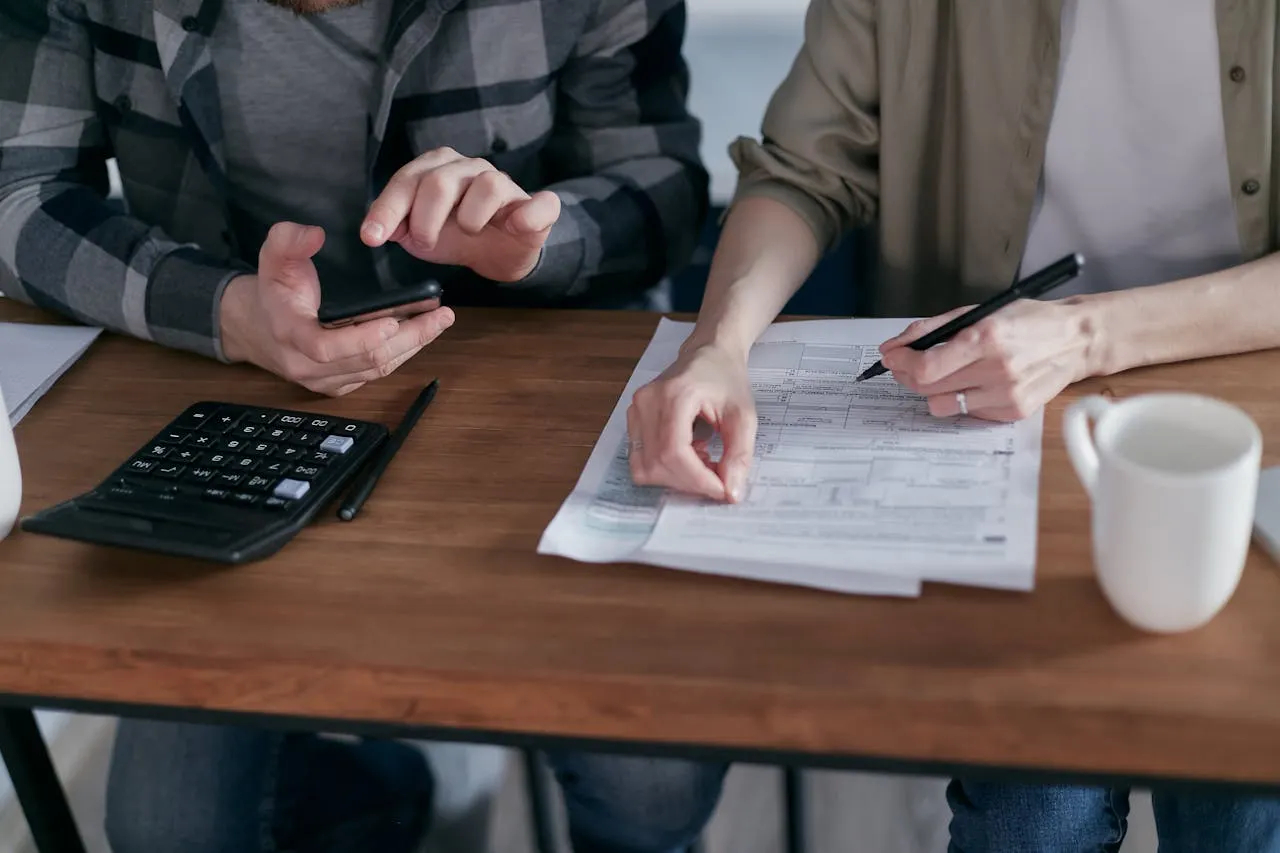
On March 8th, Swiss voters will have their say about whether married couples should continue to be taxed jointly, or declare their income and assets separately.
What is this vote about?
If approved at the ballot box, the introduction of individual taxation would be one of Switzerland’s most significant tax reforms of recent decades.
This move will bring closure – one way or another – to an issue that has been in legislative limbo for years, before finally being green-lighted by the Parliament in 2024.
READ ALSO: Swiss MPs approve new tax system for married couples
Spouses have always been taxed jointly, mostly because in the past many women did not work.
To this day, married couples are still taxed together, and that includes same-sex couples living in a registered partnership.
This means that if both partners are employed, they often have to pay higher taxes than unmarried couples filing their taxes separately. Their income is added (and taxed) together regardless of who made what.
That is good for the government, because more money is flowing into public coffers, but not so good for married people whose tax burden is high.
The approval of the new system on March 8th would change this – but how?
In a nutshell, under this new law, married couples will also be taxed individually.
Each person will pay tax on their own income and assets, and the same tax rate will apply to everyone, regardless of their civil status.
What about jointly owned property?
In the future, assets will be taxed according to ownership.
For real estate, what matters is what is recorded in the land registry. If a house is owned equally by both spouses, each will have to declare their share on their tax return. If, according to the land registry, the house is owned by just one spouse, he or she will have to declare it individually.
The same principle will apply to other assets, such as bank accounts and investment portfolios: ownership will determine tax liability – same way as it already applies to unmarried couples.
Advertisement
What impact will individual taxation have?
Certain state benefits depend on marriage as an economic unit, that is, on family income, currently determined by a joint tax return.
These include, for instance, health insurance premium reductions, student grants, and childcare subsidies. These areas fall under the jurisdiction of the cantons or municipalities, which have considerable leeway in adapting them.
The cantons will have to review their laws and adapt them if necessary.
Federal law allows them to choose whether or not to take into account the income of the partner. Some cantons already consider household income for unmarried couples when assessing eligibility for health insurance premium reductions.
Advertisement
Who will pay less tax?
The good news is that with the reform, federal direct tax will decrease overall.
The main beneficiaries will be married couples with two incomes, including many retirees.
If, for instance, the husband earns 70 percent of the household income and the wife 30 percent (or vice-versa), the couple will benefit from the reform, regardless of the number of children they have.
Most single people will also pay less tax, especially those with low and middle incomes.
Advertisement
And who will pay more tax?
Not everyone will benefit from the new system, however: approximately 14 percent of taxpayers will pay more tax.
These are the households that currently benefit from a “marriage bonus” – when a married couple’s total tax liability falls due to combined filing, often benefiting spouses with widely disparate incomes, as the higher income is taxed at a lower joint rate.
Married couples with a single income or a very low second income, with or without children, are particularly affected.
And due to the adjustment of the tax brackets, single people with high incomes will also see their taxes increase.
READ MORE: Switzerland’s strangest taxes – and what happens if you don’t pay them


