

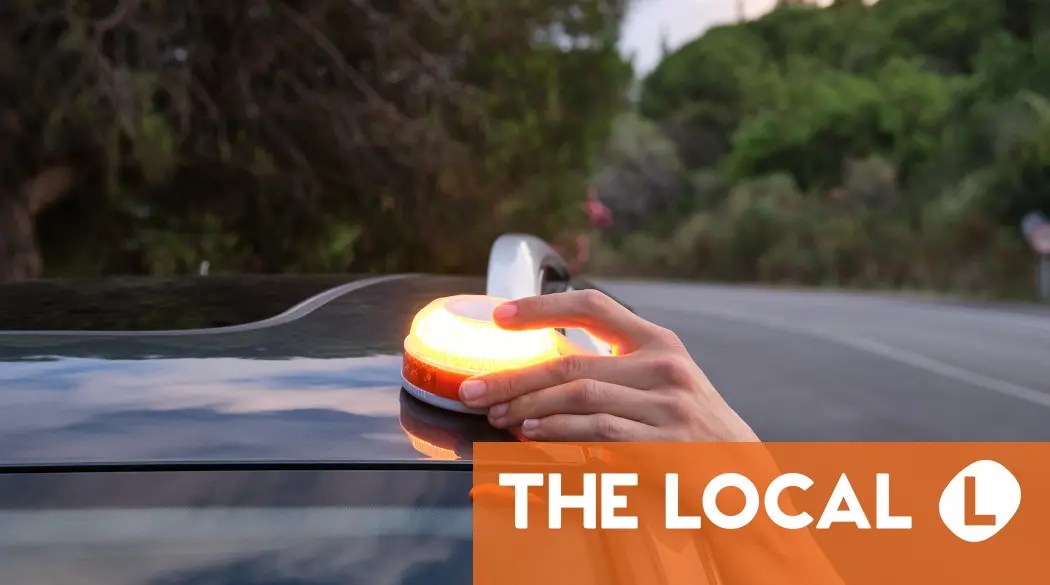
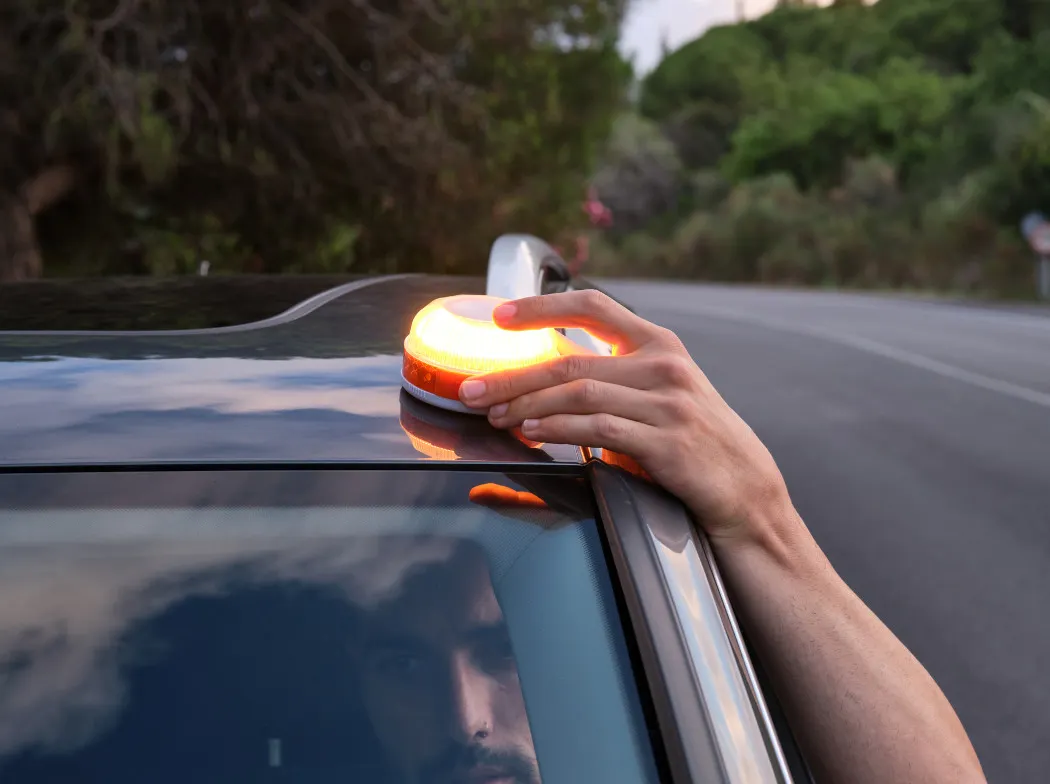
Spain’s Interior Minister has confirmed that drivers who haven’t bought the new V-16 emergency light (compulsory since January 1st) will be given a grace period before being fined, but authorities are still being rather vague about when the deadline really is.
Spanish police will be “flexible” about the new mandatory V-16 emergency light and not fine drivers without them for a “reasonable” amount of time, the Interior Ministry has confirmed.
There is no clear indication, however, as to how long this period will last. This follows a similar announcement from Spain’s DGT traffic authority that drivers will be given a grace period with the new V-16 light, a measure that has been mandatory since 1st January 2026.
This was confirmed by the Interior Minister, Fernando Grande-Marlaska, during a presentation this week of the provisional road accident figures for 2025.
READ ALSO: Do tourists driving in Spain need to carry the new V-16 emergency light?
Marlaska, who emphasised that the change is intended to reduce the number of road deaths, reported a total of 1,119 deaths on Spanish roads in 1,028 fatal accidents recorded throughout Spain in 2025.
The Minister explained that 103 pedestrians lost their lives, almost 10 percent of the total, highlighting that “a significant number of these cases” occurred when they got out of their cars, very often to place warning triangles.
It is estimated that an average of 25 people are killed each year while signalling a breakdown or accident, according to Spanish state broadcaster RTVE.
Advertisement
“All of us who have got out of the car to place a warning triangle know the danger involved in doing so,” Marlaska said, who has defended the new V16 light as “essential” to curb road deaths in the country.
The new lights have not been without controversy, however. The V16 is meant to replace the warning triangles people carry in their cars and that they place behind their vehicles when they break down.
They are meant to be safer, as they go on the roof of the vehicle without the need for drivers to get out and potentially be hit by an oncoming car on the motorway. Many are now questioning how necessary the V16 is, especially as the officially recognised ones cost around €50.
Advertisement
In fact, there are articles in the Spanish press citing the ‘inventors’ of these devices, who apparently said that they were meant only for people with physical disabilities, not for them to be compulsory for the entire population.
Spanish police have also criticised the fact that the light they emit isn’t bright enough during daytime, and they claim that they’re not useful on roads with a high number of bends as oncoming drivers don’t get the pre-warning that a triangle provides.
Consumer watchdogs such as Facua have also slammed the DGT traffic authority for not properly informing the population of the need to buy officially recognised (homologadas) V-16 lights, meaning that thousands of people have bought cheaper knock-offs (somewhat understandably) that for example don’t have the necessary geolocation feature. This, they claim, has resulted in “massive fraud” by some businesses.
The government, for its part, has defended the measure and batted away accusations of wanting to raise revenue. “Our objective is not to punish or collect revenue, what motivates us is the obligation to save lives,” Marlaska said, though he refused to specify how long the “reasonable” period of non-fines will last, as this will be determined by the DGT and Civil Guard.
READ ALSO: Can drivers in Spain be tracked with the mandatory V-16 emergency light?


