


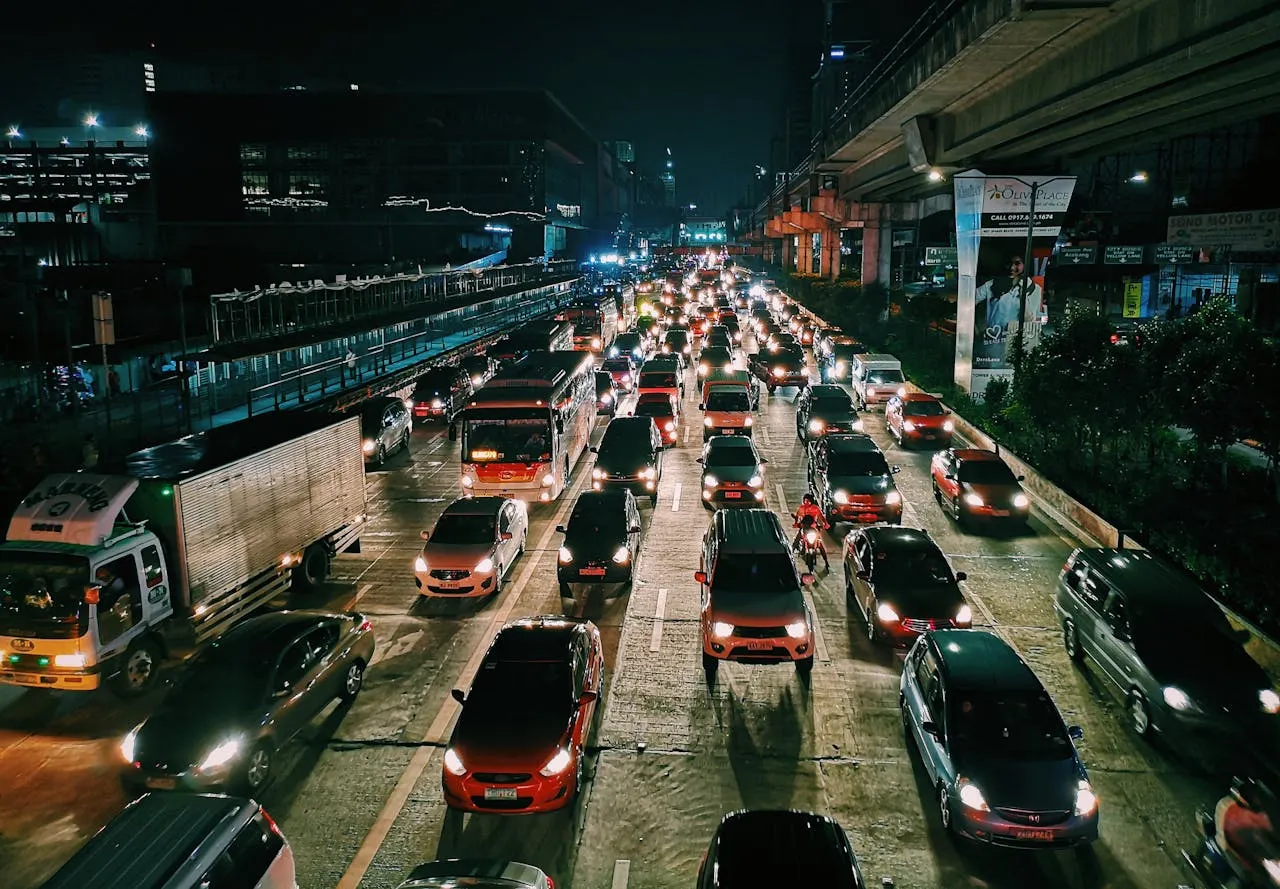
Swiss authorities are increasingly relying on 80 km/h limits on motorways during peak hours to prevent traffic jams and emissions. But not everyone is on board with this measure.
As far back as in 2023, the Federal Roads Office (ASTRA) had proposed to bring down the speed limit at peak times on motorways from the current 120 km per hour to 80 km/h at certain times of the day.
“In a few years we will probably not be able to avoid ordering a speed limit of 80km/h throughout the Mittelland (Swiss Plateau region) during rush hours to prevent permanent traffic jams,” ASTRA director Jürg Röthlisberger said at the time.
According to these plans, the measure is supposed to be implemented nationwide sometime in 2026, tough no specific timeline has been set.
However, it is already in place on some sections of Switzerland’s motorway network.
READ ALSO: The numbers that reveal how bad traffic on Swiss motorways has become
‘Wrong approach’
In the meantime, MP Thomas Knutti from the hard-rightSwiss People’s Party (SVP) has filed a parliamentary motion against the speed reduction, arguing that it is “the wrong approach from both a traffic engineering and economic perspective.”
In fact, he pointed out that “frequent changes in speed destabilise traffic flow, increase the risk of accidents, and lead to inefficient driving behaviour. They create precisely the traffic jams they are supposed to prevent.”
To back up his claim, he cited the example of the A2 motorway near Pratteln (Basel-Country) where, despite a speed limit of 80 km/h, traffic jams of up to 45 minutes regularly occur during rush hour.
Advertisement
Bumpy road ahead
Knuti’s motion will be debated in a future parliamentary session, but he will have to contend with the opposition from other legislators as well as environmental groups.
For instance, Jon Pult, a deputy from the Social Democratic Party, has said Knutti’s proposal would cause “great damage to the environment ” and he will therefore oppose it.
“An 80 km/h speed limit will improve traffic flow and prevent congestion,” Pult said. “Preventing this will only lead to more gridlock, which is neither in the interest of drivers, the economy, or the environment.”
For its part, the Swiss Transport Club (VCS) is also in favour of a reduced speed.
“At lower speeds, visibility, reaction, and braking distances are shorter, thus reducing the likelihood of collisions and, in the event of an accident, lessens the severity of the consequences,” said Martin Winder, VCS’s head of transport policy.
Advertisement
Slow-down in cities as well
The VCS has also been a longtime proponent of maintaining a maximum speed limit of 30 kilometres an hour in residential areas; presently, the speed limit in urban areas is set at 50 km/h, as established by the country’s Road Traffic Act.
Many municipalities throughout Switzerland have introduced this lower speed limit in their residential neighbourhoods, though the general limit is still set at 50 km/h.
Others, like Geneva and Zurich, have been successful in filing appeals against this rule.


