


As midnight approaches on New Year’s Eve everyone across Spain will be clutching a very important talisman: 12 grapes to bring luck and fortune throughout the coming year.
It’s essential for each grape to be popped in the mouth on the dong of each stroke of midnight, no mean feat when you are surrounded by giggling friends in a crowd of people.
To make things easier, supermarkets sell cans containing 12 small, seedless grapes, perfect for popping in your pocket and keeping them to hand wherever you decide to celebrate.
But what are the origins of the tradition?
Ask your Spanish friends and see if they will be able to tell you – it will probably be something to do with how it all started with a ploy by winemakers to try and sell off a large surplus of grapes after a particularly fruitful harvest.
That’s probably true but its origins are meant to be more proletariat in nature.
Advertisement
The particular tradition of popping a grape in the mouth to the dong of the bells in front of the clock of Madrid’s Puerta del Sol has its origins in a working-class rebellion against a tax imposed in 1882 by José Abascal y Carredano, the mayor of Madrid.
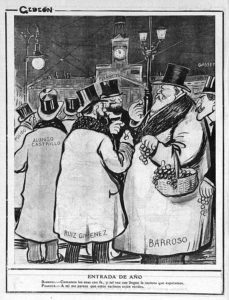 He reportedly imposed a tax of five pesetas (Spain’s old currency) on those holding parties on the eve of Epiphany – when the Three Kings roll into town on the night of January 5th – which meant only the wealthy madrileños could afford to celebrate late into the night after the free parade in the afternoon.
So Madrid’s working-class residents decided to stage their own celebration in front of the then mayor’s office in La Puerta del Sol and scoff a grape on each gong of the bell to make a mockery of bourgeoise dining habits, who thought it refined to have grapes with their champagne.
But beware, the tradition comes with a health risk.
Ear, nose and throat (ENT) associations have for years warned that the Spanish tradition of wolfing down a grape for every one of the twelve chimes that rings in the New Year is not without its risks.
They’ve told the public to buy seedless, skinless grapes and are even pushing for the time between dongs to be extended from three to five seconds to allow revellers to catch their breath more easily and swallow properly.
People over the age of 65 are also considered to be a high-risk group for suffocation during this tradition and so too are young children, especially those under five.


