


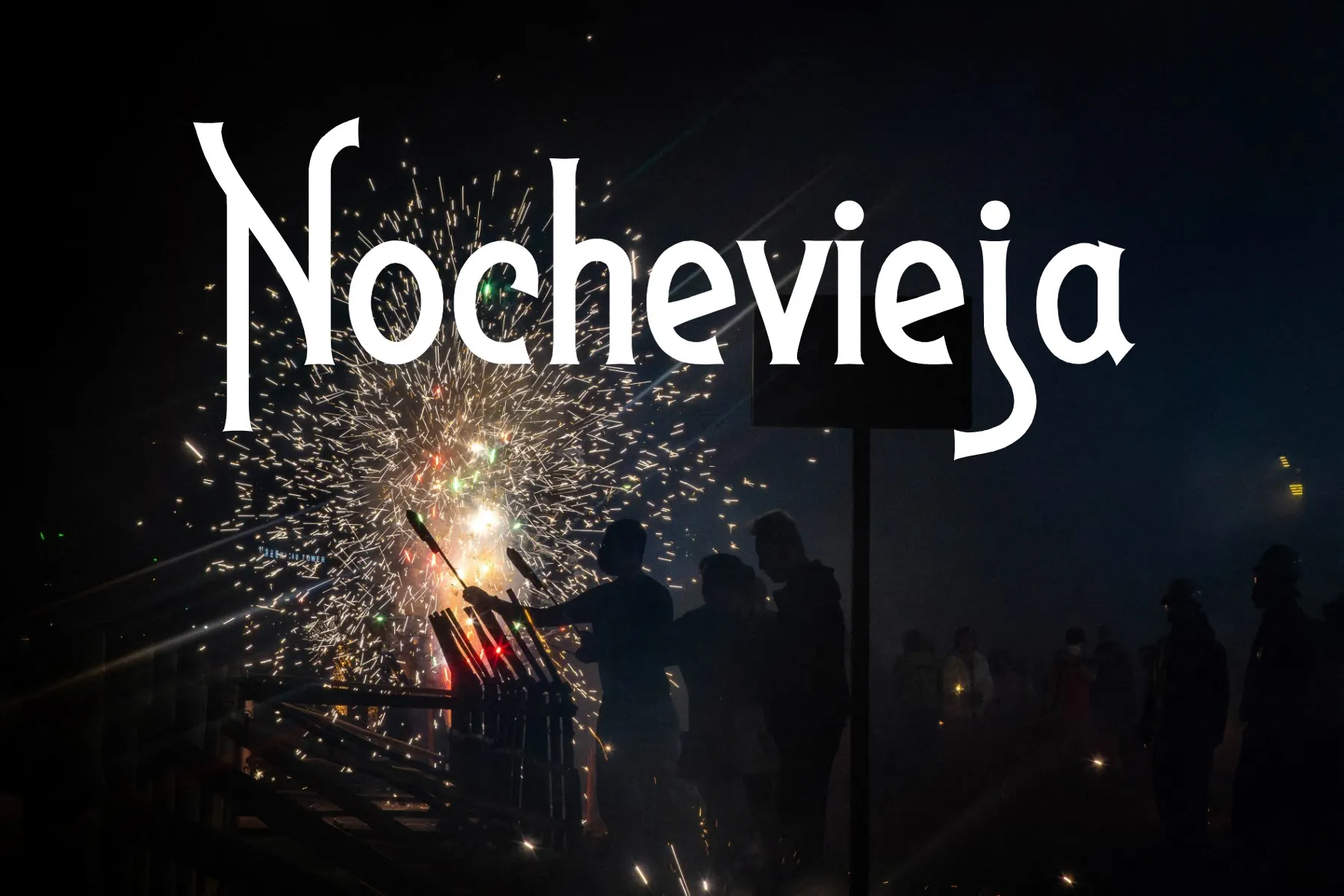
It’s the last day of 2024, so what better Spanish word to learn than that which describes New Year’s Eve?
Nochevieja is the word Spanish speakers use to describe New Year’s Eve.
Its literal meaning is ‘old night’, although it’s always written together rather than separately (Nochevieja, not Noche Vieja) to describe December 31st.
It often applies to the whole day, even though technically it refers to just the night.
It is possible to refer to New Year’s Eve as víspera del Año Nuevo, but nobody really calls it that.
Advertisement
You may think that other languages of Latin origin have a similar word to la Nochevieja, but incidentally that’s not the case.
In French New Year’s Eve is le Réveillon du Nouvel An (or Réveillon de la Saint-Sylvestre) in Italian it’s la Vigilia di Capodanno, and in Portuguese it’s often called Reveillon.
The reason why New Year’s Eve is called ‘Oldnight’ in Spain is related to the fact that it’s the last day of the Gregorian Calendar, at which point the year is at its oldest.
The origin of the New Year’s Eve celebration dates back to the Roman Empire, which paid homage in January to the god Janus.
This god had the peculiarity of having two faces, one old one with a beard and the other young one.
The old one looks back to the past while the young one looks forward to the future and a new beginning.
So that explains to a large extent why New Year’s Eve is called Nochevieja in Spanish.
In case you were wondering, New Year’s Day isn’t called Nochenueva (Newnight), instead it’s called Año Nuevo (New Year).
What does bear a resemblance to Nochevieja is the word for Christmas Eve – Nochebuena – which translates to ‘good night’ (not to be confused with buenas noches, what you say to someone when saying goodbye at the end of the day).
So that’s our last word of the day of the year. We wish you all un Feliz Año Nuevo (a Happy New Year)!
Examples:
¿Vas a salir en Nochevieja?
Are you going out for New Year’s Eve?
La Nochevieja la suelo pasar primero con mi familia y después con mis amigos.
I usually spend New Year’s Eve with my family first and then with my friends.


