


“When you study history in high school, you learn about the origins of the United Nations, and it was always the organisation that I connected with, in terms of the values it promotes. However, I never thought I would have a direct role in the organisation.
During my time working with the Uruguayan government, I had a lot of contact with the United Nations system in the country, including agencies such as the UN Population Fund (UNFPA), UN children’s agency (UNICEF), and UN Development Programme (UNDP). We had quite a few initiatives in common, including a national project on issues related to mental health and well-being of adolescents and young people. It was through these lines of cooperation that I began to understand how the United Nations works.
I was still studying for a master’s degree in administration at the University of Florida when I ran to lead the first UN Office for Youth. My goal was to help the organisation maintain the best possible connection with young people, not only listening to them but also involving them in collaboration and participation. Eight months later, I received a call from the Amina Mohammed, the UN Deputy Secretary-General, telling me that I had been selected for the role, and that I would start in 15 days’ time!

Secretary-General Meets with Assistant Secretary-General for Youth Affairs
The first year was focused on understanding the challenges, building the team, identifying how to add value to the work of youth organisations and States, positioning the office as a space to raise awareness of various issues. I believe that the purpose of the Office for Youth Affairs is to collaborate, disseminate information, and raise awareness of the interests and concerns of all young people around the world.
The three youth agendas of the UN Office on Youth
Talking about the youth agenda means understanding and supporting a very large movement that we address from three central dimensions.
The first is the participation agenda. There is an urgent need for new generations to be considered in decision-making spheres. We connect with various efforts being made to link civil society with the United Nations, creating innovative scenarios where young people feel represented, part of the spaces of power, and that their concerns are considered and addressed.
The second is the peace and security agenda. In the current global situation, with the highest number of active conflicts since World War II, we have seen young people take the lead in promoting the peace agenda and demanding that governments end wars.
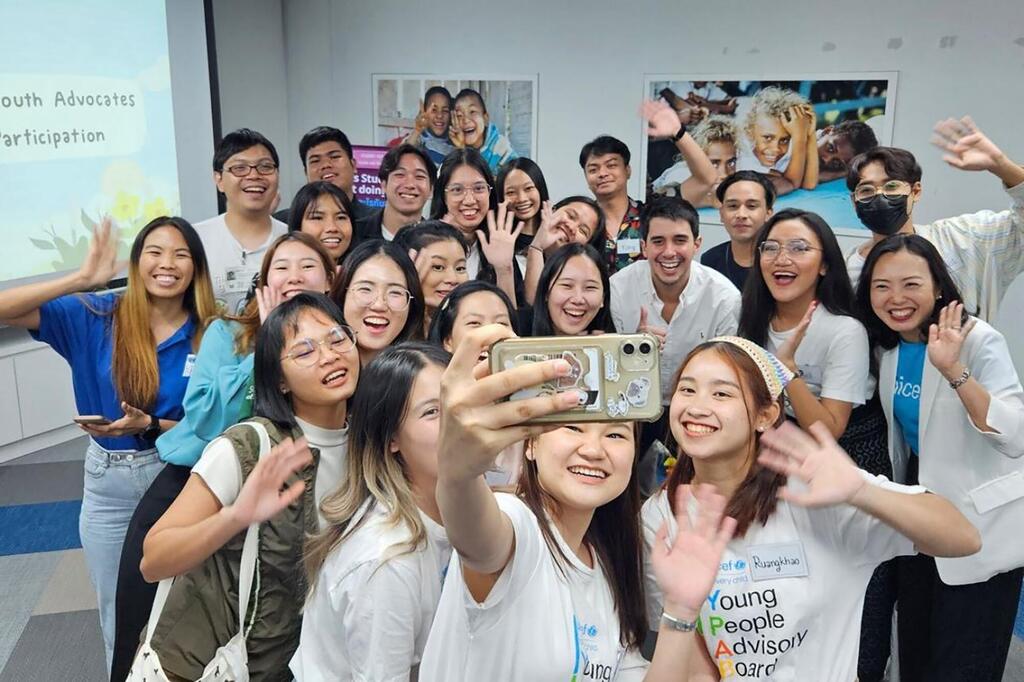
Felipe Paullier, Assistant Secretary-General for Youth Affairs, with a group of young advocates in Thailand.
The third issue that stands out among priorities is mental health and well-being. Millions of young people around the world face a silent crisis that affects all dimensions of their lives: hopelessness about the future; a digital culture marked by hate speech; lack of opportunities in education, employment, and housing; the climate crisis; and the absence of spaces for care and connection. All of this generates anxiety, depression, and, in the most serious cases, loss of meaning and suicide.
That is why we are promoting a Global Youth Mental Health and Well-being Initiative, which in just a few months has already brought together more than 600 youth-led organisations in more than 80 countries, impacting more than 13 million people (81 per cent of whom are young people).
This initiative combines youth empowerment with connections to international mental health networks and international organisations working in the field, such as the World Health Organization (WHO), UNICEF, and the UN education, science and culture agency (UNESCO). At the same time, it advances political advocacy so that much more states recognise youth mental health as a priority and develop policies that respond to this urgent need.

Youth participants reflected on their personal journeys, challenges, and motivations as changemakers, entrepreneurs, and advocates.
Mental health in the age of social media
The focus is on how we relate to technology in a fast-changing world. What can we do in a world where we are more interconnected than ever but at the same time much more isolated? That is the dichotomy we are experiencing in this era. Social media poses a huge challenge because it ends up creating bubbles where people only connect with others who think alike.
The way these networks’ algorithms are designed often leads to more polarised discourse but also allows people to take advantage of anonymity when spreading aggressive messages. Hence the need for more meeting spaces to encourage dialogue between people, because in these digital spaces, dialogue does not exist; there are only positions, and people do not listen to each other; they confront each other.
When we seek answers, we will surely find them by returning to the Charter of the United Nations, which outlines the essence of the organisation: dialogue, the celebration of diversity, and international cooperation. Young people are already doing their part. Small individual changes, when added together, are what ultimately drive global agendas.”


