


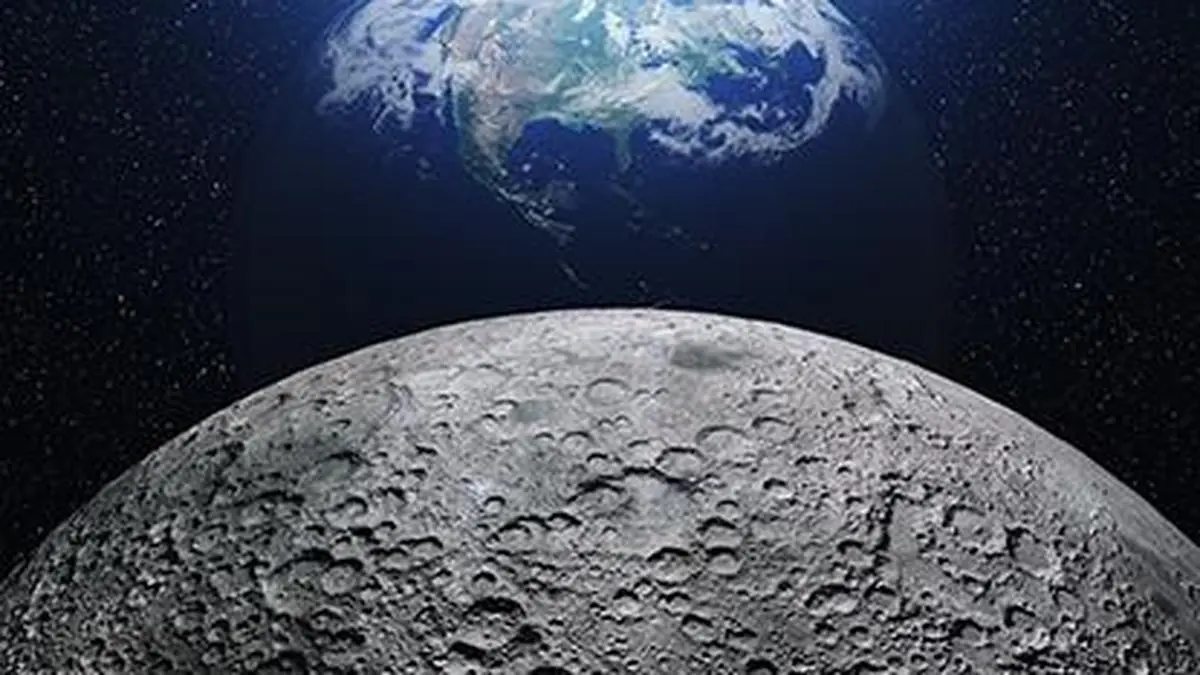
Roscosmos said the purpose of the plant was to power Russia’s lunar programme, including rovers, an observatory and the infrastructure of the joint Russian-Chinese International Lunar Research Station.
| Photo Credit:
istock.com
Russia plans to put a nuclear power plant on the moon in the next decade to supply its lunar space programme and a joint Russian-Chinese research station as major powers rush to explore the earth’s only natural satellite.
Ever since Soviet cosmonaut Yuri Gagarin became the first human to go into space in 1961, Russia has prided itself as a leading power in space exploration but in recent decades it has fallen behind the United States and increasingly China.
Russia’s ambitions suffered a massive blow in August 2023 when its unmanned Luna-25 mission smashed into the surface of the moon while attempting to land, and Elon Musk has revolutionised the launch of space vehicles — once a Russian speciality.
Russia’s state space corporation, Roscosmos, said in a statement that it planned to build a lunar power plant by 2036 and signed a contract with the Lavochkin Association aerospace company to do it.
Roscosmos said the purpose of the plant was to power Russia’s lunar programme, including rovers, an observatory and the infrastructure of the joint Russian-Chinese International Lunar Research Station.
“The project is an important step towards the creation of a permanently functioning scientific lunar station and the transition from one-time missions to a long-term lunar exploration program,” Roscosmos said.
Roscosmos did not say explicitly that the plant would be nuclear but it said the participants included Russian state nuclear corporation Rosatom and the Kurchatov Institute, Russia’s leading nuclear research institute.
The head of Roscosmos, Dmitry Bakanov, said in June that one of the corporation’s aims was to put a nuclear power plant on the moon and to explore Venus, known as earth’s “sister” planet.
The moon, which is 384,400 km (238,855 miles) from our planet, moderates the earth’s wobble on its axis, which ensures a more stable climate. It also causes tides in the world’s oceans.
Published on December 24, 2025


