


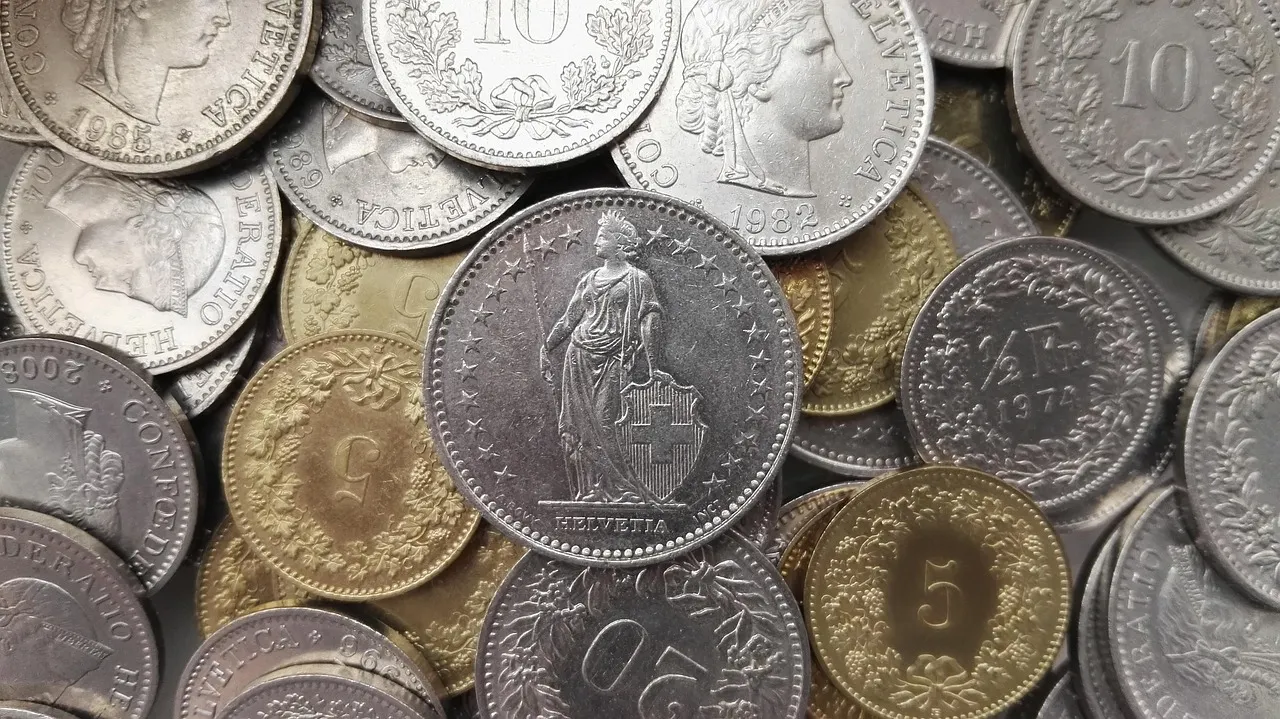
In terms of prices, there is both good and bad news for Swiss consumers: while some services will become cheaper in 2026, you will have to pay more for others.
First, let’s look at what you will have to spend more on in Switzerland in 2026.
Health insurance premiums
Following the pattern of the past several years, prices of Switzerland’s obligatory health insurance (KVG/LAMal) will go up again. They will rise by 4.4 percent in 2026.
That’s the national average – some cantons’ rates will be even higher: for instance, with a hike of 6.9 percent over current premiums, residents of Ticino will be saddled with the highest increase – equating 582 francs a month.
Next is Valais (5.8 percent – 439 francs); Appenzell-Innerrhoden (5.5 percent- 322 francs); Uri (5.3 percent – 363 francs); Zurich (5.1 percent- 451 francs); and Graubünden (5 percent – 400 francs).
READ ALSO: Which Swiss cantons will see highest hikes in health insurance premiums?
Car insurance
You will also have to dig deeper into your pockets to pay for another obligatory insurance – that being car insurance.
The main reasons providers cite for the price hike are higher costs for repairs, more expensive spare parts, as well as increasing storm damage.
Among the companies surveyed by the Comparis consumer platform, Generali, Zurich Switzerland, Allianz, PostFinance, TCS, and Bâloise all mentioned the need for premium adjustments. Zurich and TCS said that rates will likely rise without specifying when or by how much.
Simpego, for its part, spoke of case-by-case adjustments upon contract renewal.
These two major expenses – health and car insurance – will take a sizeable chunk out of the individual and household budgets, but there is also some relief in sight for the consumers.
Advertisement
Electricity will become less expensive
Remember how the price of electricity had soared in the aftermath of Russia’s invasion of Ukraine in 2022?
At the time, it represented a major expense for households in Switzerland.
But after having stabilised in the following years, electricity prices are expected to fall by an average of four percent in 2026. This means that a typical household will pay 27.7 centimes per kilowatt-hour next year, representing an average annual saving of 58 francs.
While the savings may seem modest, they add up over the years.
Advertisement
Cheaper consumer loans and mortgages
In 2025, the Swiss National Bank lowered its key interest rate to zero percent, and it is expected to remain so in 2026 as well.
This is good news for homeowners who need to renew their mortgages or those who want to purchase properties in 2026.
The same is also true for consumer loans.
If you are looking to buy big-ticket items that are usually purchased with credit – like homes or vehicles, for instance – you can benefit from better conditions.
That’s because when a central bank lowers its interest rates, loans become cheaper. So if you qualify for a loan (that is, if you have a good credit score), this may be a good time to apply for one.
And what about rents?
Generally, tenants also benefit from low-interest-rates.
As the key interest rate is expected to remain unchanged in 2026, and inflation will also remain low, a general increase in rents is not anticipated.


