


Integration is a key requirement for everyone applying for Swiss citizenship. But how you need to demonstrate it depends on the canton where you live.
Personal interviews are an integral part of naturalisation procedures in most cantons and municipalities.
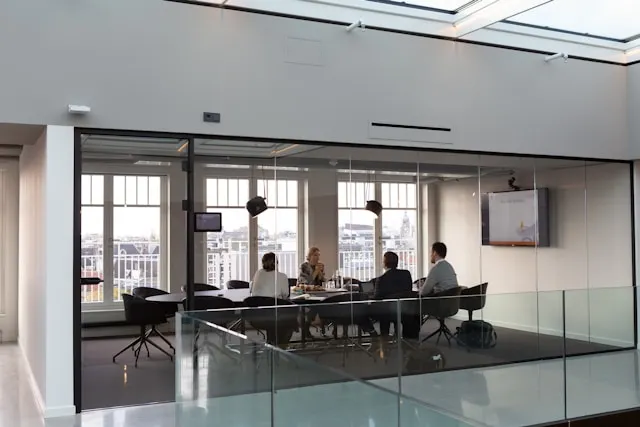
They typically take place between a person who applies for citizenship and a ‘naturalisation committee’ consisting either of cantonal/communal authorities or, in small towns or rural communities, of local residents, who are tasked with assessing your level of integration based on your answers to their questions.
Some communities, like in Zurich, are relying less and less on personal interviews, opting instead for a letter of motivation – a personal statement that accompanies the naturalisation application and details the candidate’s appreciation of, and respect for, Swiss values, way of life, and society in general.
It should also mention the person’s involvement or volunteer activities in their local communities.
READ ALSO: Why are Zurich authorities skipping naturalisation interviews?
What is the situation in other cantons where many foreign nationals live?
Let’s start with Geneva
According to authorities, “the naturalisation interview is a crucial stage in the process of becoming a Swiss citizen in Geneva. It allows the authorities to assess your integration, your civic knowledge, and your motivation to join the Genevan and Swiss community.”
The interview – which last between 30 and 45 minutes – is conducted by the Naturalisation Service of the Cantonal Office for Population and Migration (OCPM); you may also be summoned by your municipality for an additional interview.
The questions vary from general – for instance, ‘Name a Swiss river and a Swiss mountain’ and ‘Who is Switzerland’s president this year’ – to ones assessing local knowledge, such as ‘What are the main festivals in Geneva.’
READ ALSO: What does being ‘successfully integrated’ in Switzerland mean?
Advertisement
Vaud
There are no personal interviews on the cantonal level; instead, candidates for naturalisation take a comprehensive, 17-page, multiple-choice knowledge test covering Switzerland, the canton, and community.
On a national level, questions include ‘Who elects the members of the Federal Court?’, and ‘In what year Switzerland joined the UN.”
In terms of assessing cantonal knowledge, expect questions such as ‘Which river flows through Vaud?’ and ‘What is the final station on the [regional] LEB train line?’
As far as local knowledge is concerned, you would need to know what the flag of your town/village represents, as well as the names of parks in your community.
(Given the specificity of these questions, it is no wonder that several years ago an Italian man saw his citizenship application rejected because he didn’t know what animals lived in his local zoo).
Advertisement
Basel-City
Here, personal interviews are part of the naturalisation procedures.
According to the canton’s website, authorities “hold interviews with the applicants and their family members. They then prepare an assessment report containing the necessary information for the municipality and the federal authorities.”
During the interview, candidates are grilled (though not literally) on their social integration and lifestyle, including what friends they have and what local clubs/associations they belong to.
This being Basel, you should definitely be ready and able to answer this ubiquitous question: What is the main local festival? (Spoiler alert: the Fasnacht).
You can find out information about the interview process in other cantons/municipalities directly on their respective websites.
Advertisement
A common point
Regardless of your canton or municipality of residence, all interviews share one similar requirement during their naturalisation process.
It is that they must be conducted in the official language of the region (never in English!), which helps the interviewer(s) assess your proficiency level – an important part of integration.
For most cantons, the required levels for citizenship are B1 oral and A2 written, though rules are stricter in some cantons:
READ ALSO: Do all cantons have the same language rules for Swiss citizenship


