


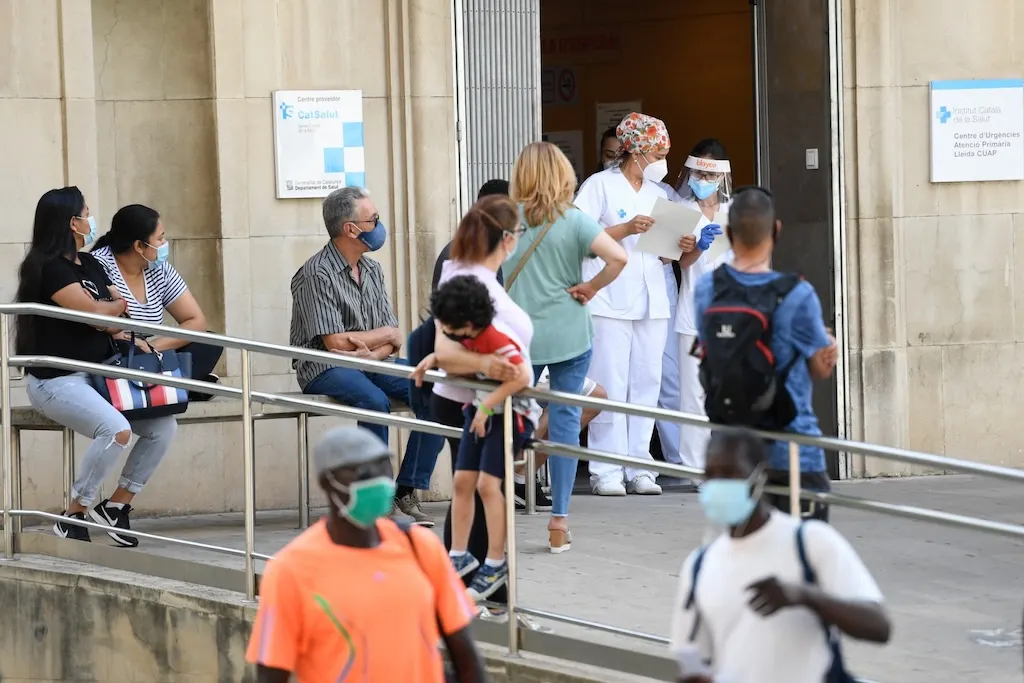
Find out how the medical strike across Spain this week will affect you and what services will still be operating.
Starting from today, Tuesday December 9th, there will be a national doctors’ strike lasting for the next four days until Friday December 12th.
Medical unions and doctors have rejected a reform of the Framework Statute and are demanding better work schedules and basic salaries, which reflect the changes.
Although doctors have been calling for a reform for a long time, they don’t agree with the Ministry of Health’s new legislation.
Advertisement
The walkout comes after almost three years of negotiations, demonstrations back in October and June of this year, and more than 60 meetings between the Ministry of Health, unions and strike committees.
The stoppage has been called by the Spanish Confederation of Medical Unions (CESM) and the Andalusian Medical Union (SMA), and medical staff in in regions such as Catalonia, Madrid, Galicia and Navarre, have joined in.
The demonstrations will affect public hospitals, as well as primary care centres or local clinics across the country.
For the next four days, there will be no scheduled appointments in local public health centres in many areas, which means no appointments will be available with your GP and if you already have one, you will likely have to reschedule it.
Only the emergency departments of primary care centres, outpatient clinics, and urgent and continuous care centres will operate, with a minimum of 25 percent of their staff.
Ambulances, all emergency services, cancer treatments, dialysis, oxygen therapy, and urgent tests will still be operational and will go ahead.
Spain’s Ministry of Labour has also decreed minimum services in specialised units, including ICUs, coronary care, and neonatology. Radiotherapy and chemotherapy treatments for urgent and life-threatening situations, and essential surgical procedures will also still be scheduled.
Blood and tissue banks will operate at a 50 percent capacity. The remaining services will operate as if it were a public holiday.
Advertisement
In Andalusia, the Andalusian Health Service (SAS) has established minimum services that guarantee healthcare activity similar to that provided on a public holiday in primary care centres and hospitals.
The SAS establishes that 100 percent of those services that “are usually provided on a Sunday or public holiday” must be provided and that “100% of diagnostic tests and urgent activities carried out on a Sunday or public holiday must be guaranteed”.
In Madrid, primary care centres with more than four professionals must guarantee at least two GPs and one paediatrician per shift, while smaller clinics must have at least one family doctor and one paediatrician per shift. For out-of-hospital emergencies, the system will be operating as normal with 100 percent staff coverage in units such as the Emergency Coordination Centre, mobile intensive care unit, rapid intervention, home care services, and air ambulances.
In Catalonia, doctors have already organised a second strike for the new year, which is due to take place on January 14th and 15th 2026.
In Valencia, authorities have said that routine care may be slowed due to staff reductions and the prioritisation of essential services. Unions also warn that in many centres, the usual staffing levels will be lower than the minimum required. This may result in longer waits, rescheduled appointments, and limitations on non-urgent procedures, especially in primary care and outpatient clinics.
Patients in all areas are advised to confirm their appointments, anticipate possible delays, and only attend when necessary on the scheduled strike days.
Read more about the reasons behind the walkout.


