


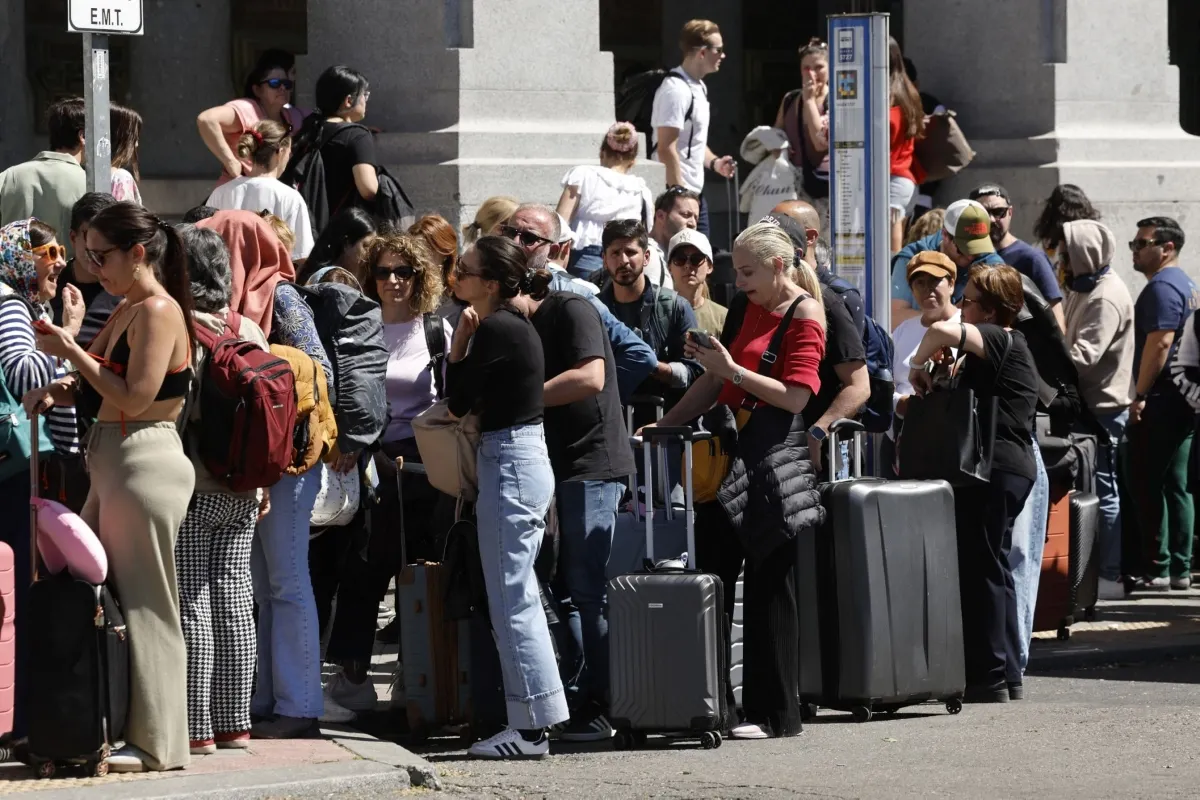
A countrywide fixed-price travel pass, tighter rules to enter the UK from Spain, lots of changes for drivers, insurance for e-scooter riders and plenty more – here’s a breakdown of all the changes to travel and transport in Spain in 2026.
EES fully operational by April 10th 2026
Spain’s airports have been phasing in the EU’s new Entry & Exit System — known as EES — in recent weeks and months, and by April 10th it is anticipated all Spanish bases will be fully operational.
EES is basically an enhanced biometric passport check at external Schengen borders that includes giving a facial scan and fingerprints.
You can find a full explanation of the new system HERE and The Local Spain’s coverage of the Spanish rollout HERE.
So far in Spain airports including Madrid-Barajas, Tenerife Sur, Lanzarote, Málaga Airport-Costa del Sol and Alicante-Elche airport, which has outlined plans to create a special non-Schengen terminal area, have already switched to EES.
UK ETA
Similarly, the UK government has warned European travellers that they will be refused entry from February 2026, if they do not have the required ETA visa waiver.
READ MORE: ‘No ETA, no entry’: UK warns of tighter travel rules for Europeans in 2026
New flights in 2026
Spain will also see a number of new flight routes launched to and from the country next year.
These include trans-atlantic journeys such as Madrid to Toronto, Madrid to Buenos Aires, and Barcelona to Seattle, or a whole host of connections with London Luton including Valencia, Seville and Madrid.
By our count, there are over 25 new routes in Spain from next year. Read The Local’s full breakdown of them all HERE.
Advertisement
Further Ryanair flight cuts?
That said, some of the new routes may be needed if budget airline Ryanair continues its war of words with Spain’s airport operator, Aena, over airport fees.
The low-cost Irish airline has already threatened to cut millions of seats for the summer and winter seasons next year, despite reinforcing its presence in traditional tourist hubs.
READ ALSO: Ryanair threatens further cuts at Spanish airports for 2026 winter season
More cities with low-emission zones for drivers
Cities across Spain have slowly been introducing Low Emission Zones (known as ZBEs) over the last few years, but not all places have them fully implemented yet.
Next year will see the rollout continue, including in cities such as Girona, Oviedo, Santander and Valencia.
For a full list of the Spanish cities and towns which have to have new ZBEs in 2026, click HERE.
READ ALSO: How to get an emissions sticker for your car in Spain
Advertisement
Changes to vehicles’ emission stickers
Staying on emissions for a moment, environmental emissions stickers are mandatory in Spain for all vehicles that want to circulate in some cities’ low-emission zones, but from next year the classification of these stickers is set to change.
Spain’s Directorate of Traffic, the DGT, has begun implementing new environmental label classifications for cars, which will come into force in 2026.
Previously emissions stickers were based on the New European Driving Cycle (NEDC), but now the change will be accompanied by a new test designed for this purpose called the Worldwide Harmonised Light Vehicle Test Procedure (WLTP). It will also integrate Euro regulations to redefine labels and classifications.
READ ALSO: The changes to vehicle emission stickers in Spain in 2026
New V-16 light mandatory for drivers in 2026
The head of the DGT has also confirmed there will be a grace period following the deadline for drivers to have the new V-16 emergency light in their vehicles, set for January 1st 2026.
As of this date, all drivers in Spain must use the new V-16 lights instead of the warning triangles like before, in case of an accident or a breakdown.
HERE’S what you need to know about the V-16 light.
Advertisement
Compulsory insurance for e-scooters
From the start of 2026, owners of personal mobility vehicles (PMVs) in Spain such as electric scooters, hoverboards, electric skateboards, electric bikes and Segways for example, will be required to purchase liability insurance to ride them.
This is part of an amendment to the Automobile Insurance Law, which was recently approved by the Spanish government.
Read more about the change HERE.
READ ALSO: Is it legal for e-scooter users to ride on the pavement in Spain?
Changes to Gibraltar-Spain border crossing
The Gibraltar border crossing is now due to be removed at the start of 2026, according to a new report in leading Spanish daily El País.
This will put an end to decades of frequent hold-ups at La Verja (The Fence), the border post which separates Gibraltar and the southern Spanish town of La Línea de la Concepción.
If all goes to plan, this will finally mean no border controls on people and goods, creating a customs union with the European Union. It is also set to align Gibraltar’s tax system with EU standards.
READ ALSO: Spain and UK plan to remove Gibraltar border crossing in January 2026
Advertisement
Spain aims to launch countrywide fixed-price travel pass
At the very start of 2025 Spain’s Transport Minister announced plans to create a fixed-price public transport pass which works for trains, buses, metros, trams and bicycles across the country’s 17 regions from 2026.
Plans are for an all-purpose monthly transport pass, which will work in all corners of the Spanish territory.
A price for Spain’s potential ‘single pass’ has not yet been given, although somewhere between €30 and €49 has been suggested in the Spanish press. No definitive rollout roadmap has been outlined yet either.
READ ALSO: Spain aims to launch countrywide fixed-price travel pass
New Sustainable Mobility Law
The Spanish government recently approved its new Sustainable Mobility Law, resulting in plenty of changes to transportation, from the elimination of short-haul domestic flights to the reintroduction of night trains.
The government aims to eliminate short-haul flights that have a viable train alternative lasting less than 2.5 hours.
Night trains in Spain were eliminated in 2020, but could also be brought back with the new law. However, reports suggest that Spain’s national rail operator Renfe isn’t planning to resume the nocturnal service unless pushed to, given the low profitability and demand for night trains.
For a full breakdown of the travel changes that could come into effect as a result of the Sustainable Mobility Law, click HERE.


