


 Getty Images
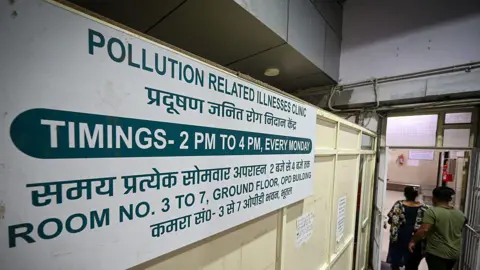
More than 200,000 cases of acute respiratory illnesses were recorded in six state-run hospitals in Delhi between 2022 and 2024 as the Indian capital struggled with rising pollution levels, the federal government has said.
The government said in parliament that more than 30,000 people with respiratory illnesses had to be hospitalised in these three years.
Toxic air is a recurring problem in Delhi and its suburbs, especially during winters.
For weeks now, Delhi’s Air Quality Index (AQI) – which measures different types of pollutants, including PM2.5, a fine particulate matter that can clog lungs – has been more than 20 times the limit recommended by the World Health Organization.
There isn’t a single cause behind the problem, but it’s attributed to a mix of factors like industrial emissions, vehicle exhaust, dropping temperatures, low wind speeds and the seasonal burning of crop stubble in neighbouring states.
Delhi’s six major hospitals recorded 67,054 acute respiratory cases in 2022, 69,293 in 2023 and 68,411 in 2024.
“Analysis suggests that increase in pollution levels was associated with increase in number of patients attending emergency rooms. However, this study design cannot provide confirmation that the association is causal,” the government told parliament.
Delhi’s average AQI has crossed the “severe” 400 mark many times over the past decade, especially in winter – levels that can harm even healthy people and pose serious risks to those with existing illnesses.
On Wednesday morning, Delhi’s average AQI was around 380, according to the government-backed Safar app.
The BBC reported last week how many hospitals in Delhi and its suburbs are seeing an influx of children who are sick because of the toxic air.
The Delhi high court is set to hear a petition on Wednesday calling for urgent measures to curb hazardous air pollution.
Over the past few years, India’s top court has also raised concerns about the air quality in Delhi and surrounding areas.
Follow BBC News India on Instagram, YouTube, Twitter and Facebook.


