


A total 40 percent of land in Spain is at risk of desertification, two out of three Spaniards think Spain could go to war in the next few years, and more news this Friday November 28th.
30 percent of properties in Spain not used as primary residences
Provivienda, a non-profit organisation, has released a new report entitled “Prevention and Attention to Residential Exclusion”, in which it sates that in 2023, 30 percent of properties in the country were not used as primary residences. Secondary residences, meanwhile, represented 28.7 percent of the total.
Eduardo Gutiérrez, co-director general of Provivienda, said that Spain needs to optimise the management of the available residential stock, focusing on unoccupied homes, in order to help solve the housing crisis.
The report revealed that the growth of the residential housing stock has been slowing down over the last decade, adding 1,281,774 new units from 2013 to 2023, compared to an increase of 1,242,400 homes during the same period.
Although there is a net gain of approximately 39,000 homes, the increase in primary residences was only 937,765 units, a rate lower than both the total housing stock growth and population growth.
READ ALSO: The overlooked factors causing Spain’s housing crisis
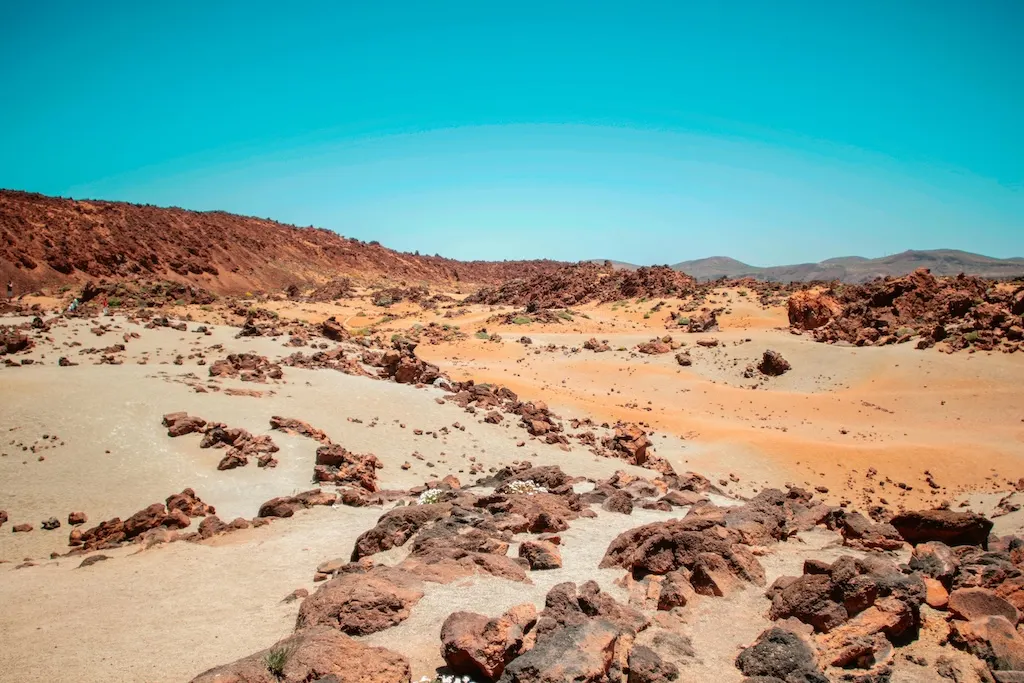
A total 40 percent of land in Spain is at risk of desertification
The first map revealing which areas in Spain could become desert land in the future has been been published by specialists from the University of Alicante and the Spanish National Research Council (CSIC). It warns that 206,217 square kilometres is at risk, which represents 60.9 percent of arid zones and 40.9 percent of the total Spanish territory.
This is almost double the amount of the last official desertification estimate. The new map considers not only the condition of the soil but also water resources available.
Desertification reaches the highest percentages in provinces such as Murcia (91 percent), Albacete (84 percent), Almería (84 percent), Las Palmas (81 percent), Valladolid (79 percent), Alicante (79 percent); Valencia (71 percent); Zaragoza (71 percent) and Toledo (70 percent).
Advertisement
Flood-hit Spanish region votes in new leader with far-right support
Spain’s main conservative party had its candidate elected leader of the flood-hit Valencia region with far-right support on Thursday, after his predecessor resigned under fierce criticism for the handling of the deadly disaster.
The eastern region’s Popular Party (PP) leader Carlos Mazón became the target of public fury after the October 2024 floods killed more than 200 people, the country’s deadliest such disaster in decades.
Mazón announced his resignation on November 3rd after a year of intense scrutiny over his whereabouts on the day of the floods, whose management is primarily a regional responsibility in Spain’s decentralised political system.
Valencia’s regional parliament voted in PP candidate Juan Francisco Pérez Llorca, a close ally of Mazón, with an absolute majority thanks to the support of far-right party Vox.
Questions were raised about Mazón’s schedule on the day of the disaster, which included an hours-long lunch with a journalist.
Critics say Mazón’s absence played an important role in the late sending of a mass telephone message to warn residents, which came when floodwater was already gushing through towns and claiming lives.
Pérez Llorca said during the investiture debate that his first words as regional leader would be “to ask the relatives of the 229 dead victims for forgiveness”.
Relatives, who had protested regularly, calling for accountability and Mazon’s resignation, are now demanding he face legal action.
But Mazón will continue as a regional lawmaker, offering him immunity from an ongoing criminal investigation into the handling of the floods.
Advertisement
Two out of three Spaniards think Spain could go to war in the next few years
The first study on fears and uncertainties by the Centre for Sociological Research (CIS) has been published, revealing that two out of three people think that Spain could become involved in a war in the coming years.
Of those, more than half (57 percent) believe that the war would be against Russia, while 42.2 percent think it would be Morocco and 30.2 percent think it would be against the United States.
A total 68 percent of the population also believe the world is getting worse, compared to 27.3 percent who are more optimistic.
The opinions were based on 2,000 telephone interviews conducted at the beginning of November 2025.
With additional reporting from AFP.


