


Ticino countryside? No, Rhode Island, USA.
Amory Ross/ Ocean Hour Farm
There is an unusual farmstead in the US state of Rhode Island that would not look out of place in Italian-speaking Switzerland. The story of the ‘Swiss village’ in Newport is a surreal journey that spans architectural splendour, philanthropy and genetic research.
During the so-called Gilded Age in the United States in the late 19th century, the city of Newport, Rhode Island, became a playground for the super-rich.
A playground? Or perhaps more of a battleground, as the crème de la crème of high society spared no effort to outshine their neighbours by building the most opulent mansions (euphemistically referred to as ‘summer cottages’) and throwing the most extravagant parties.
Arthur Curtiss James, a philanthropist and railway and mining magnate, first came to Newport with his wife Harriet in 1908. The Gilded Age was on the wane and the excesses of earlier decades were giving way to a more sober lifestyle.
This was an environment that better suited the couple. Indeed, the picture of James painted by author Roger Vaughan in his biography Arthur Curtiss James: Unsung Titan of the Gilded Age is that of a discreet industrial giant who shunned the spotlight – so much so that he is, today, much less known than many of his peers, the likes of John D. Rockefeller, Andrew Carnegie and J.P. Morgan.
This is not to say that the Jameses did not also throw themselves whole-heartedly into hosting parties. Money was certainly no object for them, and in Newport they purchased a plot of land relatively far from the other mansions, up on the hill. Telegraph Hill was thus to serve as a blank page for the creation of their showpiece, a project in which every wall, every plant, every glimpse of the sea was designed down to the smallest detail. The hill itself was carefully re-shaped thanks to the skillful use of dynamite.
After completion of the main mansion, two more villas and the ‘Blue Garden’ (a sophisticated secret garden, where Hariett forbade the use of brightly coloured flowers), the project was rounded off with a farm; and not just any farm, but a “Swiss” farmhouse, which was ready by 1917.
Cows in need of a home
The Jameses were avid travellers (James’s great passion was yachting) and in their trips across the Old Continent they also visited Switzerland, where Hariett was captivated by the traditional stone villages found on the southern side of the Alps.
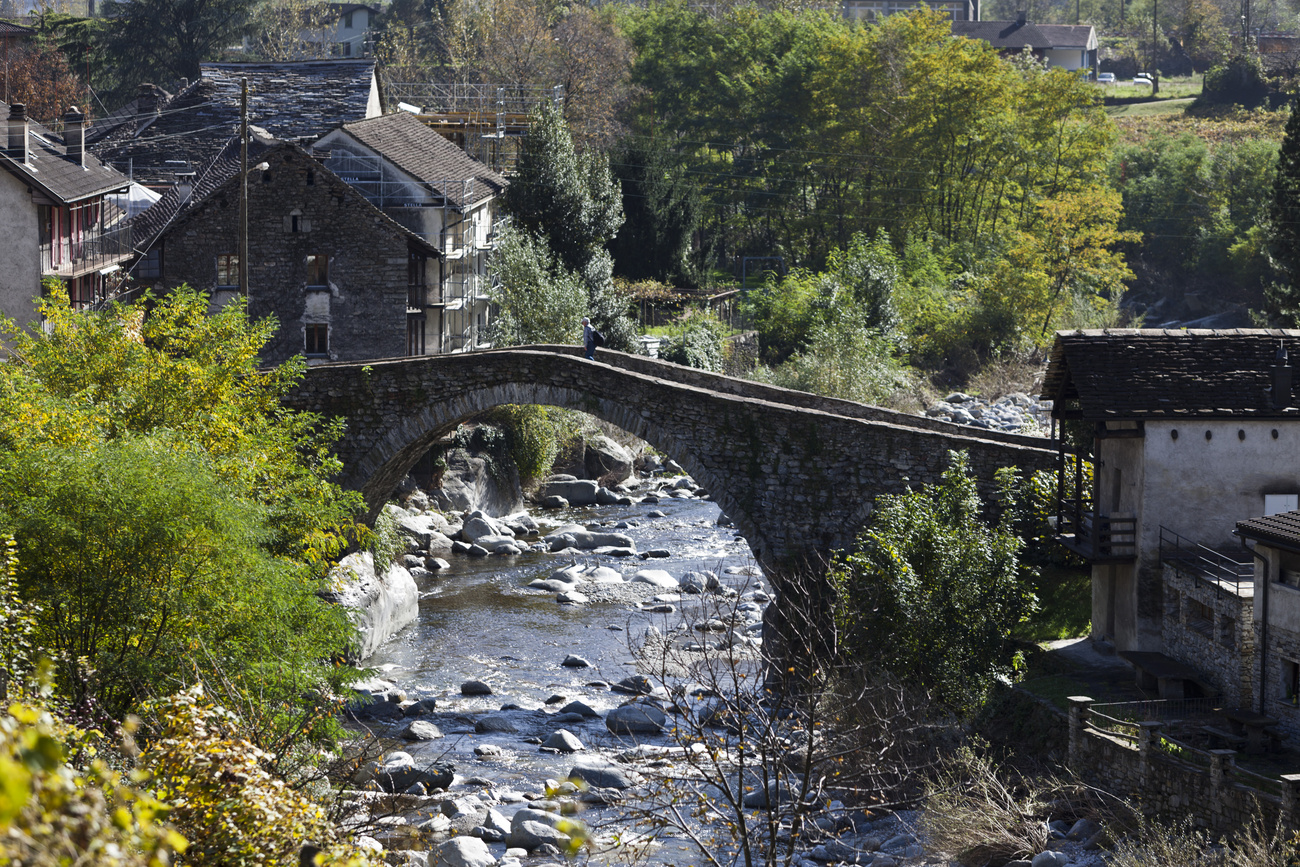
It is not known which Swiss villages impressed the James, not least because much has changed since then. But Giornico, in Val Leventina, could be a good candidate.
Keystone / Gaetan Bally
When James had to decide the fate of a herd of Guernsey cows (inherited from his late father), which were on a plot of land in New Jersey that was about to be sold, the idea of building a village – modelled on those they had seen in Italian-speaking Switzerland – took shape. This would not just provide a home for the cows but would also make his wife happy.
For building materials, the architect Grosvenor Atterbury used granite from the hill itself. The stone was speedily extracted using drills and explosives from Arthur’s mining operations.
Vaughan’s book suggests that the farm was given its original name, Surprise Valley Farm, because the valley had appeared “by surprise” on Telegraph Hill, thanks to the use of explosives. Today it is still best known as the Swiss Village Farm.
The stone blocks of various sizes help give the buildings an air of authenticity, but this is not enough to mask the artificial nature of the place, given the huge distance from the country that inspired them. Already at the time, the writer Lida Rose McCabe described the farm as “theatrical, so obviously is the stage set, the curtain up”.
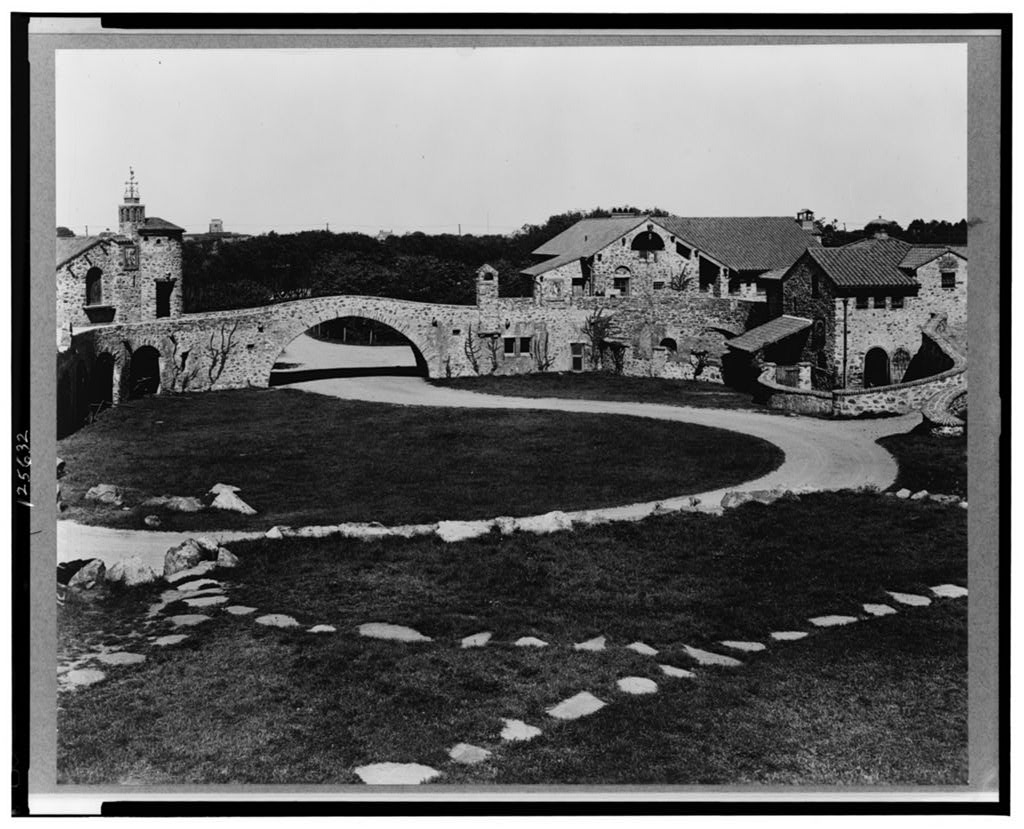
The Swiss village in 1917, when it was completed.
Library of Congress Prints and Photographs Division Washington, D.C., 20540 USA
Nonetheless, it was a functional farm in all respects, with around a hundred people working there. Each worker was given a plot of land for their own use, and James encouraged them to “experiment, develop their own ideas”.
Today, McCabe’s use of the word “experiment” sounds almost prophetic, given the subsequent fate of the buildings.

At work on the farm of Arthur Curtiss James, 1917
Library of Congress Prints and Photographs Division Washington, D.C., 20540 USA
Strange animals at the Swiss village
After Arthur and Hariett James died, in 1941, the farm was taken over by their granddaughter, Hariett Ferry Manice. In 1975 it was sold and became a rehabilitation centre for alcoholics, and in 1993 a training centre for people with disabilities.
The most surprising transformation came about in 1998, when another person for whom money was no object entered the scene. This was Dorrance Hill Hamilton, heiress to the family that created Campbell’s soup cans, a product made world-famous by Andy WarholExternal link.
Among the philanthropic interests of the billionaire and long-time Newport resident was the conservation of historic buildings. Hamilton had the farm meticulously renovated and the grounds cleared of asphalt.
A fervent environmentalist, she then set up the Swiss Village Farm (SVF) Foundation and, in collaboration with the Cummings School of Veterinary Medicine, turned the Ticino-style village into a centre for the preservation of rare breeds of farm animals (ironically, Hamilton’s nickname was “Dodo”, like the extinct bird). These animal breeds were gradually disappearing, either because they were difficult to breed or because they produced less milk or meat than modern breeds.
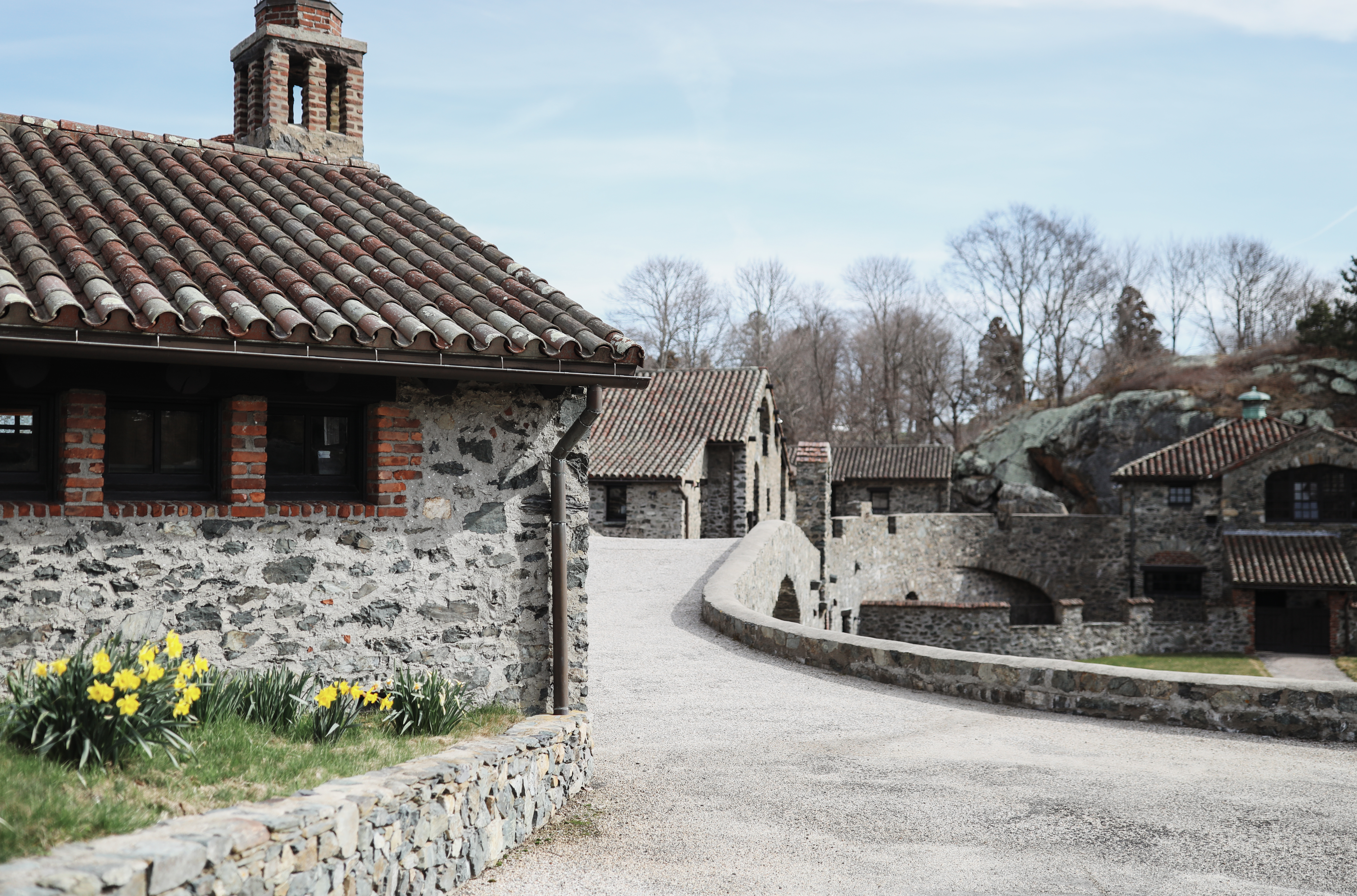
The Swiss village of Rhode Island has today returned to its former glory.
Maaike Bernstrom/ Ocean Hour Farm
For some 20 years, starting in 2002, strange animals roamed the Swiss farm – among them goats with an unusually large number of horns, and the famous Tennessee “fainting goats”, which keel over when frightened or excited, because of a hereditary genetic disorder called myotonia congenita.
Inside the buildings, meanwhile, researchers were hard at work on the collection and cryopreservation of the animals’ genetic material (embryos, sperm, blood, etc.).

Among the most unusual breeds reared in the Swiss village was the Navajo-churro sheep.
Good Focused, Llc
The SVF Foundation’s mission came to an end in 2021. By then, it had collected and frozen the genetic material of over 1,100 animals from 36 different breeds. This is now stored in the Dorrance Hamilton Cryo Conservation Laboratory at the Smithsonian Conservation Biology Institute in Front Royal, Virginia.
One day, it will be possible to thaw the embryos and, through a host animal, bring these breeds back to life even if no living specimens are left on earth.
A new chapter for the village
The story of the Swiss village in Rhode Island did not end with the winding down of the SVF Foundation’s activities. The current project is part of the philanthropic work of Wendy Schmidt, the wife of former Google CEO Eric Schmidt. Fervent environmentalists like Hamilton, the couple took over the farm, which the SVF Foundation had bound by a conservation easement agreement (a legal agreement aimed at preserving the environmental value of a piece of land). There they created Ocean Hour FarmExternal link, a centre dedicated to education, research and the promotion of regenerative agricultural practices.
“Our work provides a living example of sustainable agriculture and land stewardship – in an integrated system where plants, animals and people sequester carbon, clean stormwater, build soil and produce food and fibre for the community,” explains communications manager Hilary Kotoun.
It is a very different experiment from anything the original owner James could have imagined; but chances are he would have been whole-heartedly in favour.
Edited by Samuel Jaberg. Adapted from Italian by Julia Bassam/ac


