


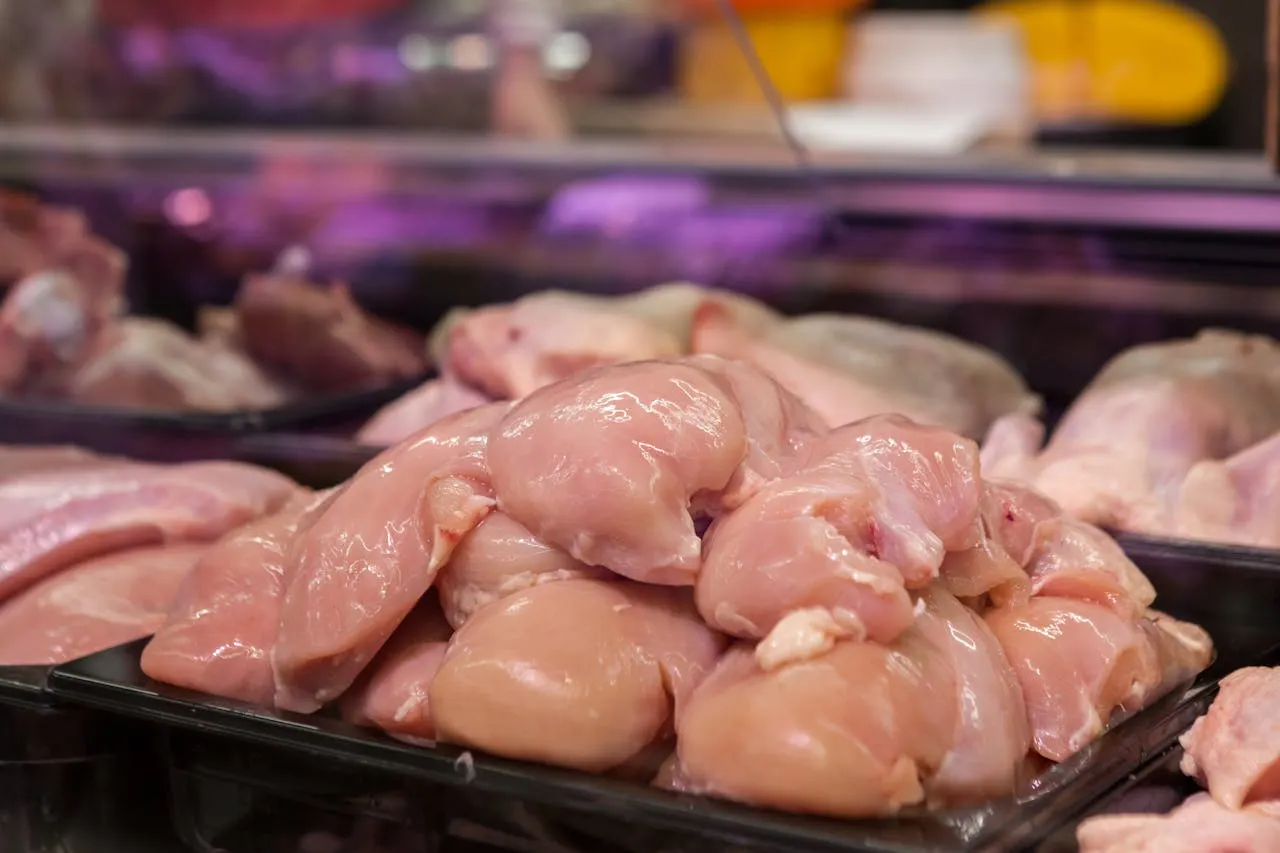
The new lower-tariff agreement between Bern and Washington stipulates that Coop, Migros, and other Swiss supermarkets should sell much more US meat. But will they?
One of the conditions set by the White House for cutting Swiss import duties from 39 to 15 percent is that, in addition to other obligations, Switzerland will have to buy 500 tonnes of beef, 1,000 tonnes of bison meat, and 1,500 tonnes of chicken from the United States.
It is not the government per se, but rather the supermarket chains, that will need to comply with the new rule.
But does this mean that supermarkets will offer this imported meat to the detriment of Swiss products?
So far at least, none of the major retailers have plans to do so.
Migros said it will continue to “prioritise local meat as much as possible,” so the new agreement with the United States will have no impact on its product range.
And according to Coop, its priority “remains Swiss meat” as well.
Even discount retailers, who are particularly price-sensitive in the highly competitive meat market, aren’t keen on buying chicken, beef, or bison steak from across the Atlantic.
“Integrating fresh meat products from the United States is not an option for us,” according to Lidl’s spokesperson.
Aldi also shows little interest in US meat, as does Migros subsidiary, Denner.
Advertisement
Inferior meat?
Key reasons for supermarkets – and consumers – to snub meat imported from the United States is its chemical content.
According to Philippe Häberli of the professional association Proviande, American meat has a high hormone content.
This fact is likely to deter Swiss consumers, who “place great importance on the origin and traceability of their meat products,” he said.
But that’s not all
American chickens may also be hard to swallow in Switzerland because they are treated with chlorine on industrial farms where they are raised.
This process involves disinfecting them after slaughter in a diluted chlorinated solution to kill germs.
The Swiss Poultry Producers Association finds the idea of chlorinated poultry “absolutely unacceptable.”
Also, this method is currently prohibited in Switzerland, so a change in the law would be needed before this poultry could be sold in Switzerland.


