


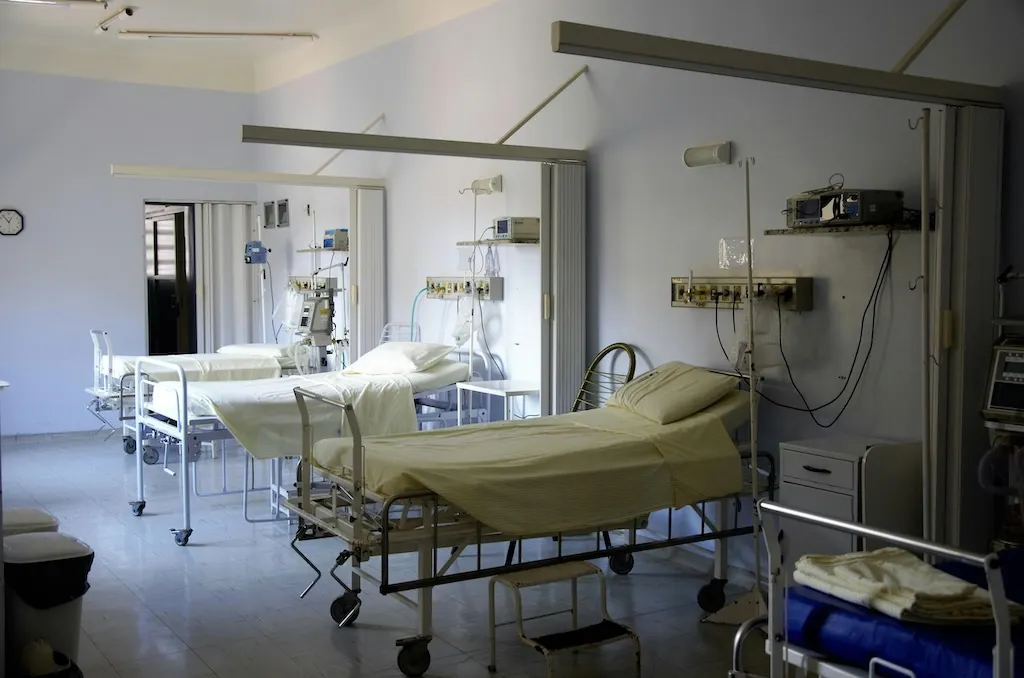
You may already be covered under the public health system in Spain, but should you also consider private insurance for certain issues?
You will have access to the public healthcare system in Spain if you’re employed here or if you’re self-employed. This is because you will be paying social security to cover it.
For some visas it’s necessary to get private healthcare such as for the Non-Lucrative Visa and the Student Visa. In some cases, you may need it for the Digital Nomad Visa too.
Even if getting private healthcare isn’t a residency requirement, many people in Spain, even Spaniards prefer to get it anyway and therefore may have access to both private and public healthcare here.
According to the 2025 Health Barometer published by the Spanish Centre for Sociological Research (CIS), nearly 30 percent of Spaniards have private health insurance.
READ ALSO: Your guide to healthcare in Spain
This high stat could be surprising to foreigners from countries where public healthcare is the norm such as in the UK, where only 11.8 percent of the population have private health insurance.
So why would people in Spain want or even need private health insurance if they’re already covered by the public system?
According to the Ministry of Health, those who opt for private often seek “greater speed or convenience in accessing certain healthcare services”.
Long waiting lists are the main reason for people wanting to go private.
A total of 24 percent of respondents on the 2025 Health Barometer said they have waited more than eleven days for an appointment with their primary care doctor and 16.6 percent said they waited between eight and 10 days. Only 14.7 percent of people had to wait one week.
READ ALSO: What breast cancer screening does Spain’s public health system offer?
Advertisement
When it comes to certain specialisms, many people also have to wait a long time in the public health system. Colonoscopies have the longest average waiting time with an average of 158 days, followed by MRIs with 73 days, ultrasounds with 67 days and CT scans with 60 days.
A total of 67.4 percent say that more than two months passed between the consultation with their GP and a specialist appointment, with 17.9 percent waiting more than half a year for a specialist consultation.
Mental health is another area where the public system falls down. Around 17 percent of those surveyed had to consult a healthcare professional for a mental health problem, psychological distress, or emotional distress in the last twelve months. More than 40 percent had to wait between three and six months for an appointment and opted to go privately instead.
So, if you need any of the above tests or think you need to see a specialist quickly, it may be worth going through your private insurer instead, where waiting times are much shorter. Many private insurers will even let you book consultations specialists directly, without having to see a GP first.
It’s worth keeping in mind, however, that most private health insurance policies won’t cover you for pre-existing conditions, so you can’t just get private health insurance if you want to see a specialist if you already have a problem.
Reader Insights: A love letter to Spain’s public health system
Advertisement
When it comes to more serious health issues though, such as needing to get surgery, having cancer, it may be worth sticking to the public system.
A total of 61.4 percent of people with private health insurance prefer public healthcare in case of a serious health problem, according to the health barometer.
The results show that 72.9 percent prefer public health when it comes to hospital admission and 69.3 percent prefer public emergency services to private ones.
Although the barometer shows a slightly downward trend in the overall perception of the public health system, compared to last year, it still reveals high satisfaction and a positive opinion of public health services in Spain.
READ ALSO: Spain to spend €39 million on mental health to help suffering workforce


